How We Built a $7.7K MRR AI Video Tool in 21 Days (No Ads)
 ## Hello! Who are you and what business did you start?
Hey! My name is Anatoly Pashias (known as TolyPash on X/Twitter), and I’m a technical co-founder and software engineer based in Limassol, Cyprus. I consider myself a serial builder I make companies, software, and investments.
My background spans fintech, hospitality, and AI creator software. I'm the technical brains behind a cloud-based POS system called Sally POS (currently running in 400+ locations), a website builder called Digisell, and my flagship product: Motionvid.ai.
I co-founded Motionvid.ai with my partner Nick Nicolaou, who is a professional filmmaker. Motionvid.ai is an AI-powered platform that generates professional motion graphics, animated infographics, explainer videos, and map animations from plain-text descriptions or reference images. We essentially collapse the grueling hours spent in Adobe After Effects into a few seconds using our proprietary Miltos v3.0 model and Animora engine.
Currently, our ecosystem is thriving. Motionvid recently crossed the €4,000/mo MRR milestone and our verified Stripe revenue via TrustMRR shows us sitting at $7,775 MRR with over $44,400 in all-time revenue from about 280 active subscriptions. We are completely bootstrapped and growing fast.
Anatoly Pashias
Co-Founder · Motionvid.ai
 Cyprus
This story is compiled from public sources and presented in an interview format for a better reading experience.
What's your backstory and how did you come up with the idea?
 I’ve been building since 2019, but my most defining professional move wasn't a startup it was a job. At 19, with no degree, I got a job as a full-stack engineer at Pepperstone, a major forex broker. I was put under the mentorship of a senior engineer named Ahmad S. Within 2.5 years, I went from a solo builder to architecting the entire Golang backend connector for their trading engine. I did not understand the true power of real mentorship until then. Combining hard work with a mentor is the key to moving fast without breaking everything.
The idea for Motionvid came directly from solving an acute pain point for my co-founder, Nick. As a filmmaker, he was constantly frustrated with motion design workflows. Clients wanted high-quality, YouTube-style motion graphics (think Vox, Johnny Harris, or Ali Abdaal), but doing this manually with keyframes took hours and required specialized skills.
We looked at the market and realized there was a massive gap. There were generic AI video generators, but nothing specifically engineered for motion graphics, map routing, and infographics. I knew with my background in React Native and Golang, I could build a backend to connect various AI models (like Google VEO, Kling, and our own Miltos) into one seamless UI.
I locked myself in and built the initial MVP in just 3 weeks in late 2024.
Take us through the process of building the first version.
 Because I wanted to ship fast, I relied on a lightweight, scalable stack: Next.js for the frontend and Firebase for the backend. Next.js is crucial because it gives us Server-Side Rendering (SSR), which is an absolute necessity for SEO. Firebase allowed me to handle user authentication, real-time database syncing, and cloud hosting without the operational nightmare of maintaining traditional servers as a solo dev.
The core challenge wasn't just wrapping an API; it was building an engine that could handle complex map animations and pie charts without timing out. When you type a prompt, our system has to execute a heavy asynchronous rendering process.
Interestingly, after building the 3-week MVP, it quickly validated itself by hitting some early organic revenue, but we actually deprioritized it for a bit to work on other AI tools like Framekit.ai. However, the product-market fit for Motionvid was so violently clear that we eventually decided to go "all in."
Describe the process of launching and getting your first customers.
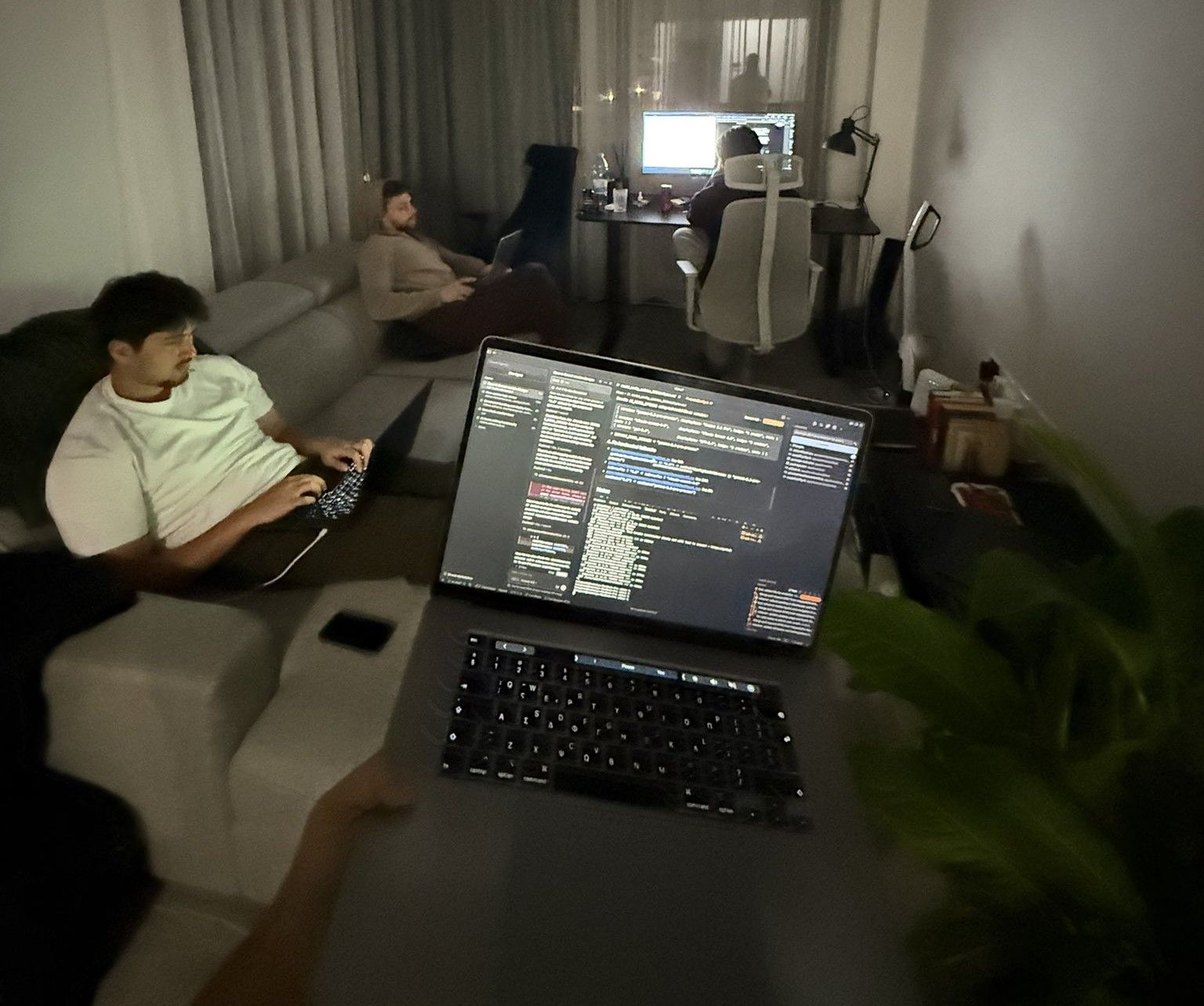 Our acquisition evolved in stages, from organic "dogfooding" to a massive marketplace launch.
1. The "Dogfooding" Launch (Customer #1)
Our very first customers came organically because we built in public and used our own product for marketing. When we launched our major Miltos 3.0 update on Product Hunt, we didn't just write copy; we created the entire launch video using Motionvid.ai itself. Seeing is believing. If an AI tool can generate its own promotional material flawlessly, early adopters (mostly YouTubers and marketers) will buy it.
2. The AppSumo Arbitrage Launch
Our massive inflection point happened in April 2026 when we launched a Lifetime Deal (LTD) on AppSumo. The results were staggering. We hit $5K in 1 day, $20K in 3 days, and $40K in 4 days, largely driven by US-based deal hunters and agencies.
AppSumo is a classic indie-hacker growth tactic. It gives you a massive burst of non-dilutive cash (which we needed to pre-fund expensive GPU compute costs) and an army of extreme beta testers. These users pushed our engine to its limits and gave us the exact feedback we needed to refine the UX. During the launch, we even added a higher "Ultimate" tier because the demand for 4K exports was so high.
Since launch, what has worked to attract and retain customers? What is the "Secret"?
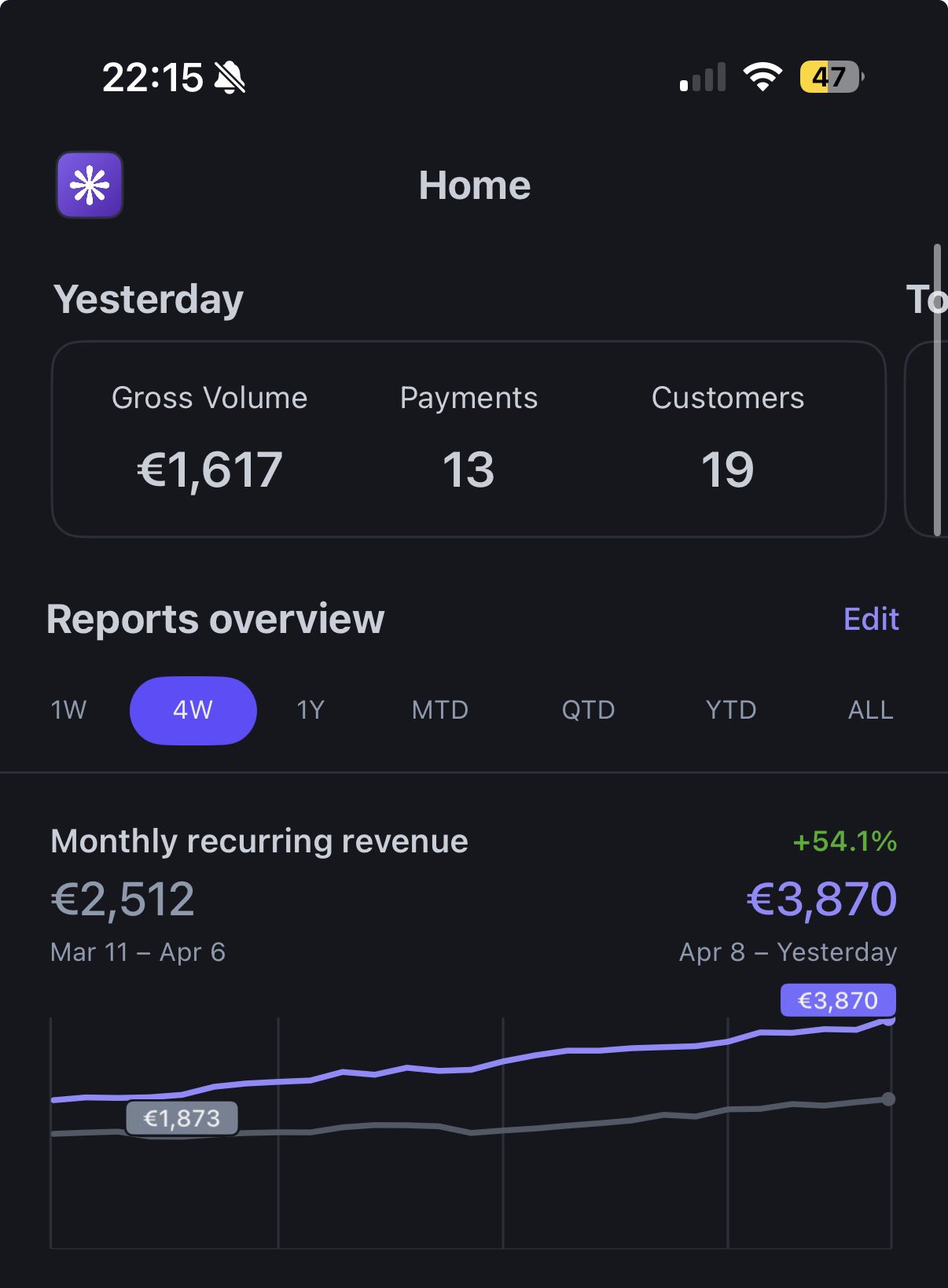 We don't rely on expensive Facebook ads. Our growth engine is built on four distinct pillars:
Secret #1: Affiliates, Affiliates, Affiliates
This is our biggest secret weapon. We placed a highly visible affiliate link right at the top of our homepage and used a tool called Affonso to manage it. Because Motionvid solves such a visual, painful problem, YouTubers and marketers naturally want to promote it to their audiences. We simply gave them a dead-simple way to earn a commission for doing so. Most of our affiliates just come to us organically.
Secret #2: The B2B Arbitrage Narrative
We don't sell "software"; we sell an economic transformation. For example, we had a freelance digital marketer in Bangladesh using our AppSumo deal. Before Motionvid, they made ~$2,400/mo and missed deadlines because manual After Effects work took too long. By using our tool to generate social graphics and animated reports, they reduced production time by 85% and scaled to 12 active clients, hitting $8,900/mo. When your software acts as a money-printing machine for your users, retention solves itself.
Secret #3: Radical Financial Transparency
The AI space is full of "fake founders" posting fake revenue screenshots. I decided to go the opposite route. I integrated Motionvid with TrustMRR, giving them read-only access to our Stripe API to verify our metrics publicly. Not only does this build immediate trust with high-tier enterprise clients, but it acts as an incredible marketing funnel. Investors and other founders browse the TrustMRR leaderboards, see our 109% growth velocity, and discover our product natively.
Secret #4: Multi-Product Cross-Pollination
I don’t put all my eggs in one basket. I also run Francis Live (an AI finance copilot) and Betly AI. A user of one product often sees me building in public on X (@TolyPash) and crosses over to try Motionvid.
What does the future look like? What questions are you asking now?
 Recently, I posted on X: "What we are building next is insane… and it’s almost done." While I won't spill all the beans yet, reaching nearly $8K MRR forces you to ask critical strategic questions about scaling. According to our current resources, here is what we are trying to solve next:
-
The Revenue Transition: AppSumo LTDs are great for bootstrapping compute, but they are a long-term liability if users churn out heavy videos without paying monthly. We are actively focused on converting those users to our $249/mo "Creator" tier through advanced features.
-
Defeating the "Demo vs. Reality" Gap: Professional motion designers are highly skeptical of AI. They want deterministic, editable outputs, not just a "black box" prompt generator. Our next "insane" upgrades are focused heavily on giving pros the granular, timeline-level control they demand to defend our moat against generic foundational models from Google or OpenAI.
-
Operational Systemization: As a solo technical founder, customer support debt is the biggest threat. When our engine times out, I get the DMs. We are building out automated triage systems so that our premium users get the priority support they pay for without me having to manually process every ticket.
What platform/tools do you use for your business?
-
Frontend: React, Next.js (Crucial for SEO)
-
Backend & DB: Firebase, Golang (for heavy backend connectors)
-
Payments: Stripe
-
Growth & Transparency: AppSumo, TrustMRR, Affonso (for affiliates)
-
Community: Product Hunt, X/Twitter
Through starting the business, have you learned anything particularly helpful or advantageous?
1. Mentorship compounds. My years at Pepperstone under a senior engineer gave me the architecture skills to build Motionvid in 3 weeks. Don't learn in isolation.
2. Build fast, validate faster. We built an MVP in 21 days and it hit revenue. If you are spending 6 months coding in a dark room before charging money, you are doing it wrong.
3. Use AppSumo as a launchpad, not a business model. We used it for initial traction and cash flow, but our focus is now on annual recurring subscriptions (like our recent yearly top-tier subscriber!).
4. Affiliates beat ads. Make your product so useful that your users want to sell it for you.