He Used AI to Build This SaaS in Weeks, Now It Makes $10K–$40K/Month

Hello! Who are you and what business did you start?
I’m Jack Friks, a self-taught indie maker and the founder of Post Bridge a brutally simple social media scheduling tool designed specifically for solopreneurs, creators, and indie hackers.
Post Bridge solves a very specific, painful problem: it allows you to upload a piece of content once and push it to 9+ platforms simultaneously (Twitter/X, Instagram Reels, LinkedIn, Facebook, TikTok, YouTube Shorts, Bluesky, Threads, and Pinterest) in under 30 seconds.
I operate a portfolio of profitable projects. Before Post Bridge, I built consumer apps like Curiosity Quench (an app to stop doomscrolling) and Lovelee (an app for couples). Today, Post Bridge is my primary revenue driver, hitting over $18,000 in Monthly Recurring Revenue (MRR), with my overall portfolio of apps bringing in anywhere from $10,000 to over $40,000 per month depending on the period.
We recently passed 1,600+ happy customers who have published over 1.4 million posts using the platform.
What's your backstory and how did you come up with the idea?
 About a year and a half before I got any significant traction, I couldn't write a single line of code. I was working part-time at McDonald's, living in my mom's basement, and driven by an absolute obsession to build things on the internet.
I taught myself to code primarily through building real projects using AI assistants like ChatGPT and Claude a process the indie hacker community calls "vibe coding."
My first major win was Curiosity Quench, which organically reached over 100,000 downloads and generated around $3,000/month recurring (with over $60k+ in lifetime revenue). To get those users, I relied heavily on organic short-form video content. I was posting daily on TikTok, Instagram, and YouTube.
Here was the core problem that sparked my SaaS: I was spending over an hour every single day manually switching apps, copy-pasting the exact same video, caption, and hashtags across six different platforms. It was soul-crushing.
When I looked for a solution, legacy tools like Buffer or Hootsuite were charging $75 to $200+ per month. They were bloated with "enterprise collaboration features" and advanced analytics that a solo founder like me didn't need. I just wanted a simple hammer: upload once, post everywhere. In October 2024, I decided to scratch my own itch. I stopped complaining about expensive, bloated tools and built Post Bridge.
Take us through the process of building the first version
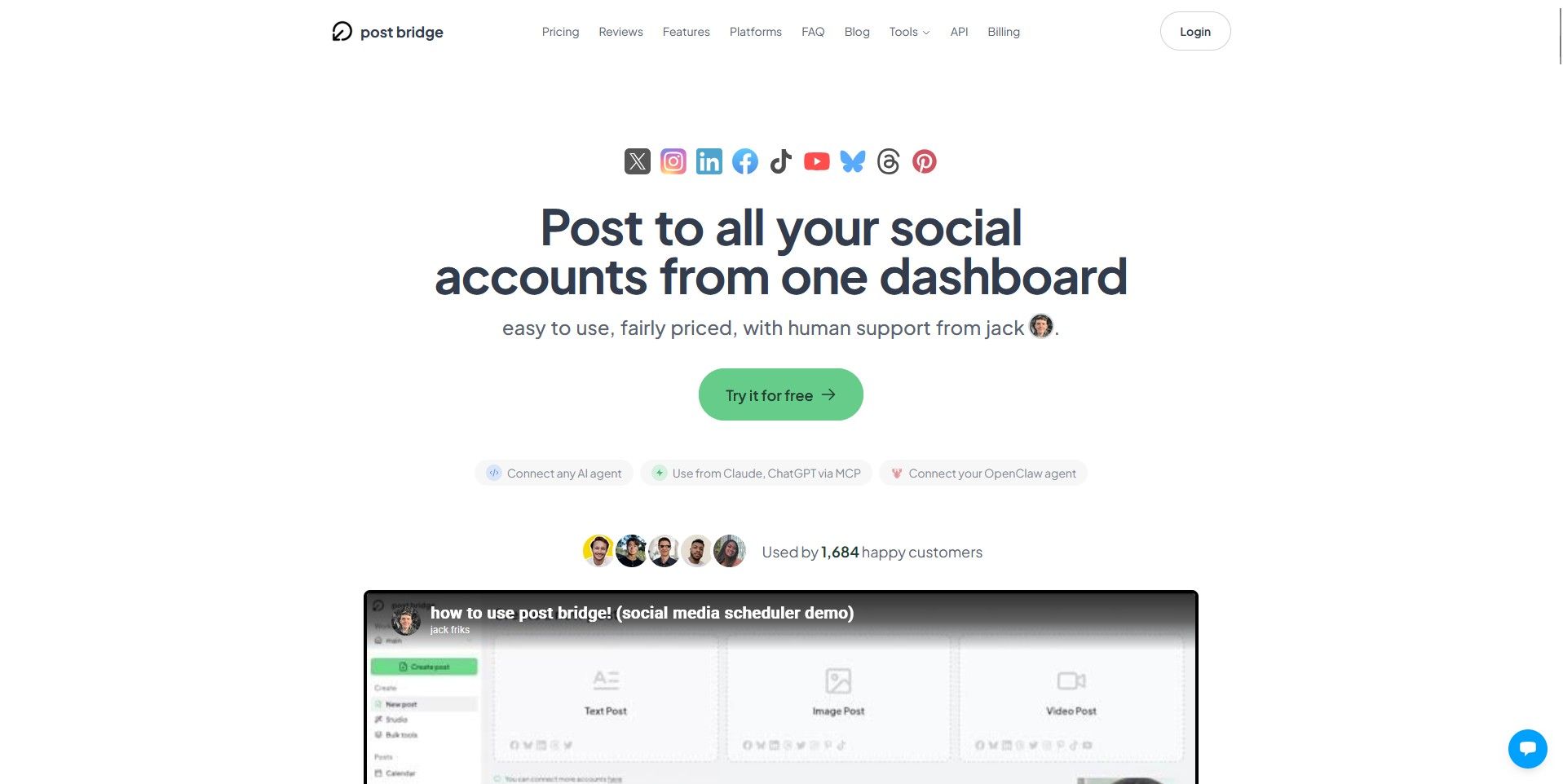 Because I was self-taught, I prioritized shipping speed over architectural perfection. I kept the stack incredibly lean and modern: Next.js for the framework, Supabase for the backend/database, Stripe for payments, Vercel for hosting, and Tailwind CSS for styling.
I used Cursor an AI-powered code editor to generate large portions of the logic rapidly. By using natural language prompts, I was able to build the MVP in a matter of weeks.
In a software landscape obsessed with building "10x better" products, I realized Post Bridge only needed to be exactly as good as it needed to be.
The Product Breakdown:
-
No Enterprise Bloat: I ignored team permissions and multi-tier approvals. It delivers 80–90% of what most solo creators need without the clutter.
-
The Content Studio: I built a drag-and-drop template builder right into the app. It uses proven viral formats (like a 2x2 image grid) so users can generate ready-to-post graphics instantly.
-
API & Reliability: I used database-level locking for the cron jobs to ensure posts never duplicated and went out reliably. I also added Developer API/MCP support so people can hook up their own AI agents.
The Go-to-Market Strategy: How did you get your first users?
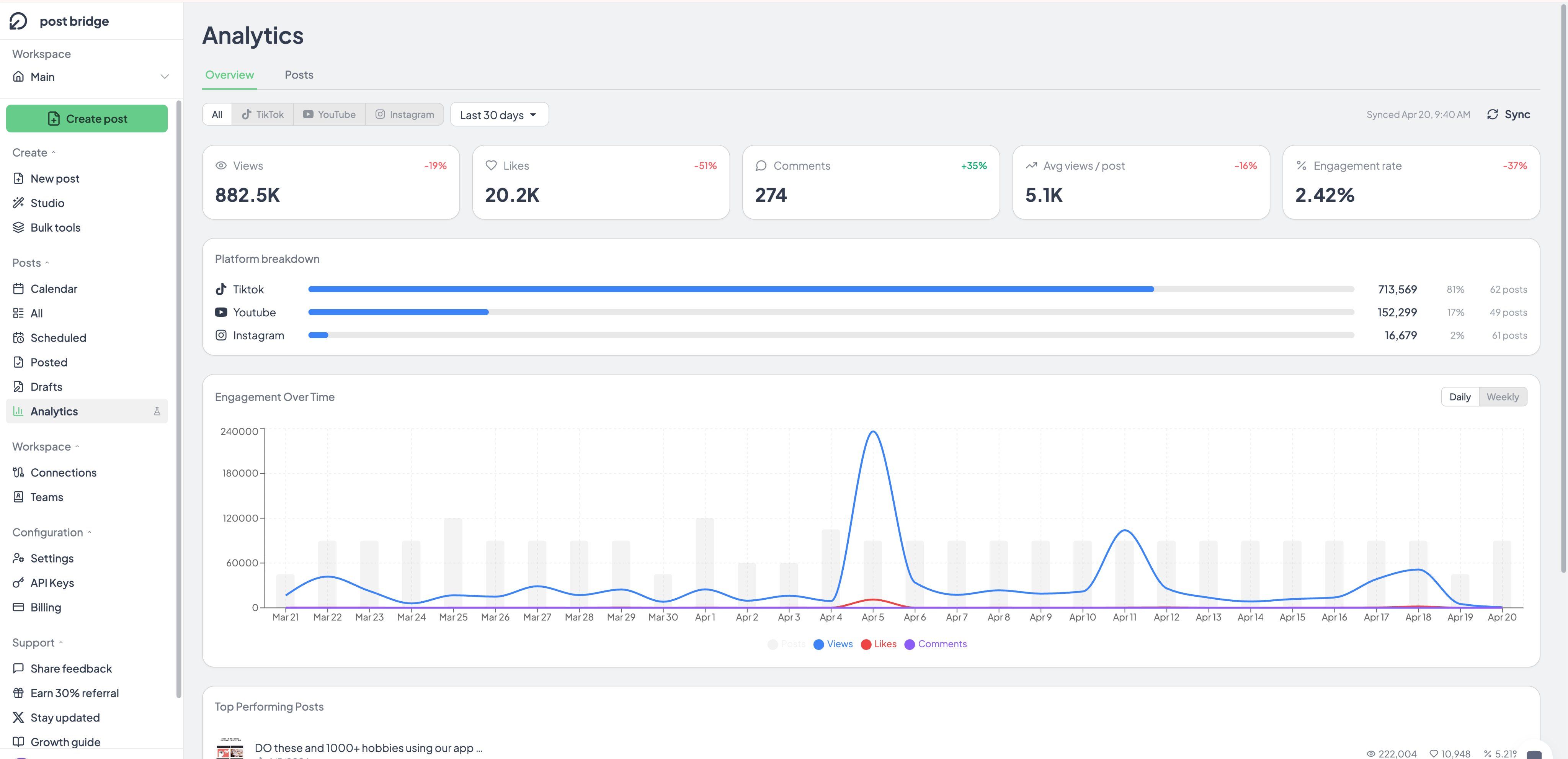 We went from zero in October 2024 to $7k–$11k MRR within 4 to 5 months, entirely bootstrapped with $0 spent on paid advertising.
My go-to-market strategy is based on Media-First Validation: The best way to validate a product is not by building it, but by testing if the media around it goes viral first.
Here is the exact organic playbook I used to scale my apps:
1. Build in Public + Transparency
I share everything on X/Twitter (@jackfriks) to an audience of over 117k followers. I post revenue screenshots, "day X of building" updates, and the raw realities of being a solo dev. This builds an authentic moat. People buy Post Bridge because they see me as a fellow builder, not a faceless corporation.
2. The "Show, Don't Tell" Principle
The most viral app content doesn't look like an ad. I used a 10-second video format where the app was just being used naturally in the background. People would naturally ask in the comments, "What app is this?" which spikes algorithmic engagement.
3. Dogfooding the Product
I used Post Bridge to grow my own apps. For example, I drove 30,000 downloads for my app Lovelee in a single month by spending just 1 hour a day scheduling 6 videos across platforms using Post Bridge. My product helps market itself, and it helps market my other apps, creating a massive flywheel.
Since launch, what has worked to attract and retain customers?
1. Accessible Pricing by Design
My pricing strategy is my biggest retention lever. We offer a Starter tier at ~$9/mo, and our Creator/Pro tiers sit at $18–$27/mo. Traditional business wisdom says to charge more, but I explicitly wanted to undercut the legacy competitors and capture the long tail of solo creators priced out by enterprise tools. The lower churn rate from an affordable, highly useful tool far outweighs the initial lower ACV.
2. Radical Execution Speed
My secondary app, Lovelee (a couples app), was built in a massive 5-day sprint using AI, shipped to the App Store, and made revenue within 24 hours. Showing that level of execution speed online builds massive trust with my audience.
3. Staying Solo & Low Overhead
I run this as a solo operation. The margins are incredibly high. By outsourcing global tax compliance to Merchants of Record and using AI to speed up my coding, I don't need to hire a massive team. I've moved out of the basement, I'm an "up and coming wife guy," and I manage to keep my life balanced by strictly time-boxing my deep work.
What advice do you have for other entrepreneurs who want to get started?
 1. Solve Your Own Pain First
If you experience a problem daily (like my 1-hour cross-posting nightmare), you understand the exact friction points better than any market research survey ever could. Scratch your own itch.
2. Validate with Media First
Before you spend 6 months coding a SaaS, make 10 TikToks or Reels talking about the problem your SaaS solves. If you can't get anyone to watch a 10-second video about the problem, getting them to pull out their credit card for the solution will be impossible.
3. Embrace "Vibe Coding" and Ship Fast
You don't need a CS degree or VC funding to win in 2026. Use AI tools like Cursor to translate your logic into code. Focus on core loops over architectural perfection. Ship the minimum viable solution, price it reasonably, and tell the world while using it yourself.
 (You can read more about my exact philosophy in my book, "You Were Built to Create Cool S**t", available on my site).