How a 15-Year-Old Built a $10K/Month AI Soccer Coach in 90 Days
 ## Hello! Who are you and what business did you start?
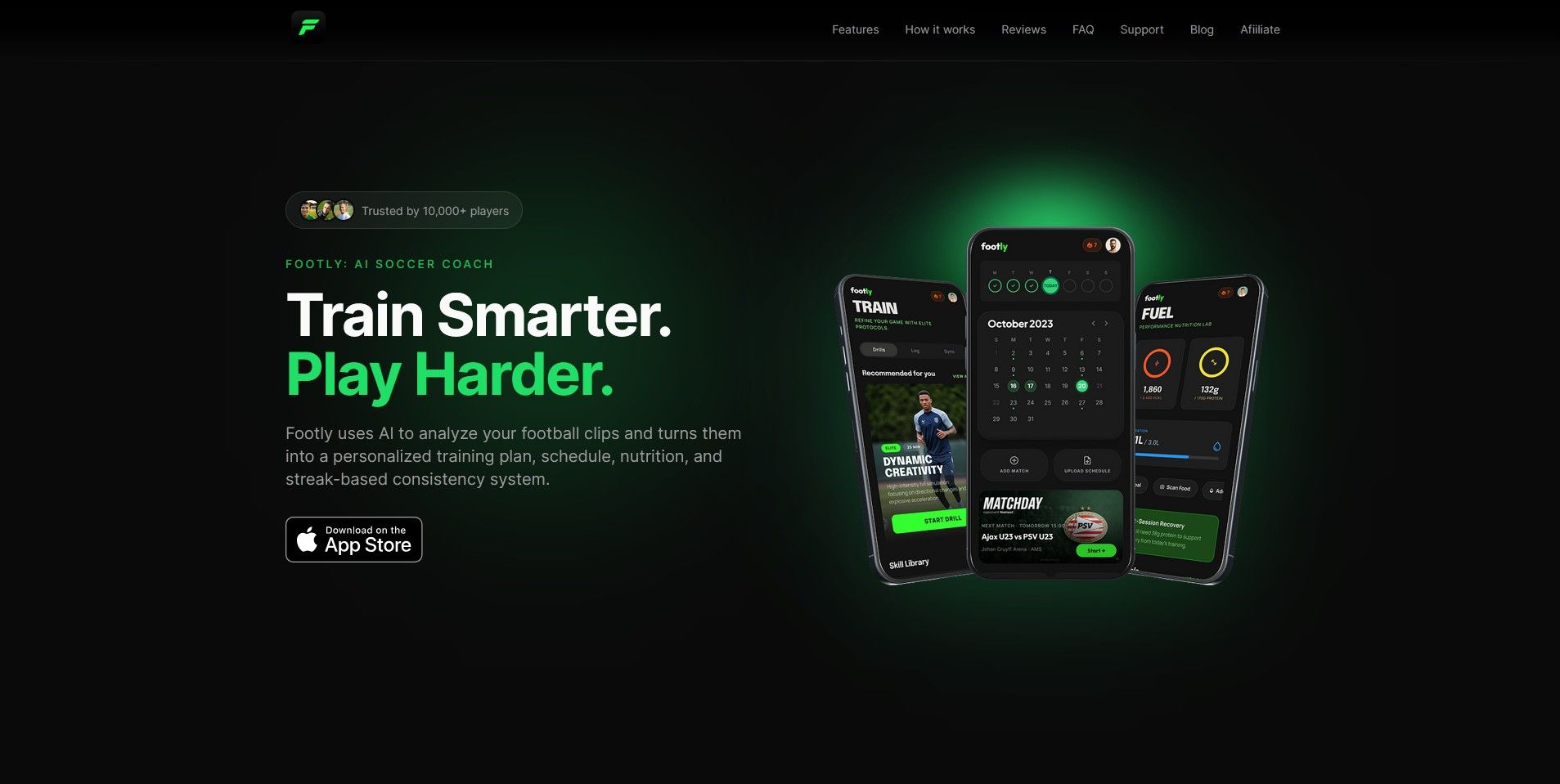
Hey! I’m Angel Stoevski, a 15-year-old entrepreneur and developer from North Macedonia. I am the founder behind Footly, an AI-powered soccer coach that lives right in your pocket.
Most soccer training apps out there are just generic libraries of YouTube-style drills. Footly is different. It uses AI to analyze user-uploaded video clips of their training or matches, providing real-time, frame-by-frame feedback on technique, positioning, and movement. Based on that analysis, the app generates a fully personalized training plan, schedule, and recovery guidance.
We launched recently, and as of our third month, we have crossed $10,000 in Monthly Recurring Revenue (MRR). We currently have over 10,000 players who have claimed their spots, logging over 50,000 sessions with a 92% improvement in training consistency.
Angel Stoevski
Founder · Footly
 North Macedonia
This story is compiled from public sources and presented in an interview format for a better reading experience.
What's your backstory and how did you come up with the idea?
I’ve been building digital products seriously since I was 9 years old. I always treated them as real business experiments rather than just hobbies.
When I was around 12, I built a game on Roblox that gained incredible organic traction, which I eventually sold for a $40,000 exit. That experience taught me the fundamentals of product-market fit and retention loops. After that, I dabbled in dropshipping (generating ~$15K revenue in 4 months) and ran a marketing agency scaling to ~$7K/month before exiting. Most recently, I built a productivity/habits app called Locked that hit $15,000 MRR in just 3 months.
While Locked had great acquisition, keeping users at scale was a challenge, which led me to step away and apply those lessons elsewhere.
The idea for Footly came from my own life. I play sports constantly—gym, tennis, padel, and football. If you're a serious soccer player (youth academy up to semi-pro) trying to train on your own outside of team practices, it's incredibly difficult to get objective feedback. You might record yourself, but you lack the expert eye to break down the footage.
I realized there was a massive gap for a product that offered academy-level, data-driven coaching for the individual player. I knew the domain deeply, which made every product decision much sharper.
Take us through the process of building the first version of your product.
 I build fast, but that speed comes with a messy reality.
The first version of Footly was, quite honestly, embarrassing. It had a basic video upload and rudimentary analysis, but the user experience was incredibly clunky.
The most painful part of the build process was the onboarding. We broke onboarding three times.
-
V1: We required users to upload a perfect video in a specific format before they could even see the value of the app. Drop-off rates were massive.
-
V2: We simplified the upload but forced users through an exhausting questionnaire about their goals, position, and fitness level. It felt like homework.
-
V3: We tried a "quick start" mode that skipped the questions, but the resulting training plans felt generic, which defeated the entire AI value proposition.
There were weeks where I genuinely wasn't sure if the app was going to go anywhere. But my experience with Locked taught me something crucial: acquisition is marketing, but retention is a product design problem.
I stopped focusing just on features and started obsessing over the behavioral architecture of the app. We built in streak-based habit loops, adaptive progressions, and visually engaging progress tracking so players felt the loss if they skipped a day.
Describe the process of launching the business.
We didn't rely on a single, explosive launch day. Instead, I heavily leveraged the "build in public" community on X (Twitter) alongside my co-founder Mihael Borchevski.
Initially, our content strategy completely flopped. I was trying different angles, comparing Footly to professional coaches, but it just wasn't clicking with the core football community.
The real turning point wasn't a marketing hack; it was a product signal. Real players started paying for it. When we finally dialed in the onboarding and the AI feedback, the value became undeniable. We started getting testimonials not just from casual fans, but from youth academy players and semi-pros. When players were telling us, "My coach asked what I've been doing differently, and it's just been following the training plans on this app," we knew we had achieved real problem-solution fit.
Since launch, what has worked to attract and retain customers?
 Getting to $10,000 MRR in three months without heavy paid ads required precision. If we relied on broad, spray-and-pray paid acquisition, it would have destroyed our margins.
Here is what actually drove our growth:
1. Targeted Influencer Strategy
Instead of paying massive lifestyle influencers, we targeted mid-tier football content creators who had highly engaged communities of actual players. For example, working with creators like Tom Harris to show authentic, real-world "before/after" content of skill improvements (like freekicks and shooting technique) provided massive social proof.
2. Product-Led Social Proof
Footly's core feature AI video analysis is inherently shareable. Players love posting their AI-driven breakdowns and progress charts on social media or in their team group chats. Every share acts as a highly targeted acquisition channel.
3. Focusing Obsessively on Streaks
We realized that for a fitness/sports app, breaking a streak is the enemy of MRR. By building out a smart calendar with reminders and highlighting "session history," players became hooked on their own consistency. This kept our churn low while our organic acquisition grew.
How are you doing today and what does the future look like?
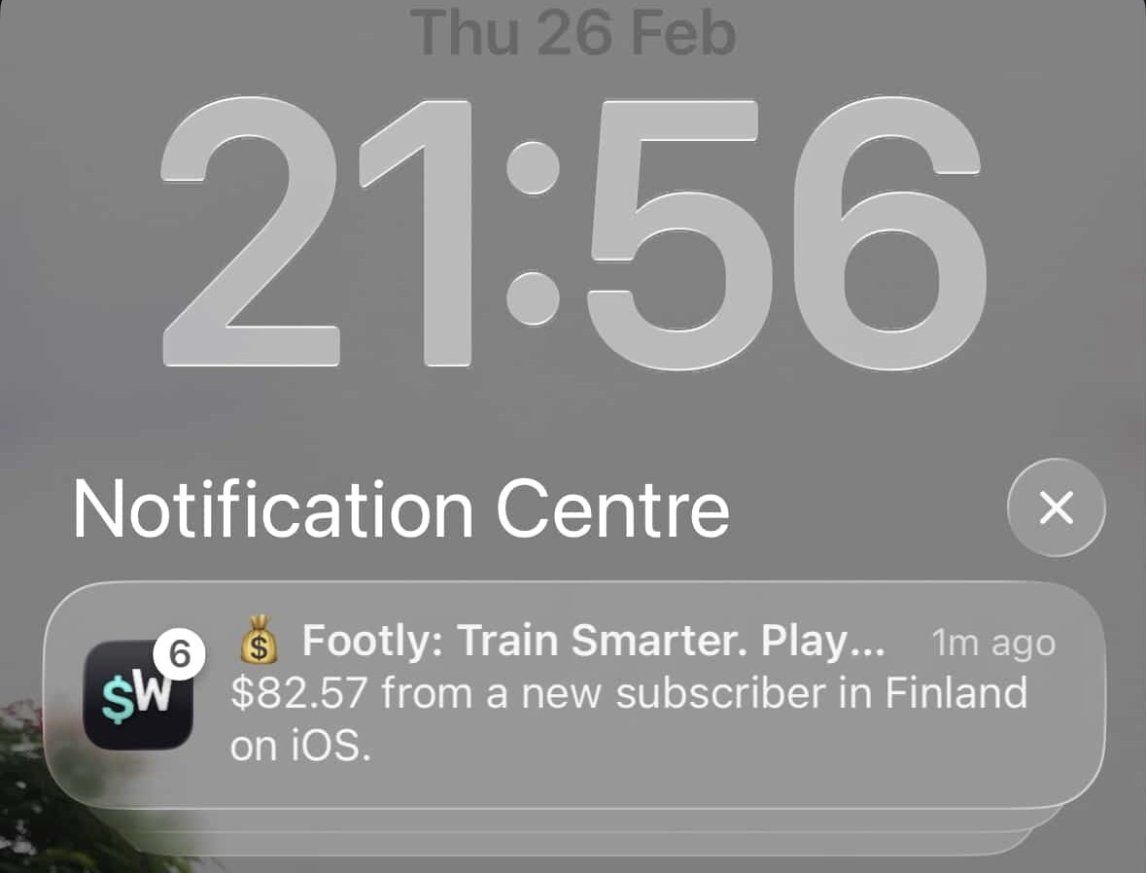
 Today, Footly is growing rapidly. We've crossed the $10K MRR mark and are aiming toward $20K MRR in the coming months based on our current momentum. We have over 10,000 players on the platform and incredibly strong product-market signals.
Because we aren't burning cash on broad paid ads, the economics of the business are very healthy.
Looking at the roadmap, we are going deeper into the AI capabilities. We want to expand our position-specific programming, introduce features for entire teams and coaches to use, and eventually secure partnerships directly with youth academies. This $10K MRR is just a milestone; it is absolutely not the endgame.
Through starting the business, have you learned anything particularly helpful or advantageous?
 1. Your first version should be embarrassing.
If you wait until the product is perfect, you've launched too late. The only way we fixed our terrible onboarding was by putting it in front of users and watching them fail to use it.
2. Build where you are the target user.
Because I play sports constantly, I understood the exact pain points of training alone. Deep domain insight sharpens every single decision you make and prevents you from building features nobody actually wants.
3. Know when to walk away.
People look at my past projects (the agency, the dropshipping, the Locked app) and see successes, but I also knew exactly when to exit or pivot from them. If the unit economics or the retention mechanics aren't there at scale, don't be afraid to take your lessons and apply them to a better vehicle.
Advice for other entrepreneurs who want to get started or are just starting out?
Obsess over retention from day one. It is so easy to get caught up in the dopamine hit of marketing, acquiring new users, and watching your download numbers go up. But if your product is a leaky bucket, it doesn't matter.
Validate your idea in a space you know intimately. Use targeted, proof-based distribution to get your first 100 users. Ship fast, iterate publicly, and be brutally honest with yourself about the messy weeks. Real traction feels like enough when users are actually getting value and pulling out their credit cards to pay you for it.