How a Forgotten Side Project Got 700 Users
TL;DR: Discover how a solo developer built JobBuddy, an AI cover letter and resume tool, growing it to over 10,000 users and $1,000 MRR in just 18 months. By launching for free on Reddit and focusing on solving a painful problem, he turned a simple side project into a profitable SaaS business. Read on to learn his exact strategy for steady growth without viral marketing or VC funding.
Josh
Founder · JobBuddy
 United Kingdom
This story is compiled from public sources and presented in an interview format for a better reading experience.
Hello! Who are you and what business did you start?
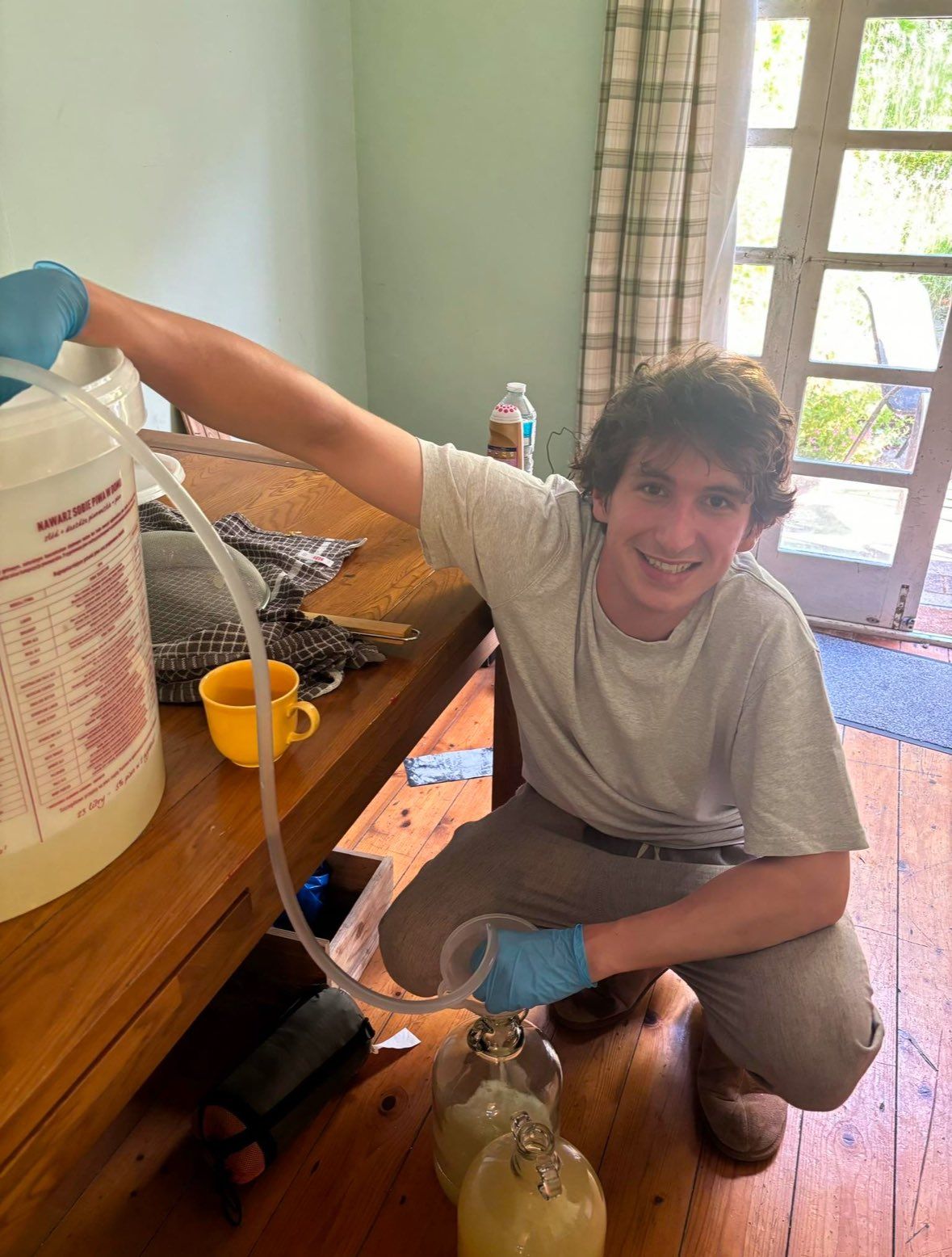
Hi! I’m Josh (@hellwaiver on X/Twitter), a software developer based in the UK, and the indie hacker behind JobBuddy (jobbuddytech.com).
My bio online is simple: "just keep shipping." I am a huge believer in the power of quiet building. I do not have a massive social media audience, I do not use viral growth hacks, and I am definitely not an overnight success story. I actually work a full-time job while steadily growing my SaaS (Software as a Service) business on the side.
JobBuddy is an AI-powered job search tool designed to make the painful process of job applications so much easier. Instead of spending hours staring at a blank screen, job seekers can upload their resumes, paste a job description URL, and instantly generate highly personalized, ATS-optimized cover letters that look ready to send. Over time, we also added tools for interview preparation and resume optimization.
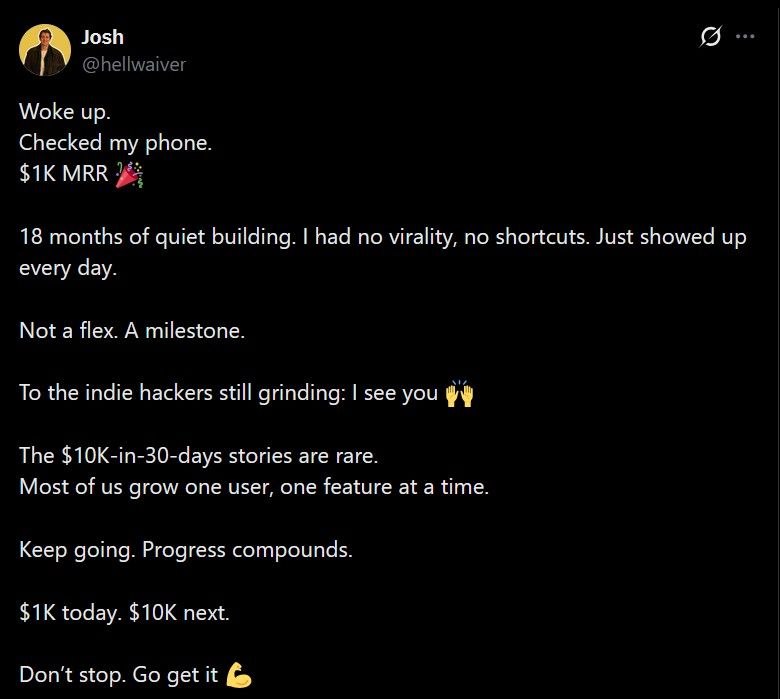
Recently, after about 18 months of focused, quiet effort, I hit a massive milestone: $1,000 in Monthly Recurring Revenue (MRR). We now have over 10,000 total users and more than 150 paying subscribers. We operate on a freemium model. This means we offer basic tools for free so users can see the magic, with paid tiers for unlimited access and advanced AI models.
What's your backstory and how did you come up with the idea?
Like many good software products, JobBuddy started because I watched someone else suffer through a terrible process.
A good friend of mine was deep in the trenches of the job hunt. I watched them waste hours painstakingly writing and editing custom cover letters for every single application they sent out. After all that hard work, they were usually met with complete radio silence from the companies.
If you have ever applied for jobs, you know how soul-crushing traditional job hunting is. Tailoring your resume and cover letter for every single role is tedious. At the time, early AI tools (like the very first versions of ChatGPT) were not much help. They produced robotic, inconsistent text that lacked professional polish and often made things up.
I did not sit down and do a massive market research project. I did not write a 50-page business plan. I just had a simple idea: What if I built a simple AI tool that takes a user’s specific resume, combines it with the exact job details, and generates a high-quality, perfectly tailored cover letter?
It was never meant to be a business. It started as a helpful side project to solve a painful, recurring problem for one person. But it quickly proved valuable to many.
Take us through the process of building the first version.
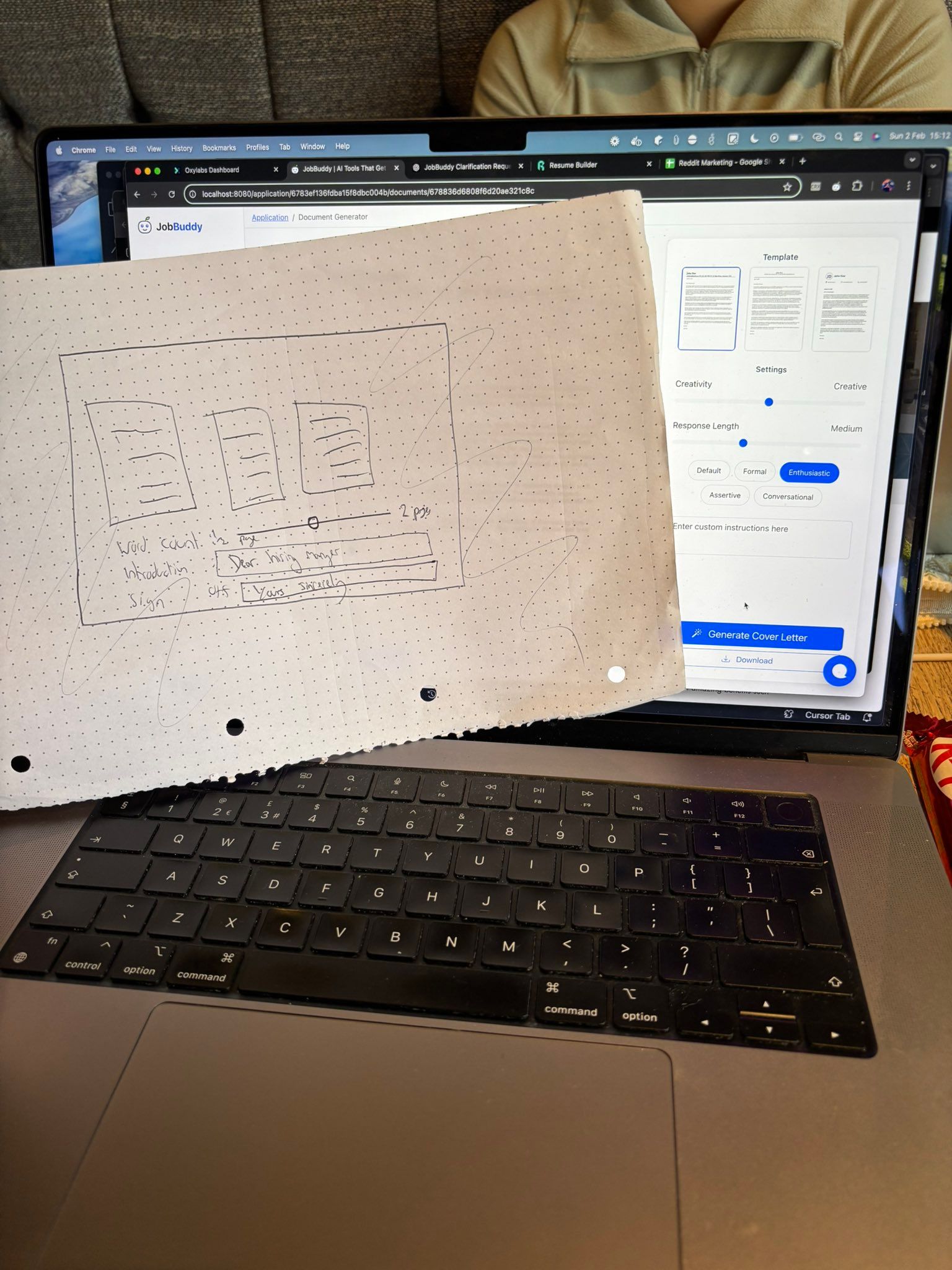 The early days were all about getting the core product right. I built the first version on top of OpenAI’s GPT-3.5 model.
It was a major struggle at first. The AI could be very unpredictable. Sometimes it would hallucinate (make up facts) or write long, unreadable paragraphs that no hiring manager would ever want to read.
Because of this, I focused almost entirely on the prompt engineering. I wanted the AI to act like a professional career coach. It needed to highlight the user's real, transferable skills and match them perfectly to the job description they provided.
My ultimate goal was output quality. I wanted people to read our generated cover letters and think, "Damn, I’d hire me!"
I did not worry about competing purely on price, and I did not waste time trying to build the fanciest user interface (UI). I built it using a modern web stack, specifically using Wasp and OpenSaaS templates to move quickly. I focused on making it a simple, free web app. You pasted your info, and you got a great document back. That was it.
Describe the process of launching and how you got your first customers.
 Initial Launch (Early 2023):
I did not have a big launch strategy. I did not have an email list of thousands of people. I just posted the free tool on Reddit, specifically in communities where job seekers hang out to share tips, like r/jobsearchhacks and r/jobs.
My pitch was incredibly simple and honest: "Hey guys, I built this free tool to help write cover letters, let me know what you think."
The Set-and-Forget Surprise:
Here is where the story gets really interesting. After that initial Reddit post, I got busy with my full-time day job and other life events. I essentially left JobBuddy completely alone for about six months. I did no marketing, I pushed no updates, and I did not even check the metrics.
When I finally remembered to log in and check the database later that year, I was shocked. I had 700 active users.
This was pure, organic word-of-mouth growth. Job seekers were sharing a tool with each other because it actually delivered real value. This six-month "set and forget" phase fully validated the idea. It proved that people needed this, and I did not have to force the growth.
The Monetization Pivot & The "Buy Me a Coffee" Mistake
Having 700 users is amazing, but running AI models is not free. The server costs and OpenAI API fees were adding up quickly. I needed to monetize the platform, but I was scared. I had imposter syndrome.
The Mistake:
My very first attempt at making money was adding a simple "Buy Me a Coffee" donation button to the site. It was a complete failure. After thousands of users generated documents, I made about $5 total.
This is a huge trap for indie hackers. If you provide real value that saves people time or helps them make money (like getting a job), you need to charge real money for it. Donations do not build a sustainable business.
The Pivot to a Real SaaS:
I decided it was time to introduce paid subscription tiers. But I did not just throw up a paywall and lock users out. I upgraded the entire product.
I added user accounts so people could save their work. I upgraded the AI to better, faster models. Most importantly, I built premium features that saved even more time: Word and PDF document exports with professional templates, resume keyword optimization to beat the ATS (Applicant Tracking Systems), and even interview practice tools.
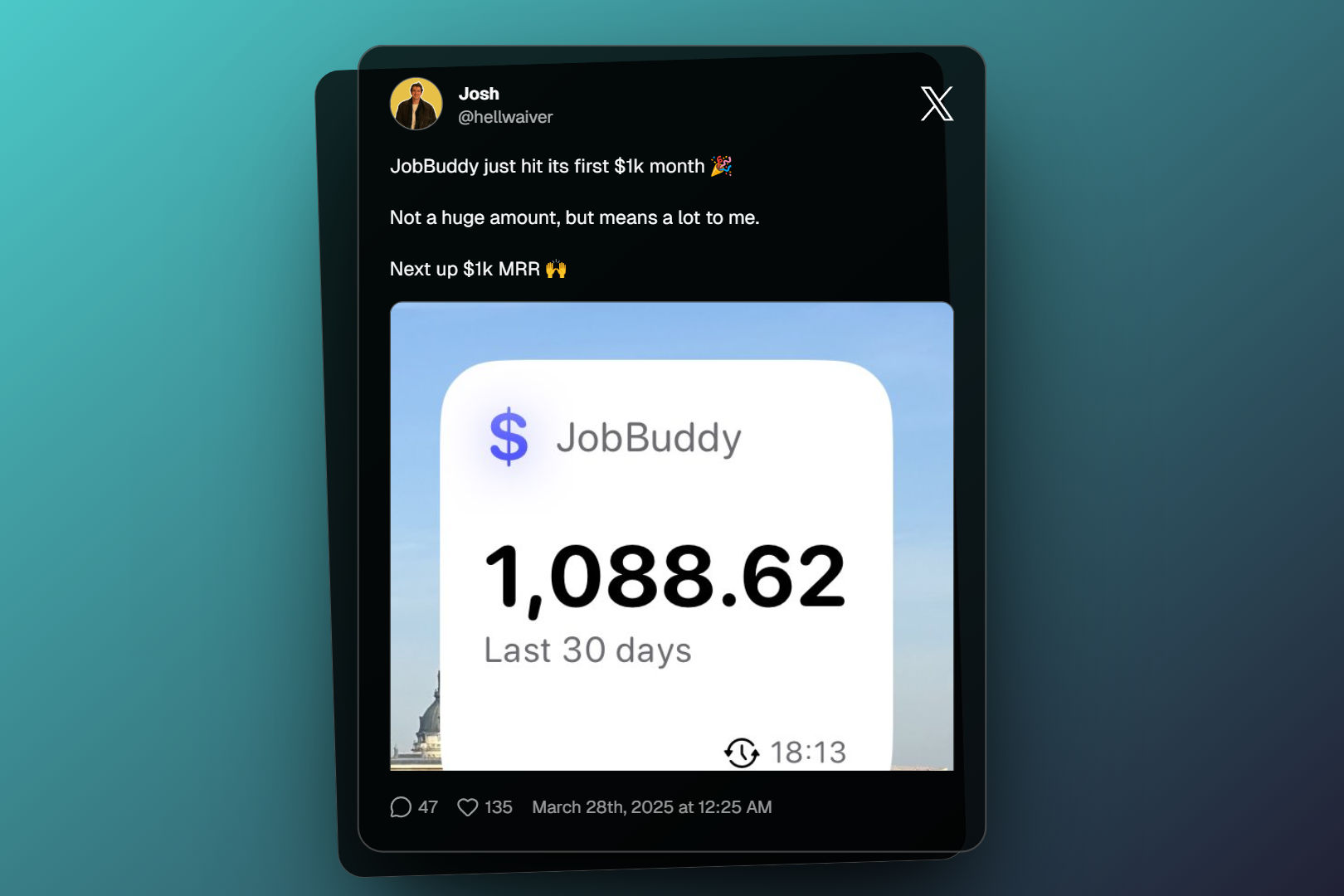
Because the free version proved the value it showed users the "magic" of a perfect cover letter they were willing to pay for the advanced features. That is when I hit my first 100 paying users. The revenue quickly scaled to $800 MRR, and in April 2025, I finally crossed the massive $1,000 MRR mark.
Customer Acquisition Strategy: How We Grow
 My growth strategy is not about virality. It is about quiet, consistent building and showing up every day. Here are the exact growth channels that work for JobBuddy:
1. Organic Word-of-Mouth and SEO (The Core Engine)
When someone uses JobBuddy, saves three hours on applications, and lands an interview, they tell their friends. It is that simple. We also get a lot of steady traffic from Search Engine Optimization (SEO). People searching for "AI cover letter generator" or "how to write a cover letter fast" find our tools organically.
2. Authentic Reddit and X (Twitter) Sharing
Reddit is still a great channel for us. Job seekers talk to each other there. I also build in public on X. I share my journey honestly I don't post high-volume hype or fake numbers. I share feature updates, small wins, and honest milestones. This authenticity attracts other builders who support the product, as well as potential users.
3. Directory Submissions for Backlinks
To build our SEO strength and get initial traction early on, I used tools like SubmitSaaS. This helped me get JobBuddy listed in over 100 different AI and startup directories. It gave us great backlinks that pushed us higher in Google search results.
Obsessing Over Output Quality and UX Friction
Retention keeping your customers paying month after month comes entirely from results. If the tool saves them hours and gets them job interviews, they stay subscribed.
I focus heavily on the small things that make outputs "send-ready." For example, I added professional templates so the document looks good immediately. I added URL auto-fill, so a user can just paste a link to a job board, and the AI grabs all the details automatically.
Listening to the Data:
I use a tool called Microsoft Clarity to watch how users interact with the site. Early on, I noticed users "rage-clicking" (clicking rapidly in frustration) because they were trying to highlight and copy the generated text. Because I saw this data, I immediately added a simple one-click "Copy to Clipboard" button.
I also listen to support feedback closely. If a user emails me on their birthday having a payment issue, I fix it immediately. These insights drive exactly what features I build next. You do not need to guess what to build; your users will tell you.
The Business Reality: Revenue Model and Balance
Today, JobBuddy operates on a standard SaaS model. We offer a free tier so users can test the product. If they want unlimited generation and premium features, we offer paid tiers at $14.99 and $49.99 per month.
I am incredibly transparent about my life: I still work a full-time job. The SaaS is a side business that is scaling up.
I actually prefer this balanced indie hacker life. The steady income from my daily employment removes the stress of needing my startup to pay my rent right away. It funds the server costs and allows JobBuddy to grow organically at its own pace. I am currently writing this from the French Alps, celebrating hitting $1K MRR while still working my normal job. It is a great balance.
What Have You Learned? The "Secret Sauce"
If I had to share my core strategies and "secrets" from the last 18 months of building, they would be:
-
Solve a painful, recurring problem: Job seekers apply for jobs constantly. It is an anxious, terrible process. If you can ease that anxiety, you have a valuable product. Validate your idea by helping just one person first.
-
Do not undersell yourself charge for value: The "Buy Me a Coffee" button does not build a business. Once the value of your product is proven, do not be afraid to charge real money. If you solve a real pain, people will happily pay.
-
Listen to users over your own assumptions: Your users will tell you what they need, often through their behavior. Use analytics tools like Clarity to see where they get stuck, and fix those exact spots.
-
Quiet consistency beats viral hype: 18 months of showing up daily matters so much more than one viral launch on Product Hunt. Progress compounds. The "$10K-in-30-days" stories you see online are incredibly rare. Focus on getting one user, and building one feature at a time.
-
Keep it simple initially: You do not need a complex, dark-mode dashboard on day one. Focus on the core problem and make the main feature perfect. Improve it daily.
Current Status & Future Plans
Today, I’m thrilled to have crossed $1K MRR, and I'm aiming for $10K MRR this year.
I am currently working on a complete UI overhaul to make the site look even better. I am adding advanced resume building tools. Most importantly, I am working on integrating advanced reasoning AI tiers (like OpenAI's new o1-preview) so the cover letters are even more strategic and human-like.
I also have another project in the works called RoastMyLandingPage, because I believe in stacking multiple projects.
JobBuddy proves you don’t need a huge social media following or millions in VC funding to build a real business online. A genuine problem, combined with solid execution and stubborn persistence, will always win. This is the realistic path most successful solo builders take—one feature, one happy user, one better day at a time. Just keep shipping.
Where can we go to learn more?
-
Website: jobbuddytech.com
-
X / Twitter: @hellwaiver - Come say hi!
-
Reddit: I am active in job communities sharing updates and chatting with users.