How I Built a $1.6K MRR SaaS After Quitting My 9–5
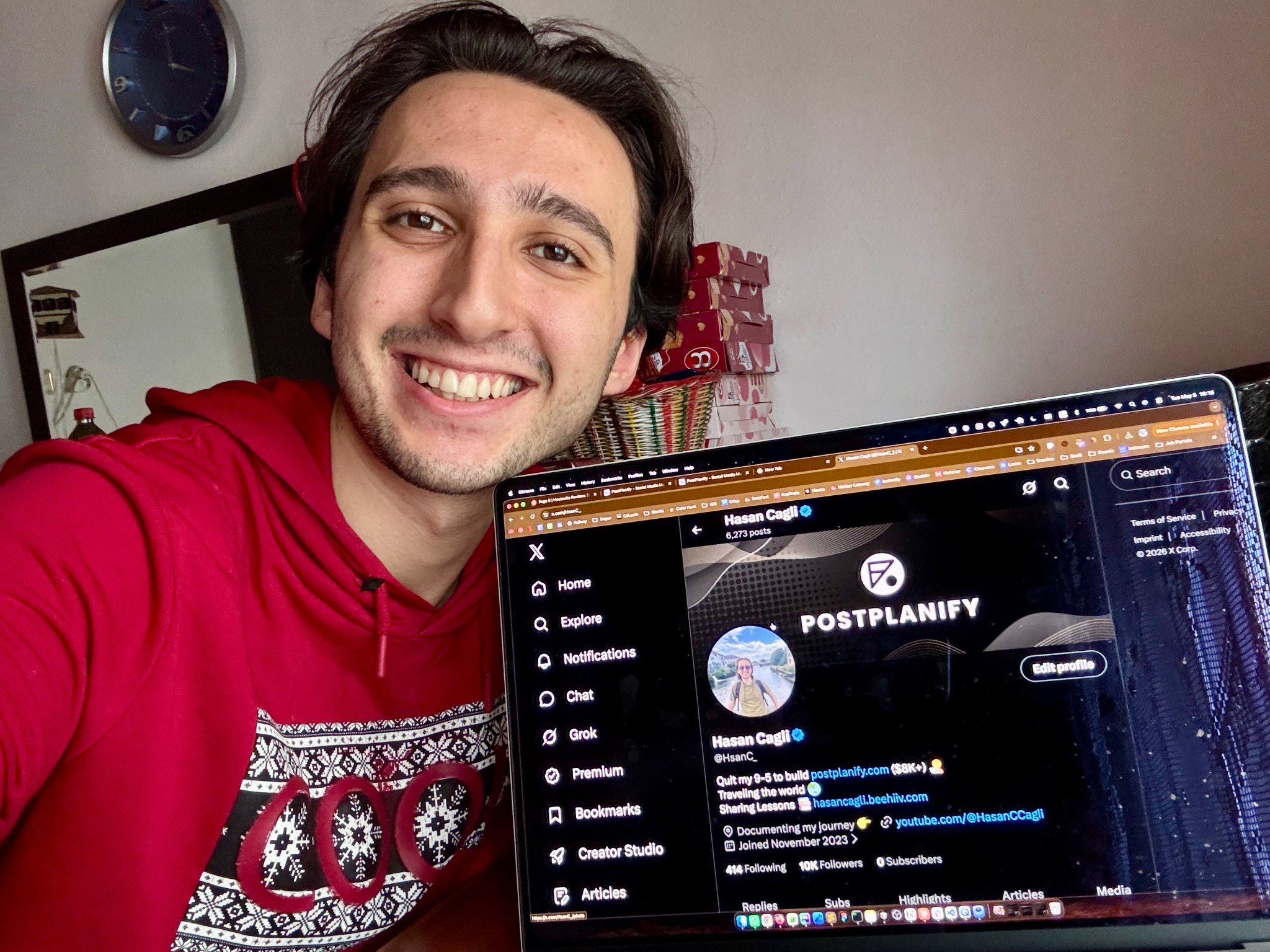
TL;DR: Hasan Cagli quit his 9-to-5 job to build PostPlanify, a social media scheduling platform that reached over $1,600 in monthly recurring revenue (MRR) without any investor funding. By ditching expensive "per-seat" pricing, he created an affordable, all-in-one tool for agencies and teams. He grew his business entirely in public, using raw transparency on X (Twitter), value-first Reddit posts, and SEO to attract a loyal customer base.
Hello! Who are you and what business did you start?
Hi everyone! I’m Hasan Cagli, a solo software engineer and indie founder. In 2025, I took a massive leap: I quit my secure 9-to-5 job to build software products completely in public on X (formerly Twitter).
The main product I spend my time on today is PostPlanify. It is a social media management platform that helps creators, small teams, and marketing agencies schedule their content across 10 different platforms (like X, LinkedIn, Instagram, TikTok, and even Google My Business) from one single dashboard.
The biggest thing that makes PostPlanify different from giants like Hootsuite or Buffer is the pricing. Big companies charge you "per seat," meaning every time you add a team member or a client to the software, your bill goes up. I completely threw that model out the window. We charge a simple, flat monthly fee with unlimited team members.
Right now, PostPlanify is making over $1,600 in MRR (Monthly Recurring Revenue, which means the reliable income that comes in automatically every single month). We have over 1,800 total users, and the platform publishes thousands of posts for users in over 30 countries. Best of all? I built it alone, without a single dollar of outside investor funding.
What's your backstory and how did you come up with the idea?
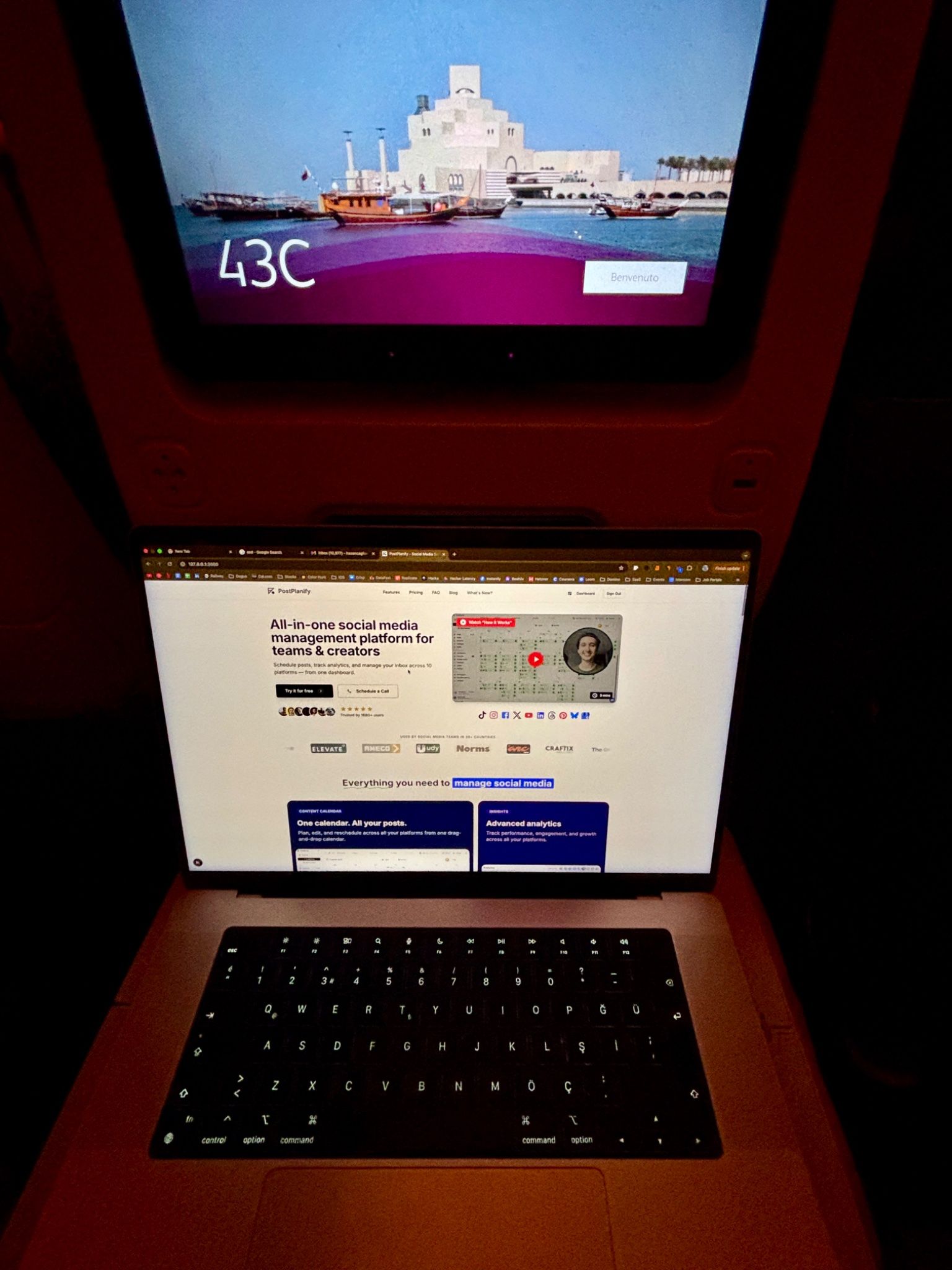 I have an engineering background, having studied at Doğuş University, but I’ve always been drawn to solving everyday business problems.
Before PostPlanify, I was trying to grow my own personal brand online. I was creating videos and posts, but I quickly realized a terrible truth: publishing the content was taking me longer than actually creating it!
Think about it. If you make one video, you have to download it, open TikTok, write a caption, and post it. Then you open Instagram Reels, write a slightly different caption, and post it. Then you go to YouTube Shorts, then X, then LinkedIn. It was a 30-minute, mind-numbing chore just to press "publish" on a single piece of content.
I looked at the existing tools out there, and they were either incredibly confusing with dozens of features I didn't need, or they were ridiculously expensive for a solo creator or a small agency. I saw a huge gap. I knew I could build something simpler, cleaner, and fairer. I wanted a tool where I could connect Canva directly, use AI to help write the captions, and click one button to schedule it everywhere.
So, I decided to just build it myself.
Take us through the process of building the first version.
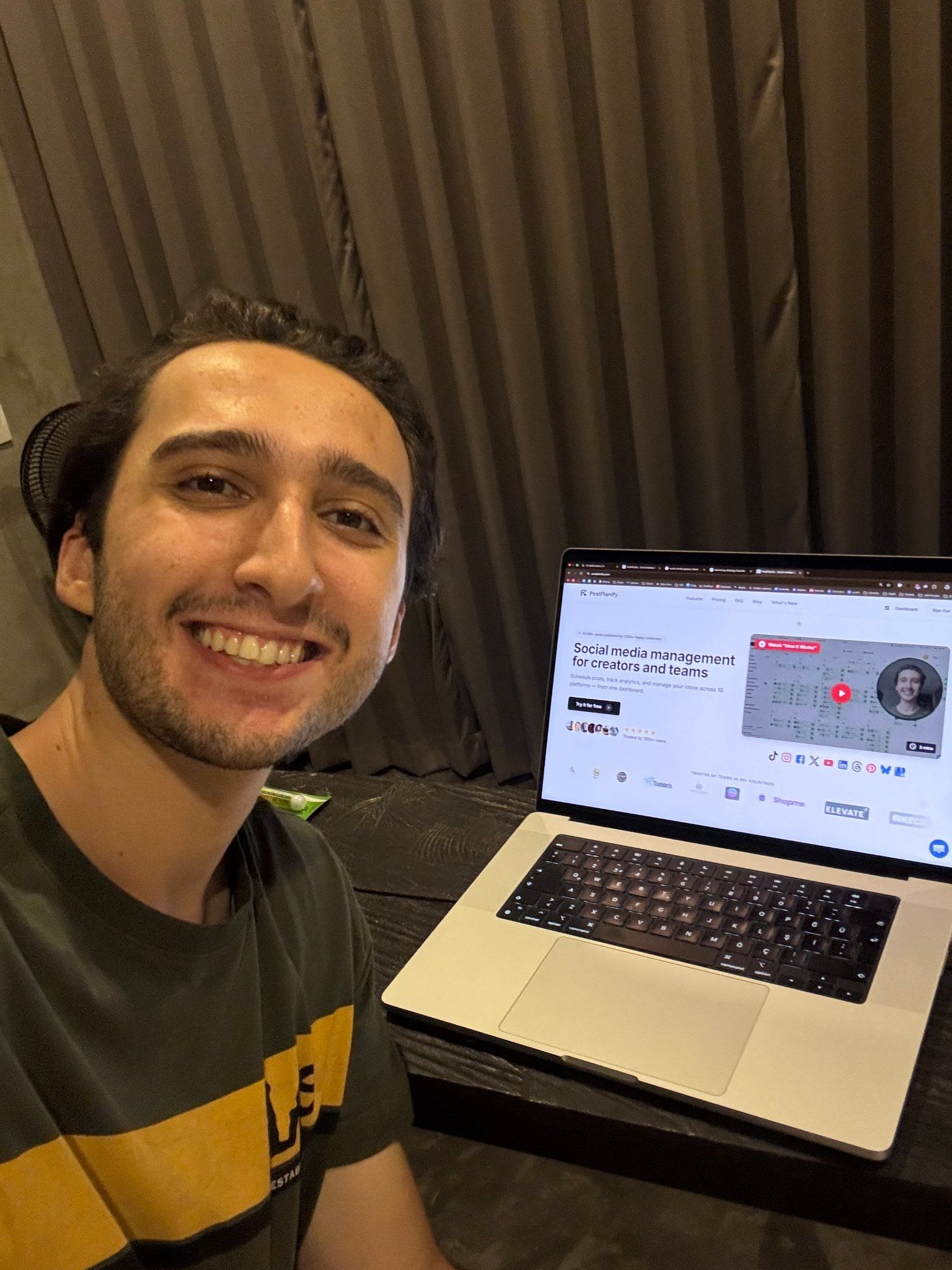 Since I am a solo founder, speed is my biggest weapon. I can't spend a year building something in secret only to find out nobody wants it.
I built the very first version of PostPlanify in just about two months, working nights and weekends. In my own words to my followers early on: "I developed the application I named PostPlanify alone in nearly 2 months design, backend, frontend, database, everything belongs to me."
I kept the technology stack very modern but lean. If you are curious about the tech:
-
Frontend (What the user sees): Next.js and Tailwind CSS (makes it look pretty and load fast).
-
Backend (The brain): Node.js and a PostgreSQL database.
-
Integrations: Official connections to the Canva API, plus Meta, TikTok, LinkedIn, X, and YouTube.
-
AI: OpenAI’s systems to help generate captions.
-
Money: Stripe to handle the subscriptions safely.
The number one rule I followed was: Simplicity always wins. The core feature scheduling a post had to work flawlessly before I added anything else. If a scheduling app fails to post your tweet at 9:00 AM like it promised, you lose trust instantly. I made sure the foundation was rock solid.
How did you validate the idea and get your first paying customers?
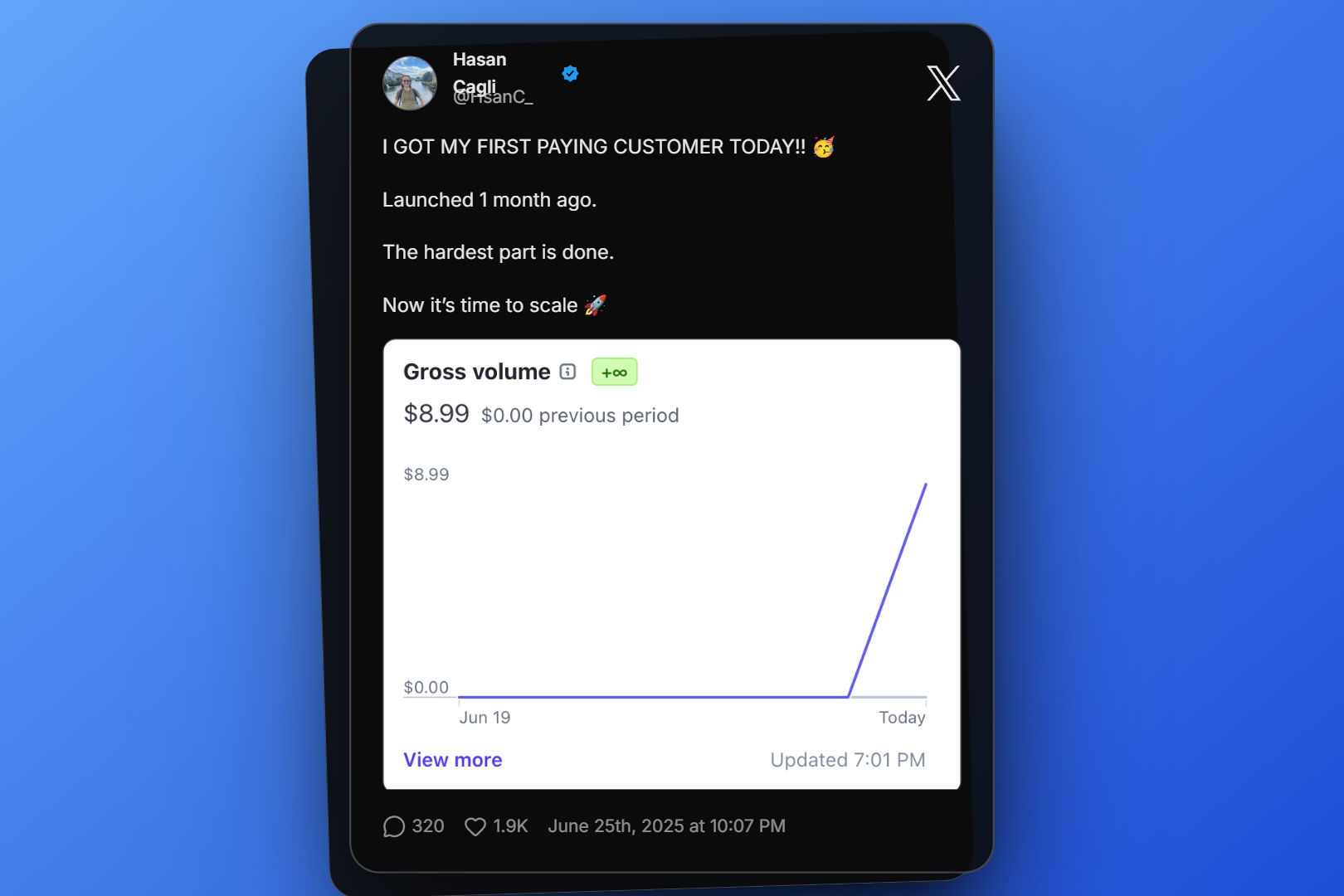 The "build it and they will come" idea is a myth. You can build the best software in the world, but if nobody knows it exists, you will make zero dollars.
I used a strategy called "Building in Public." Long before the software was finished, I started talking about it on X. I shared screenshots of the design. I asked people what annoyed them about their current scheduling tools. I even shared the bugs I was struggling to fix.
This did two things: First, it acted as validation. When people replied saying, "Oh my gosh, I need this right now," I knew I was on the right track. Second, it built a loyal audience.
When I finally launched the basic version on Product Hunt and Hacker News (websites where people share new software), I already had a small crowd cheering me on.
My very first paying users came directly from organic posts on X and Reddit. I reached out to people who were complaining about social media management, showed them my tool, and gave them a personal demo. Because I was just a regular guy solving a real problem not a faceless corporation people trusted me enough to pull out their credit cards. Recently, we even landed our first $1,000/year annual customer, which was an incredible validation that businesses are willing to invest heavily in this tool.
What is your exact strategy for getting customers today? (The Secret Sauce)
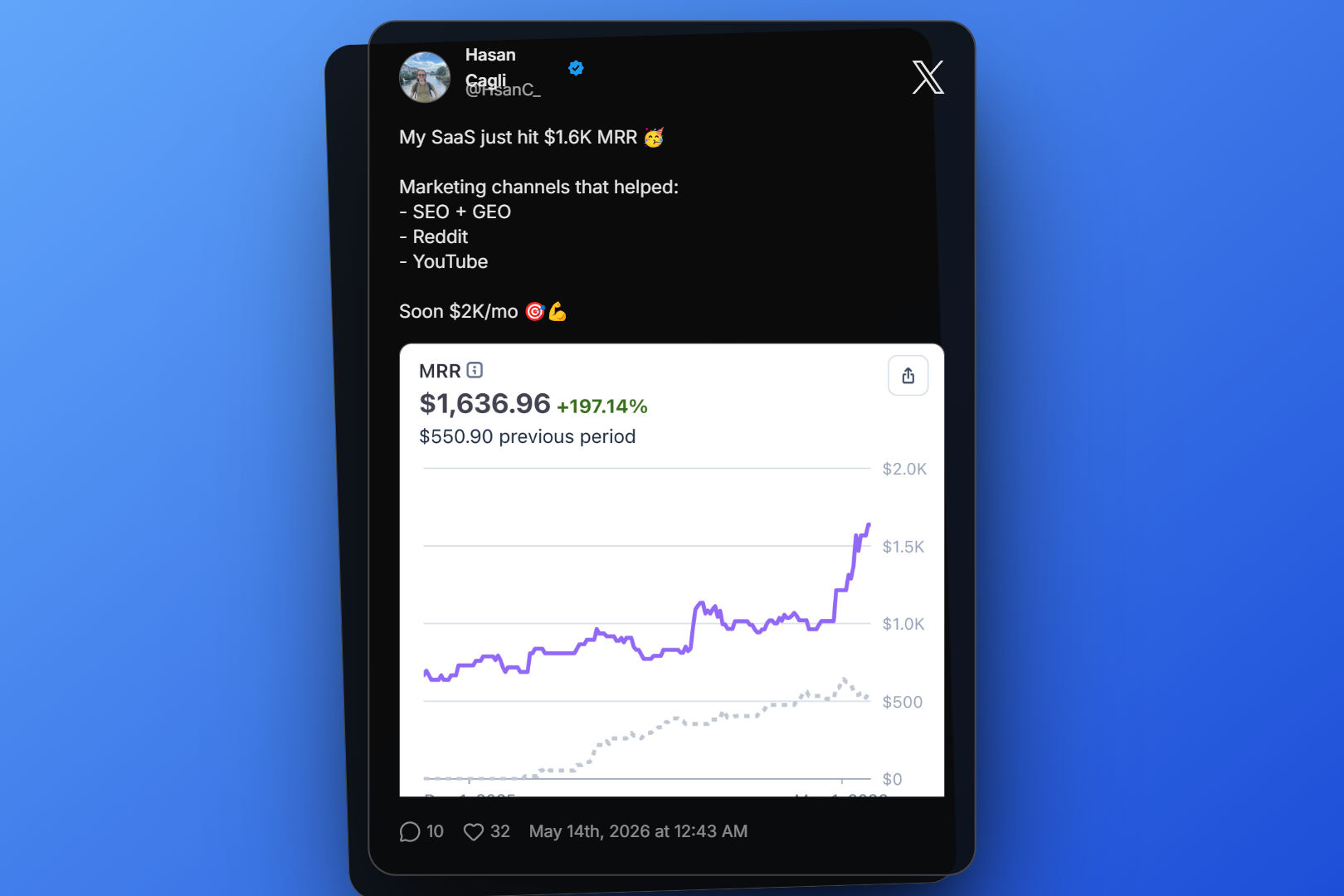 Getting the first 10 customers requires manual hustle, but to grow to $1.6K MRR and beyond, you need systems. Today, my customer acquisition is a powerful three-part machine:
1. SEO + GEO (Owning the Search Engines)
SEO stands for Search Engine Optimization. When someone goes to Google and types "Hootsuite alternative," I want my website to show up first. To do this, I write highly detailed, honest blog posts comparing PostPlanify to big competitors.
But I also use something newer called GEO (Generative Engine Optimization). Today, millions of people ask AI bots like ChatGPT or Perplexity for software recommendations. To make sure ChatGPT recommends my software, I structure my website perfectly. I use clear headings, bullet points, and data-rich tables. AI bots love structured data, so they read my site and confidently recommend PostPlanify to their users.
2. The Reddit "Value-First" Playbook
Reddit can be a goldmine, but redditors hate ads. If you just drop a link to your product, you will get banned. My secret here is simple: I find communities like r/SaaS or r/marketing where people are asking for help. I write a massive, helpful response sharing my exact strategies or solving their problem for free. I don't even mention my software until the very last sentence, and only if it naturally makes sense. Because I gave them so much free value first, they happily click my link.
3. YouTube (The Long-Term Brand)
I started a YouTube channel documenting my journey. I make videos showing exactly how I got my first 10 paying users, or how I grew my revenue. While X is great for quick updates, YouTube creates deep trust. When someone watches a 10-minute video of me explaining my business, they feel like they know me. It drives highly qualified signups and demo bookings.
What were your biggest mistakes, and what did you learn from them?
 It definitely hasn't been a straight line to success. My biggest mistake early on almost killed the business: I attracted the wrong customers, which led to terrible churn.
"Churn" is the nightmare word for software businesses. It’s when a customer pays you for one month, and then cancels. Early on, my churn rate was way too high.
Why? Because I was targeting everyday consumers (B2C) and solo hobbyists. A hobbyist might buy a scheduling tool for a month to try and go viral, fail, and then cancel their subscription to save $20.
I had to pivot hard. I realized that Marketing Agencies (B2B) are the perfect customers. An agency manages social media for 10 different dentists and plumbers. They need a scheduling tool to survive. It is a business expense for them.
Once I realized this, I changed the product. I added features only agencies care about: separate workspaces for different clients, approval workflows (so the client can approve a post before it goes live), and beautiful white-label PDF analytics reports they can hand to their clients.
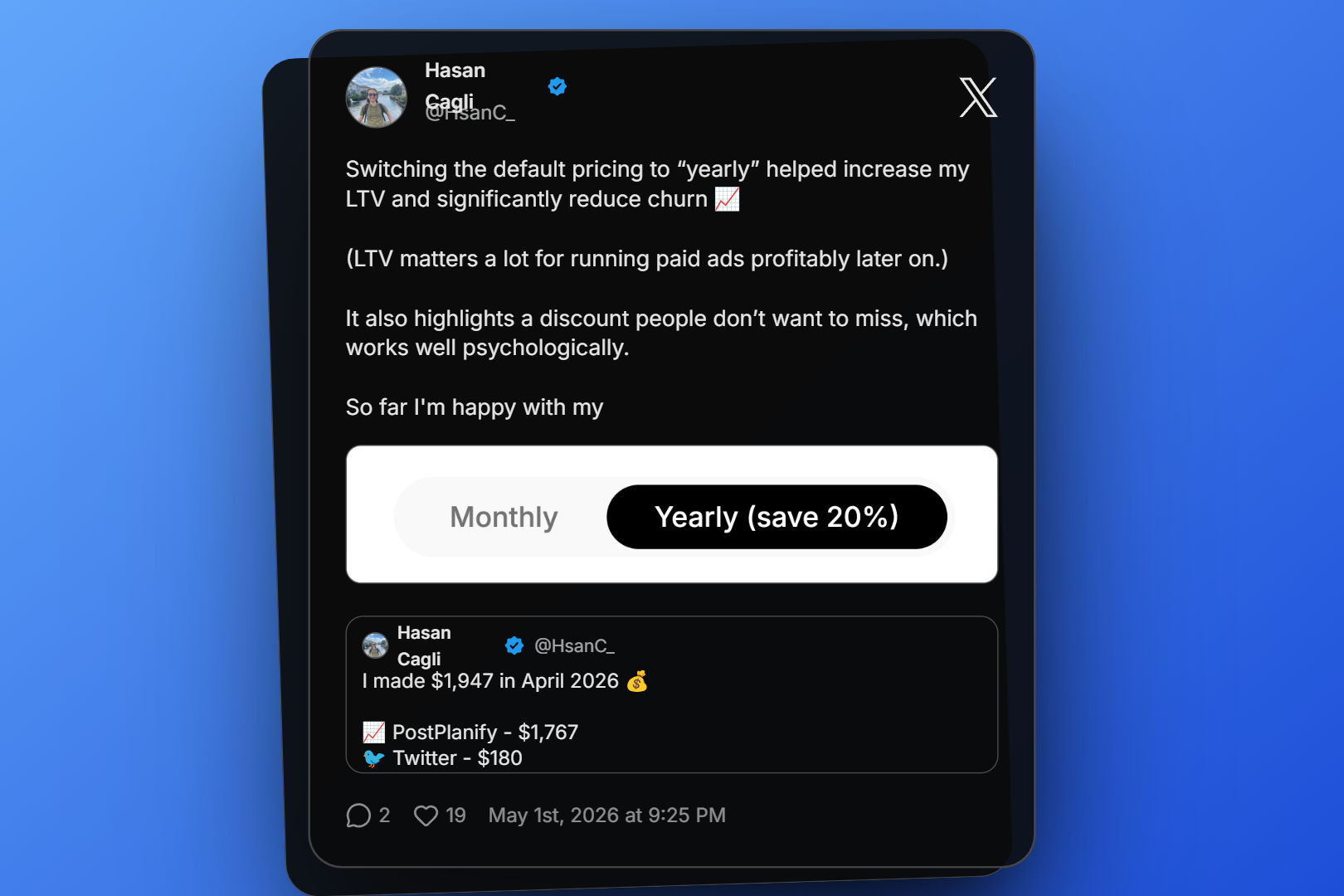
I also raised my prices. Raising prices actually helped the business because it filtered out the uncommitted hobbyists and attracted serious businesses. Since shifting up-market to agencies and encouraging yearly billing, my churn has dropped drastically, and the Lifetime Value (LTV) of my customers has skyrocketed.
How does the pricing and revenue model work?
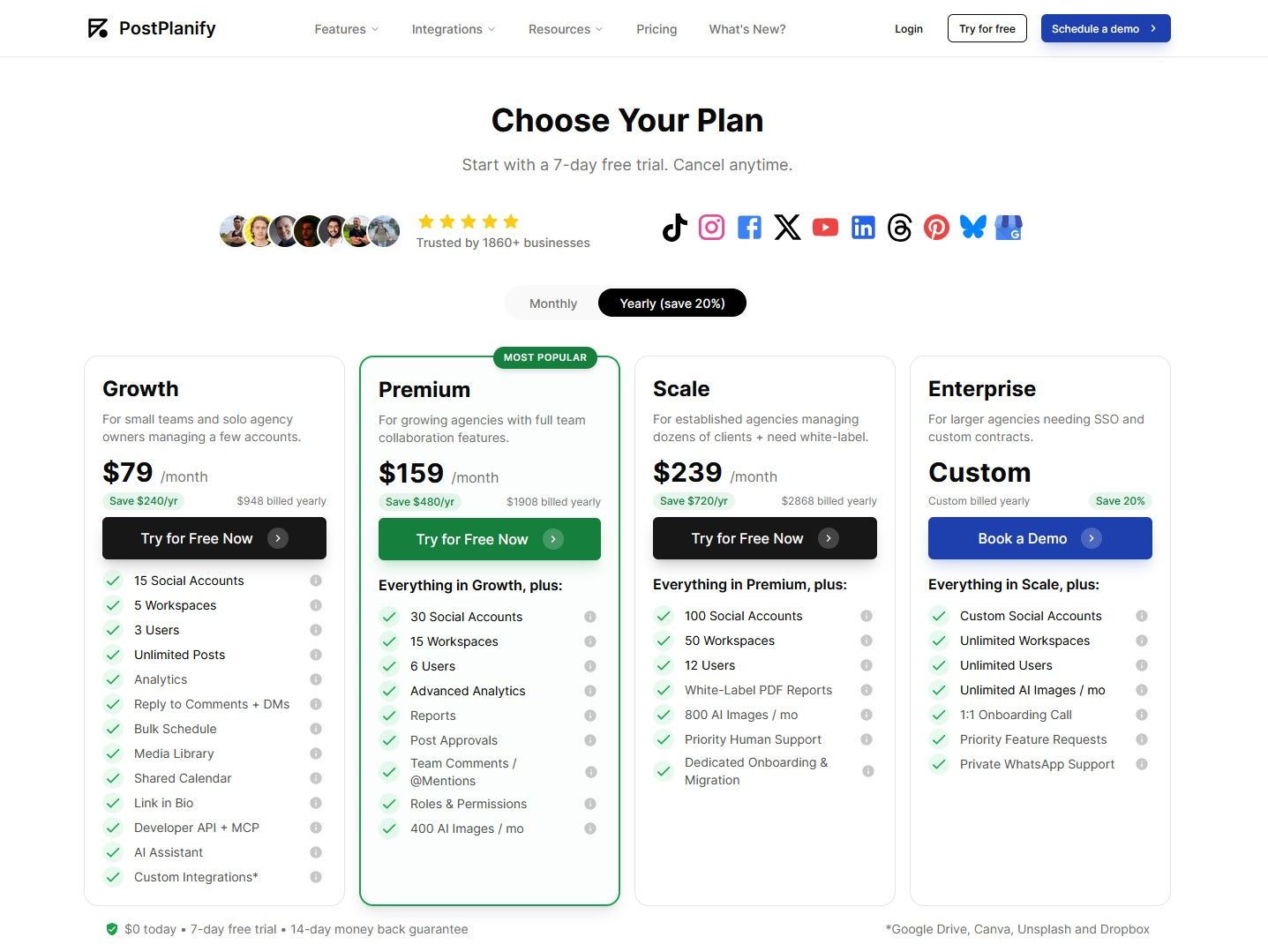 We operate on a flat-rate SaaS (Software as a Service) subscription model. We have a 7-day free trial, and then users choose from a few simple tiers based on how many social accounts they need to connect.
-
Growth Plan: ~$79/month (Great for small teams).
-
Premium Plan: $159/month (Great for growing agencies).
-
Scale Plan: $239/month (For large operations handling lots of clients).
All of these plans include our biggest selling point: Unlimited Users. If an agency needs to invite 5 different employees and 10 different clients to view the calendar, it doesn't cost them an extra penny. Our competitors charge $10 to $50 extra per person, which makes teams afraid to collaborate. Our pricing model encourages teamwork.
By making the yearly subscription the default option on the checkout page, we also secure cash flow up front, which allows me to reinvest in the business with confidence.
What is the biggest advantage you have over massive companies?
Founder-Led Support.
If you find a bug in a giant corporate software tool, you have to submit a ticket to a chatbot, wait three days for an email from a support rep, and maybe the engineering team will fix it next year.
If you use PostPlanify, you get my direct WhatsApp number.
I had an agency owner managing 95 posts a day message me with a small feature request. Because I am a solo developer with no red tape, I coded it and pushed the update live to the server within 24 hours. The customer went to Twitter and publicly raved about it.
When you ship features that fast and talk to your customers like human beings, they will never leave you for a competitor. They become your loudest marketers.
What advice would you give to other indie hackers or people wanting to quit their 9-5?
1. Distribution is harder than coding.
Building the app is actually the easy part. Do not spend six months in a cave coding. Build a very basic version in a few weeks, and spend 80% of your time figuring out how to market it. Learn SEO, learn how to write on X, and learn how to make YouTube videos.
2. Build in Public, even when it's ugly.
Transparency builds trust faster than a million-dollar marketing budget. Share your revenue goals, but more importantly, share your failures. When my revenue dipped one month, I posted about it honestly. People respect vulnerability, and it makes them root for your success.
3. Listen to the people who actually pay you.
Everyone on the internet will have an opinion on what feature you should build next. Ignore the people using the free tier. Only listen to the people who have pulled out their credit cards. If a paying customer asks for something, prioritize it.
4. Small, daily actions compound.
You don't need to go viral to succeed. Just show up every single day. I posted on X daily, even when I was sick or traveling. I fixed bugs daily. That discipline is what eventually allowed me to quit my 9-5, travel, and build a life on my own terms.
If you want to follow the journey, you can find Hasan on X at @HsanC_ or check out the platform at PostPlanify.com.
Hasan Cagli
Founder · PostPlanify
 Türkiye
This story is compiled from public sources and presented in an interview format for a better reading experience.