How a Solo Founder Hit $3.5K MRR in 5 Months Using Organic X Growth

Hello! Who are you and what are you building?
My name is Anupam Raj, and I am a digital creator and solo founder based out of a crowded home office in Lucknow, India. I specialize in building viral, profitable brands on X (formerly Twitter) and Facebook.
Right now, I run a dual-engine business in the personal finance space.
First, there is Investment Bandhu. This is a content platform where I break down complex financial topics. We offer practical, easy-to-understand guides on credit cards, getting out of debt, investing, and building wealth.
Second, there is the Investment Hub App. This is my B2B SaaS (Business-to-Business Software). While the website helps everyday people, the SaaS is built specifically for Independent Financial Advisors (IFAs). It gives them a dashboard to manage their clients, track mutual funds, generate reports, and grow their digital business.
Together, they form a complete system: the website brings in traffic through SEO, and the app makes the money.
The Backstory: How did you come up with the idea?
The idea didn't come from a random brainstorm. It came from staring at a massive, obvious problem.
When I started writing about finance online, I noticed that the internet is flooded with terrible, confusing financial advice. People were scared and confused. So, I started Investment Bandhu as a simple blog to clear up that confusion. My goal was simple: provide unbiased, clear, and actionable guidance.
As the blog grew, I started talking to the professionals the Independent Financial Advisors. I realized they had a huge problem, too. They were managing their clients' money using messy spreadsheets, outdated software, and endless WhatsApp messages. They lacked a clean, modern digital tool to engage with their clients.
That was the "Aha!" moment.
I realized I didn't just want to be a blogger. I wanted to build a tool that solved a painful, daily workflow problem for professionals. Because I had already spent time building a brand around "Knowledge, Clarity, and Trust," these advisors were willing to listen to me when I pitched a software solution.
The Tech Stack and Building the First Version
Building a SaaS while working a day job or managing other projects is tough. You have to squeeze out time wherever you can.
My approach to building the product was all about speed and validation. I didn't want to spend a year coding something nobody wanted.
-
The Tech Stack: As a solo developer, I keep things lean. I use a mix of modern low-code tools and custom development. This allows me to ship features incredibly fast. I also integrated AI features to help automate some of the heavy lifting for the users.
-
The MVP (Minimum Viable Product): I built the first version in just a few months. It wasn't perfect. It didn't have a hundred features. But it did one thing really well: it gave advisors a clear view of their clients' portfolios.
-
Public Feedback Loops: I didn't hide while I was coding. Every time I built a new feature, I posted a screenshot on X. I asked my audience, "Would you use this?" If they said yes, I kept it. If they ignored it, I deleted the code. This saved me hundreds of hours of wasted work.
The biggest lesson here? Your SaaS doesn't need more features. It needs clearer value. If a stranger cannot look at your website and understand exactly what problem you solve in 5 seconds, they will click away.
The Million-Dollar Question: How did you get your FIRST customer?
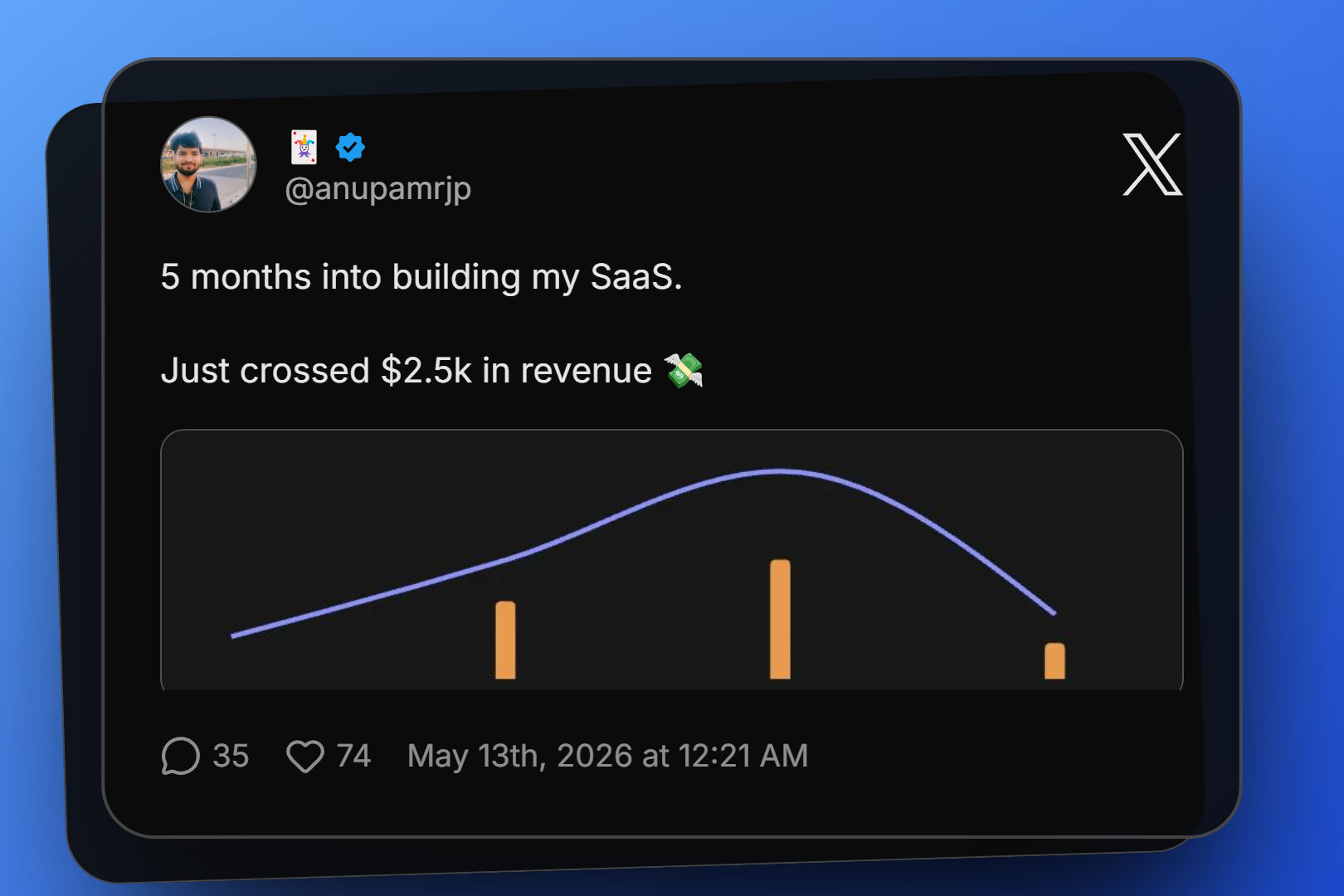 This is where almost every indie hacker fails. They build a great app, put a link in their bio, and expect people to magically pull out their credit cards. It does not work that way.
I got my first paying customer in under a month. Here is the exact mechanism I used: I built the audience before I built the product.
Before the SaaS even existed, I spent over a year treating X (Twitter) like my main job. In early 2026, I hit a massive milestone: 12 to 13 million impressions in just 120 days.
How? By sharing everything.
-
Shipping in Public: I posted daily updates about my life, my code, and my business.
-
Sharing the Hard Truths: I didn't just post my wins. I posted my failures. I admitted when things were hard. This made me human, and it made people trust me.
-
Visual Proof: I posted screenshots of my revenue charts, my website traffic, and my growth stats. People love seeing real numbers.
Because I had 15,000+ people watching my journey, my launch wasn't cold. It was warm.
The Conversion Mechanic:
My X bio is highly optimized. It says exactly who I am ("CEO @Investmentbandhu") and ends with a clear Call to Action: "DM for business."
When I launched the SaaS, I didn't just blast a link. I asked questions on my timeline. I asked founders what they were struggling with. When an Independent Financial Advisor replied to my tweet or followed me because of my financial content, I started a conversation in the DMs (Direct Messages).
I didn't sell the product; I sold the solution to their workflow problem. Because they had already watched me build in public for months, the trust was already there. That trust turned into my first paying subscriber, and it got me to $2.5K MRR incredibly fast.
Growth Channels: How the Acquisition Engine Works Today
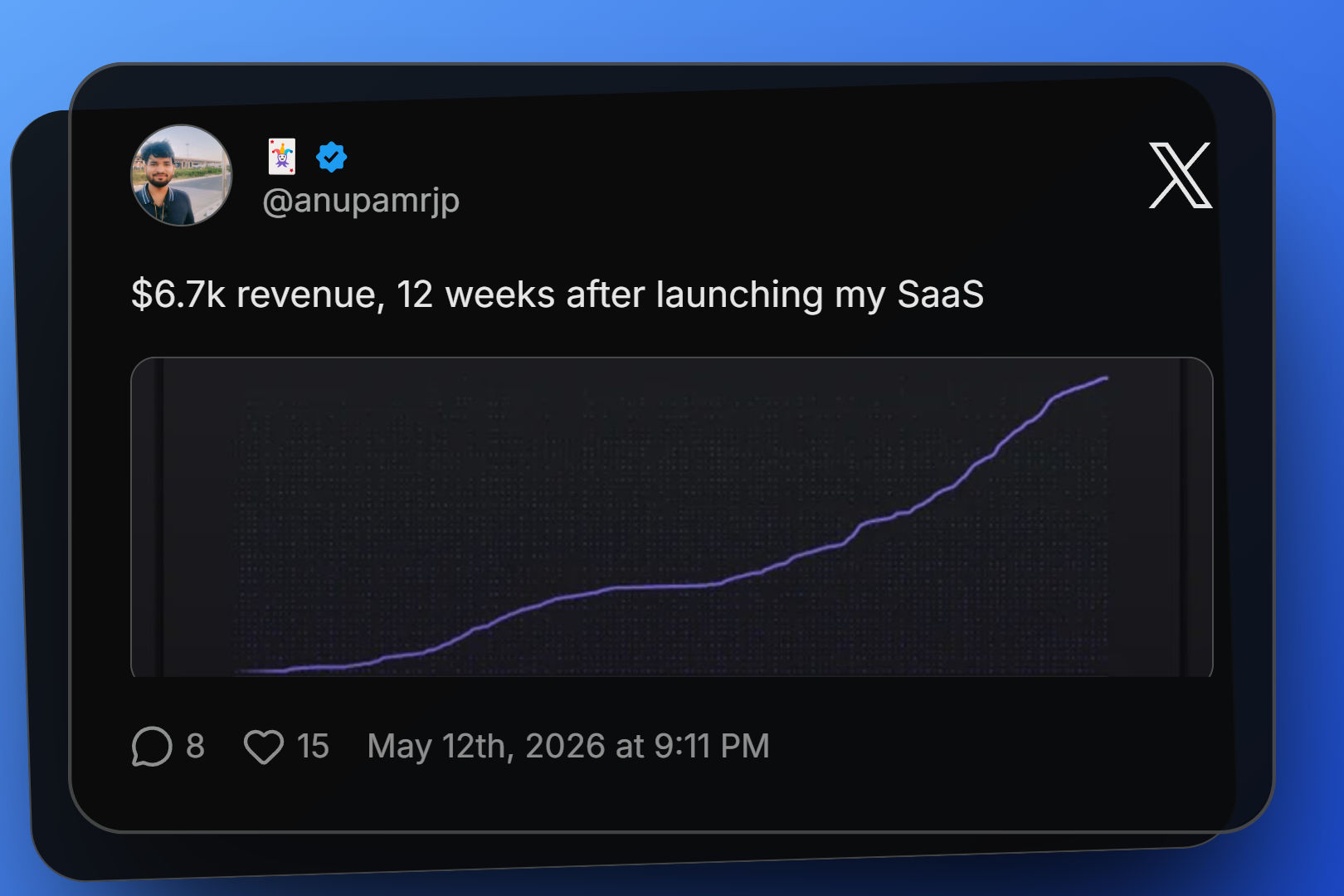 Getting to $100 is about hustle. Getting to $3,500+ is about systems. Today, my customer acquisition strategy relies on two main growth channels.
Channel 1: SEO and the Content Flywheel (B2C to B2B)
InvestmentBandhu.com is my top-of-funnel engine. I write deep, high-quality, SEO-friendly articles about investing, debt, and credit cards.
-
When people search Google for financial advice, they find my site.
-
This brings massive free traffic.
-
Financial advisors also read this content to stay updated. Once they are on the site, they see the link for the "Investment Hub" SaaS app. They come for the free article, but they stay for the paid software.
Channel 2: Viral Organic Reach on X (Twitter)
X is still my biggest growth lever. My personal brand is the moat that competitors cannot easily copy.
-
Engagement Farming (The Good Kind): I ask questions like, "Describe your SaaS in 3 words," or "Drop your project links below." This creates massive engagement and pushes my profile into the feeds of thousands of new people.
-
The "Build in Public" Virality: Whenever I hit a new milestone (like crossing $3.5K revenue), I post the chart. These posts go viral because people love success stories. Every viral post brings in hundreds of new profile visits, which leads to more "DMs for business," which leads to more SaaS trials.
The Revenue Model and Pricing Strategy
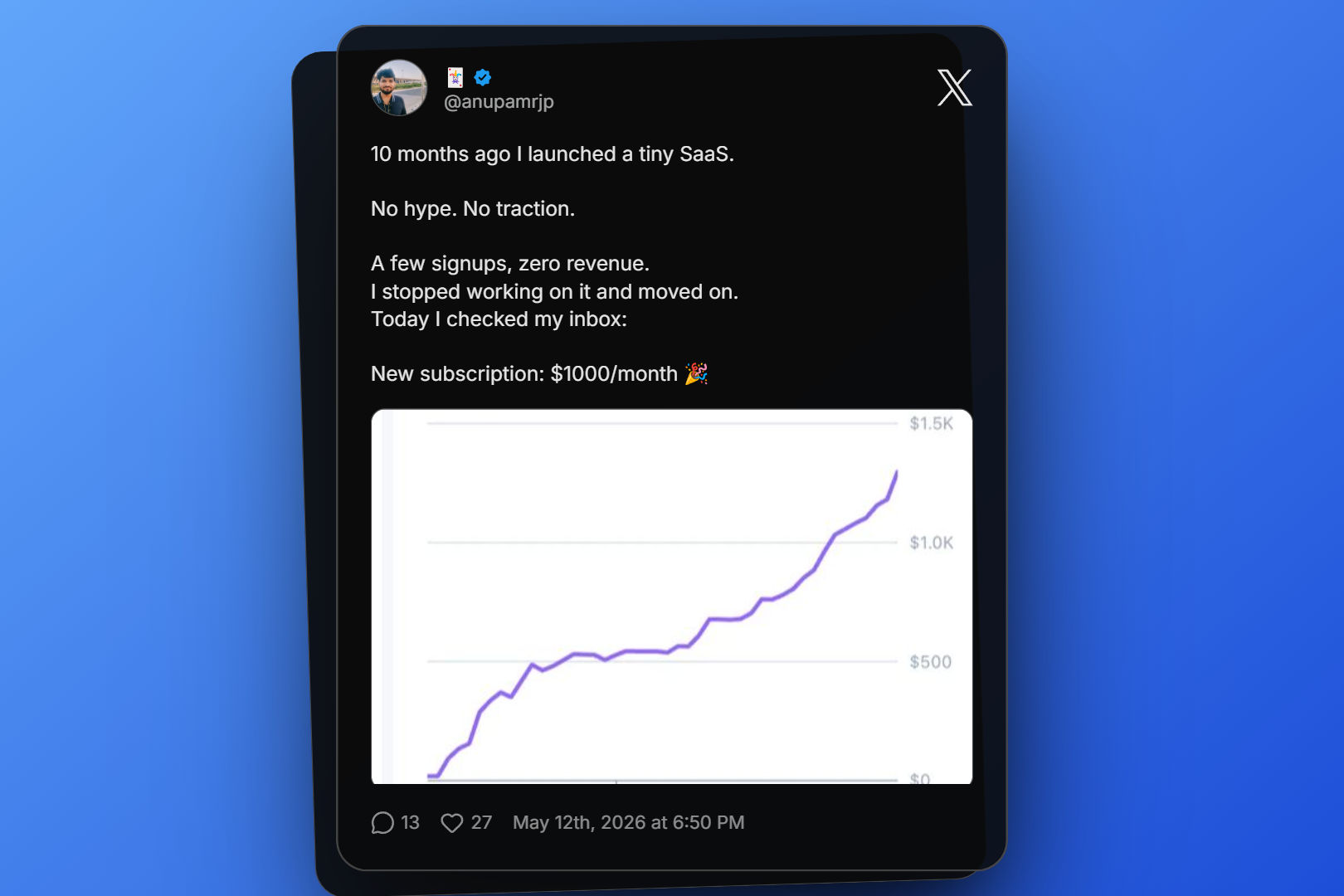 To scale a bootstrap SaaS, you have to get the math right.
-
The Model: Investment Hub runs on a B2B subscription model. Advisors pay a recurring fee to use the dashboard and manage their clients.
-
Testing and Validation: I am constantly testing how to get people in the door. I often use my X audience to run polls, asking them if they prefer a 7-day free trial or a "freemium" model (where basic features are free forever, but pro features cost money). Right now, the focus is on lowering the barrier to entry so they can experience the "Aha!" moment quickly.
-
The Economics: Because I am a solo founder and I wrote the code myself, my overhead costs are incredibly low. I don't have to pay a massive engineering team. Once the initial development was done, almost every dollar of that $3,500+ MRR goes straight to the bottom line. It is a high-margin, highly scalable business.
Mistakes Made and Hard Lessons Learned
If I could go back in time, there are a few things I would tell myself to avoid.
-
"Getting people to care is the hard part."
Today, with AI and low-code tools, writing the software is the easy part. Distribution is the hard part. I learned quickly that a marginally better product will always lose to a product with better distribution. You have to fight for attention every single day. -
Lack of Instant Clarity.
Early on, I struggled with messaging. I wanted to explain all the cool features my app had. But users don't care about your features; they care about their own problems. I learned the hard way that if your landing page doesn't instantly scream exactly how you save the user time or make them money, they will bounce. -
Consistency Over Intensity.
There were times I wanted to quit because a launch didn't go perfectly. But the secret to my 12 million impressions wasn't one lucky tweet. It was "just showing up and building every day." Consistency compounds.
The Biggest Secret to My Success
If you take one thing away from this case study, let it be this:
Be a Digital Creator first, and a SaaS Founder second.
My unfair advantage isn't that I am the greatest coder in the world. My unfair advantage is that I know how to capture attention on the internet. I spent years learning how to write hooks, how to format threads, and how to trigger algorithms on X and Facebook.
Most founders build a complex product and then say, "Okay, how do I market this?"
I did the exact opposite. I built a highly engaged audience of 15,000+ people around a specific topic (finance and building). Once I had their attention, I simply asked them what they wanted to buy. I didn't have to guess what product to build; my audience told me. Your audience is your biggest asset. Grow it before, or alongside, your product.
Success like this rewards relentless execution and community focus. Keep building! 🚀
Anupam Raj
Founder · Investment Bandhu
 India
IndiaThis story is compiled from public sources and presented in an interview format for a better reading experience.