From Midnight Idea to $10K Revenue in 30 Days

TL;DR: Emanuele Di Pietro built Remodex, a secure iOS remote control for the Codex AI agent, to solve the frustration of being chained to his Mac while AI wrote code. Launched as a one-night "meme challenge" to beat an official OpenAI release, the app gained massive traction through open-source trust and a viral MacStories review, hitting $10,000 in revenue in its first month.
Hello! Who are you and what business did you start?
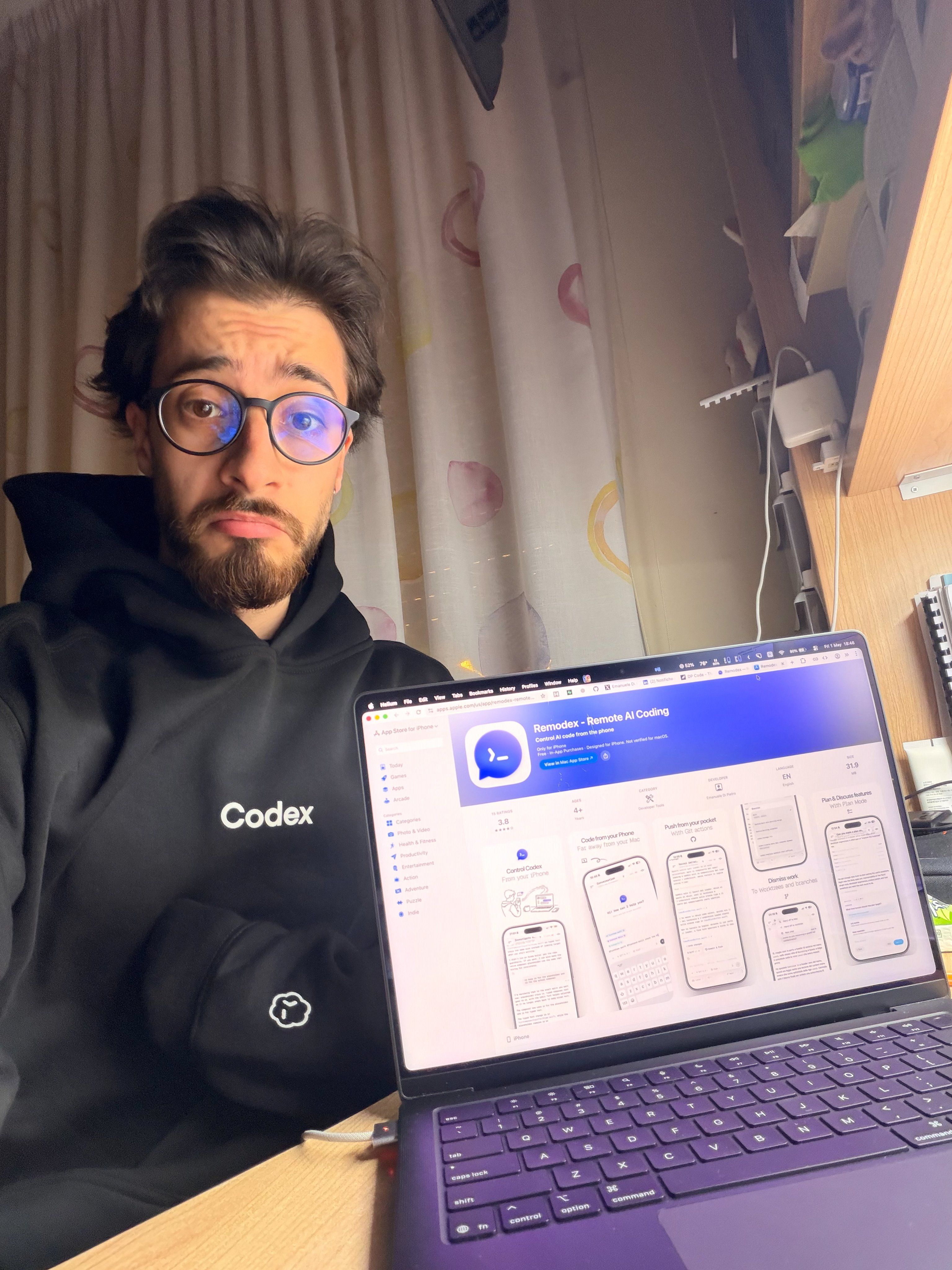
Hi everyone! I’m Emanuele Di Pietro, a 22-year-old Computer Science student at the University Federico II in Naples, Italy. I consider myself a "cracked indie-hacker," balancing my university classes with going to the gym, watching Formula 1, and coding late into the night.
I am the creator of Remodex, a local-first, open-source iOS app that acts as a secure remote control for your AI coding agents specifically OpenAI's Codex.
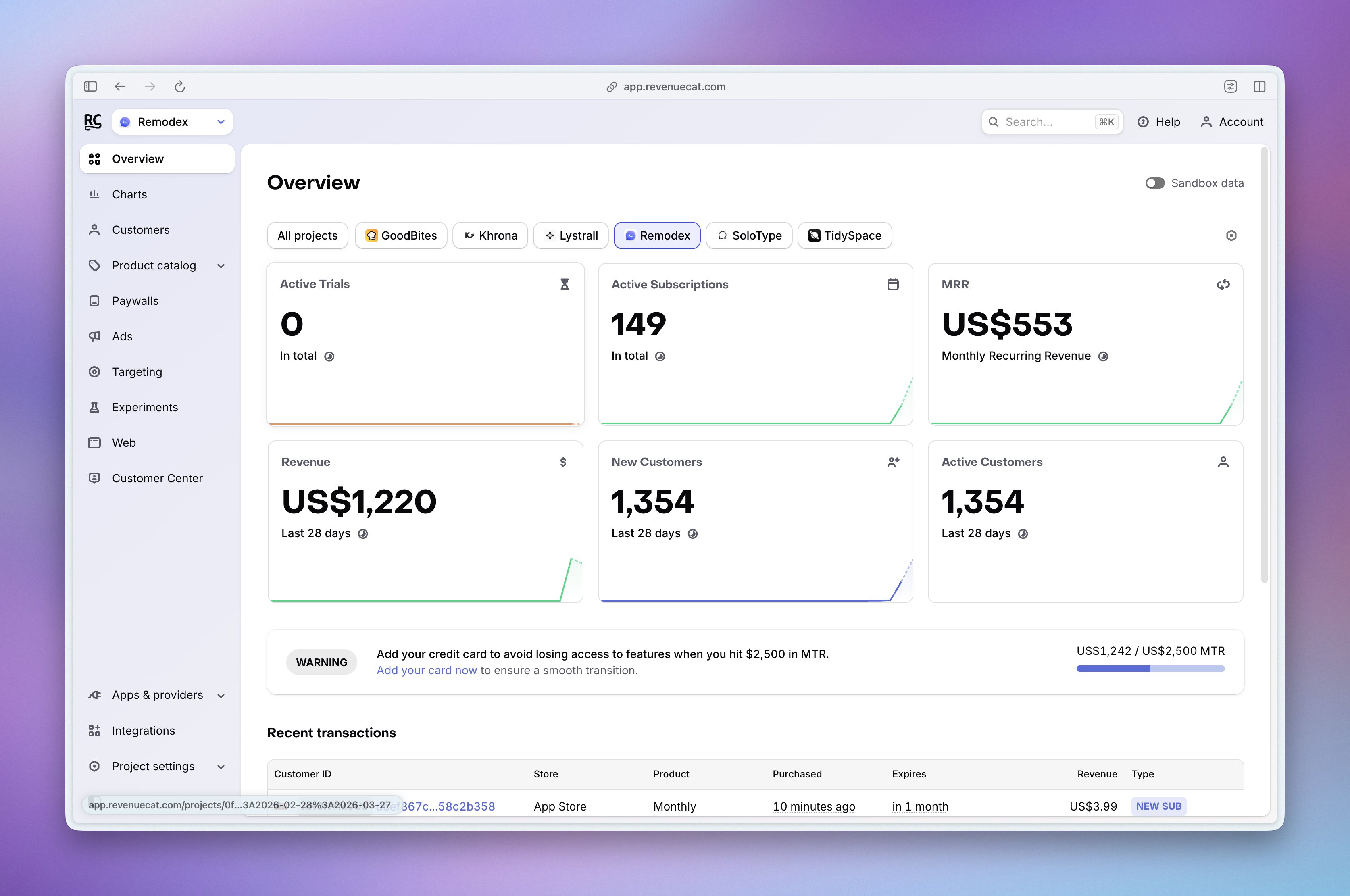
Right now, the app is geared toward developers who use AI to write code but don't want to be chained to their desks while the AI runs long, complex tasks. I launched it as a freemium app, and within about a month of launching, we hit roughly $10,000 in total revenue.
What's your backstory and how did you come up with the idea?
 Before Remodex, I was constantly shipping. I had published over 9 different iOS apps on the App Store (getting around 3,200+ downloads) and built several web apps. I learned a lot of my practical skills at the Apple Developer Academy, which really trained my eye for clean, native iOS design.
The idea for Remodex was born out of pure, personal frustration.
In early 2026, I was heavily using OpenAI’s Codex. It’s an amazing AI coding agent that runs locally via your Mac's terminal. But there was a massive flaw: leaving my desk meant losing my momentum.
If I started a long task, I had to sit there and watch it. If I walked away to grab coffee or take the train, the AI agent might get stuck on a bug, and I couldn't push a Git commit, steer the AI, or answer its questions from my phone.
I saw that Claude had a /remote-control feature, proving mobile agent control was possible. I searched X (formerly Twitter) for a Codex equivalent and found a very rough prototype by another user (@SIGKITTEN). That was the ignition.
Initially, I tried to build something called Phodex, which was an ambitious, massive cloud setup using a VPS and Docker so people could code without a Mac at all. But then, rumors leaked that OpenAI was building their own official "Remote Connections" feature. Most people would have quit right there. Instead, I pivoted.
Take us through the process of building the first version of your product.
 Instead of fighting OpenAI with a complex cloud server, I made a personal, half-meme decision on March 8, 2026. My goal became simple: Ship a Codex iOS app before OpenAI does.
It wasn't a pure business decision; I did it for the story. I wanted to be able to say, "Yeah, I shipped the Codex iOS app before OpenAI did."
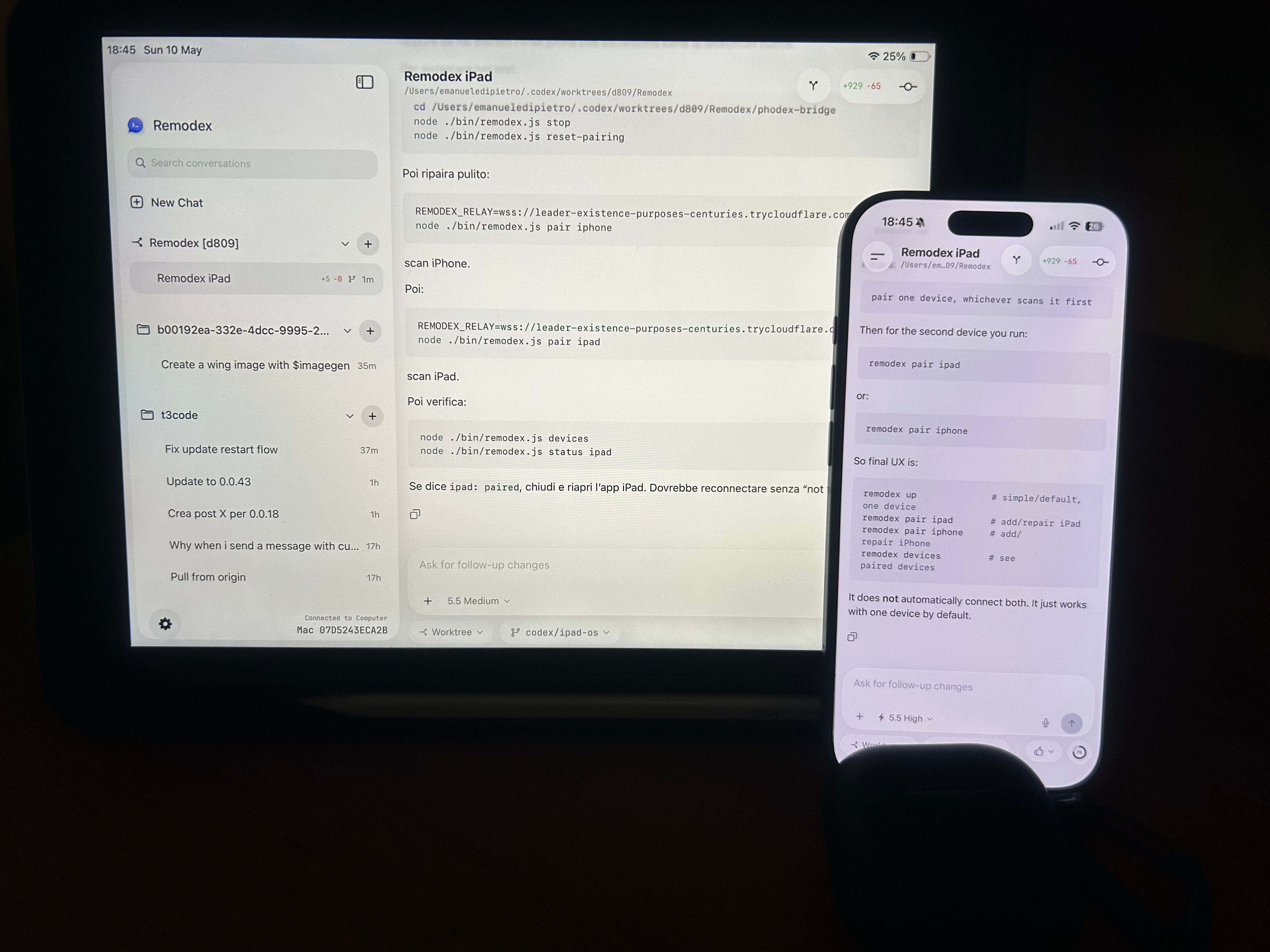
I scrapped my complicated Phodex project. Around midnight, I posted my challenge on X. Using Codex to actually help me write the code, I stayed up all night. By 4:00 AM, the first working version of Remodex was done. I literally celebrated by putting on an F1 stream.
The tech stack is built around simplicity and security:
-
The Mac Bridge: You just type
npm i -g remodex@latestand thenremodex upin your Mac terminal. It prints a QR code. -
The iOS App: You scan the QR code with your iPhone. Everything is local-first. Your code never goes to a cloud server.
-
Security: I used End-to-End Encryption (X25519 + AES-256-GCM) so no one not even me can see your code.
When I posted the first working version online, I got kind words from Romain Huet at OpenAI. That early validation told me I needed to push this to the App Store.
Describe the process of launching the business.
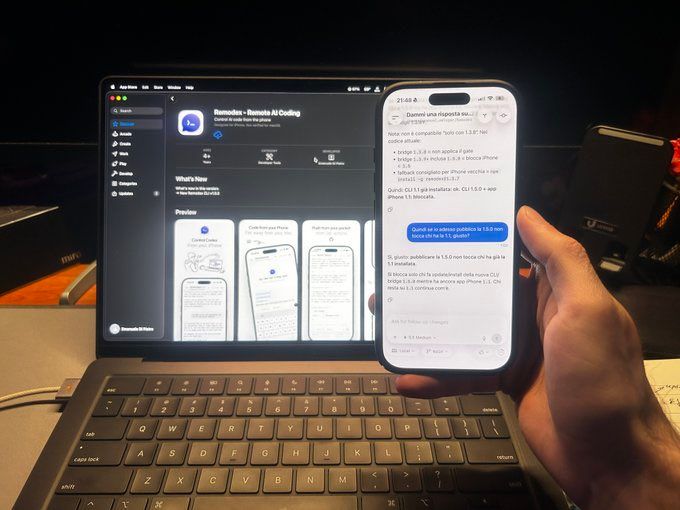 Getting an app built is only 10% of the battle. The rest is getting it into people's hands.
I didn't have a massive marketing budget, so my launch strategy was completely organic, relying heavily on the "build-in-public" momentum.
First, I launched on Product Hunt at the end of March. The AI developer niche is very active there. I positioned Remodex as the missing piece for Codex users. Whenever someone asked a hard technical question in the comments about latency or setup, I answered immediately. That built massive trust.
Second, I leveraged X (Twitter). I posted constant updates, screenshots, and videos of me steering my Mac's AI agent from my phone on the couch. I interacted with well-known developers like Theo (@t3dotgg). This grew my audience to over 10,000 followers, and these followers became my first true customers.
But the biggest launch catalyst was MacStories. Federico Viticci, the editor-in-chief of this massive Apple blog, found the app and wrote a glowing review, calling it "the best Codex remote client for iOS." This was a goldmine for SEO and ASO (App Store Optimization). That single review acted as a massive trust signal that funneled high-quality early adopters directly to my App Store page.
Since launch, what has worked to attract and retain customers?
 My customer acquisition funnel is actually built on open-source code and a freemium model.
I made the entire Mac bridge open-source on GitHub (Emanuele-web04/remodex). If you are building for developers, you must earn their trust. Giving them the source code so they can verify the security themselves was the best marketing decision I made.
Developers find the free code trending on GitHub, realize they need a mobile interface, and then go download the iOS app.
To retain them, I focus on delivering a beautiful user experience (clean iOS 26 Liquid Glass design) and powerful features. From the phone, users can do live steering, manage their Git (commit, push, pull, branch), use voice commands, and even send photos of a whiteboard to their AI agent.
How are you doing today and what does the business model look like?
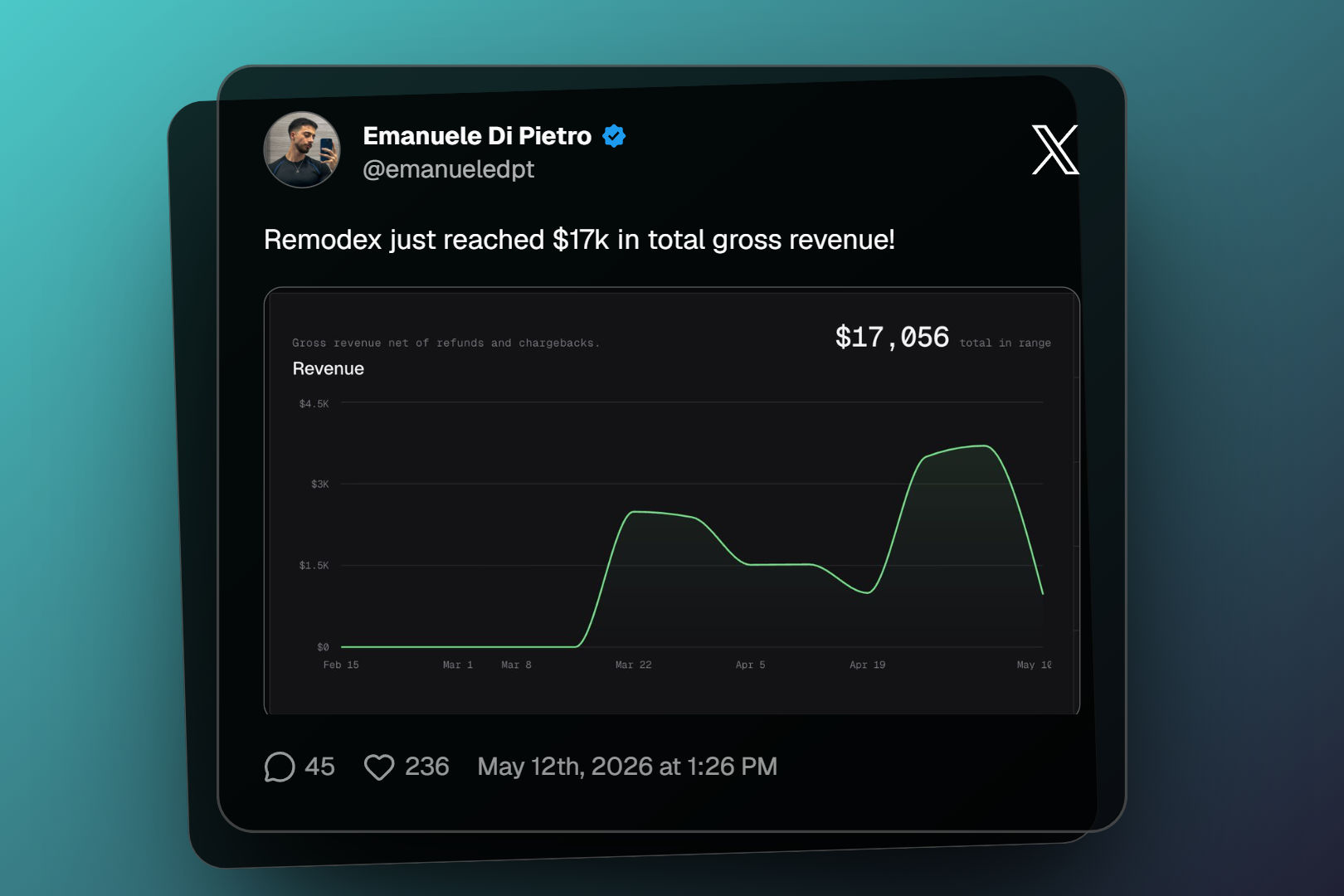 Today, I am really proud to say we hit roughly $10,000 in total revenue about a month post-launch. Standard revenue tools like RevenueCat felt too limited, so I actually built my own custom dashboard to track everything!
The business model is a simple freemium App Store model. The app is free to download, but to unlock the full power and convenience, users subscribe.
Here is the exact pricing:
-
Free: Basic remote access.
-
Pro Monthly: $3.99/month. (This is a no-brainer for professionals whose time is money).
-
Pro Annual: $29.99/year.
-
Lifetime Pro: $498.00 one-time purchase for power users.
Because the app ranks high for "Developer Tools" on the App Store and has great SEO from articles like MacStories, the organic conversions to paid tiers have been fantastic.
Through starting the business, have you learned anything particularly helpful or advantageous?
Absolutely. It wasn't all smooth sailing.
Early on, I had serious connection reliability issues. Early TestFlight users reported problems keeping the connection stable when switching from Wi-Fi to cellular data. I also had users in regions with restricted internet (like mainland China) who had to use complex proxy setups just to get it to work. Managing all of this support load as a solo founder while in college was incredibly heavy.
But I learned three massive lessons:
-
Leverage official primitives: I didn't try to hack a back-door into Codex. I built directly on top of OpenAI’s official open-source Codex App Server. This made my app reliable and aligned with the ecosystem.
-
Accept impermanence: I know OpenAI will probably release an official mobile app eventually. I built this anyway. The followers, the connections, the revenue, and the story are the real wins. Don't let the fear of a giant competitor stop you from capturing a window of opportunity.
-
Ship fast on personal motivation: The "meme challenge" of trying to beat OpenAI to the punch gave me the energy to code an entire app in one night. Find a way to make your work fun.
What are your goals for the future?
I am not stopping with Remodex. While building it, I realized developers need better tools on their desktops too.
So, I launched DP Code (dpcode.cc), a minimal web GUI that lets you manage multiple AI agents (Claude, Gemini, Cursor, Codex) at once with split chats and one-click pull requests.
My goal is to create a multi-product synergy. Eventually, Remodex on mobile won't just control Codex; it will be the remote control for the entire DP Code ecosystem. I'm going to keep shipping, keep experimenting (like adding Grok integration), and keep pushing on my road to a sustainable $10k/month MRR.
Advice for other entrepreneurs who want to get started or are just starting out?
My advice is simple: Try, try, try. Document everything.
Don't wait for the perfect idea. I shipped 9 apps that most people have never heard of before Remodex took off. Spot friction in emerging tools like AI coding agents and build a simple, beautiful solution for it.
Build in public, share your failures, and build for the story and the doors it opens. Value-first building with a little bit of personality always wins attention in crowded spaces.
Emanuele Di Pietro
Founder · Remodex
 Italy
ItalyThis story is compiled from public sources and presented in an interview format for a better reading experience.