How a Solo Founder Built $5.3K MRR With AI Tools and Reddit SEO

TL;DR: Former product lead Neel Seth left the corporate world to build profitable AI SaaS tools like ReplyDaddy and NoobBookLM, scaling his portfolio to over $5,300 MRR as a solo founder. Using AI as a coding partner, he focuses on lean, revenue-first execution, acquiring customers organically through long-tail SEO, transparent "building in public," and ethical Reddit marketing.
Hello! Who are you and what business did you start?
Hey everyone! I’m Neel Seth, a solo founder based in Bengaluru, India. I build AI-powered tools for other founders and businesses.
Right now, I run two main profitable SaaS (Software as a Service) products:
-
ReplyDaddy: An AI-powered Reddit marketing co-pilot that helps indie hackers and SaaS founders get leads without getting banned. It currently makes about $1,500 MRR (Monthly Recurring Revenue).
-
NoobBookLM: An advanced AI tool for education and strategy that generates about $3,800 MRR through enterprise deals and warm introductions.
Before this, I built a platform for teachers called TeacherOp, and I experimented with an AI website builder called Shipstation.ai.
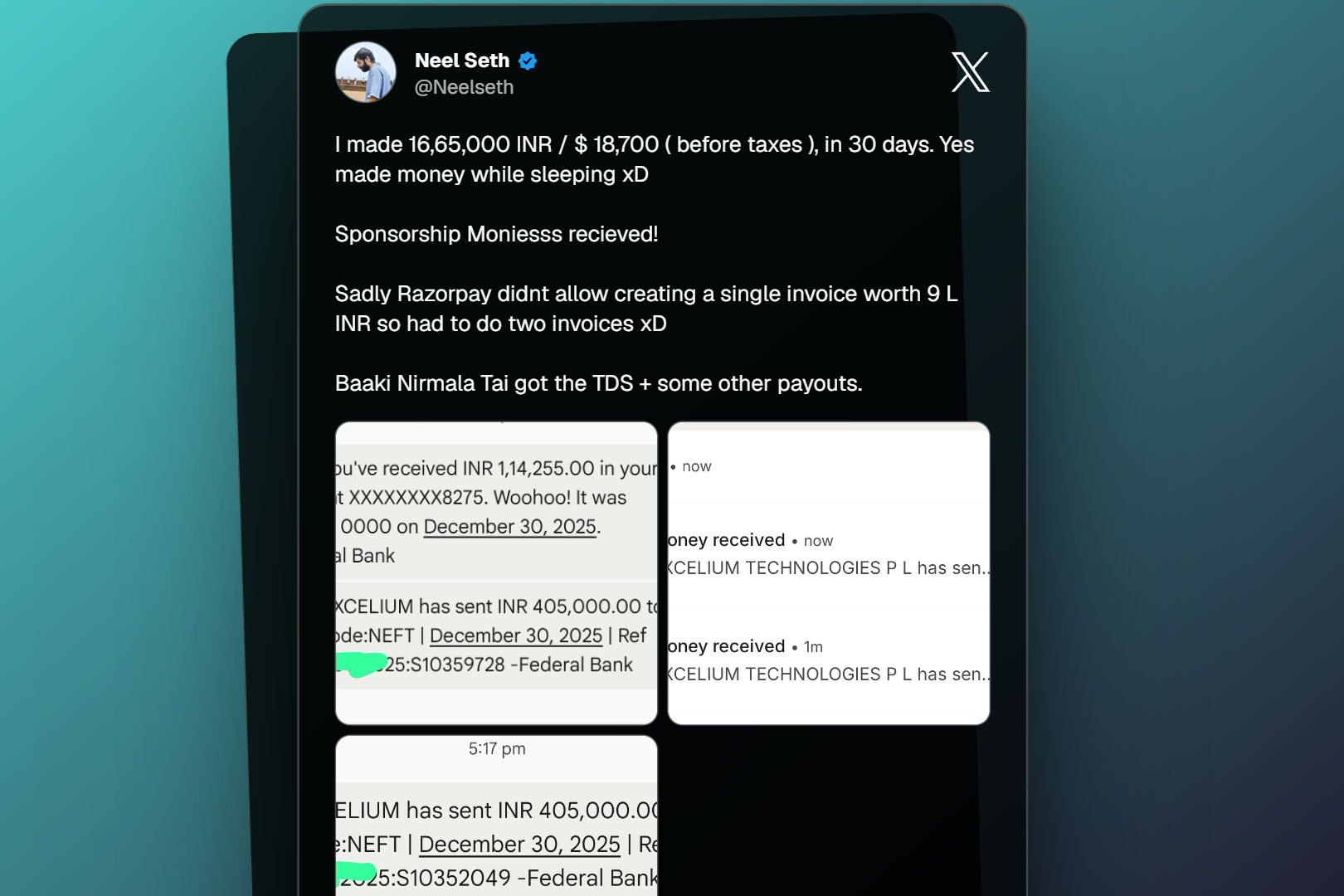
Altogether, my tools generate over $5,300 in MRR. ReplyDaddy alone crossed $20,000 in total revenue in just 9 months. It made $6,000 in its first 70 days!
My whole philosophy is simple: cut the BS, ignore vanity metrics, use AI to code fast, and focus only on what brings in revenue.
What's your backstory and how did you validate the idea?
I have always loved building things that make money. Early on, I tried a bunch of things. I worked on a solar project called UPVOLT, ran a food business called Tastewright (which hit 120 orders a day at its peak!), and did digital marketing. I also worked as a Demand Manager at OYO.
But my biggest learning experience was at Dukaan (a huge Indian e-commerce platform). I worked there from 2020 to 2024 and rose to become the Product Lead in the Founder’s Office. I helped scale their B2B enterprise side from zero to over 10,000 paying merchants in just 7 months.
That experience taught me a massive lesson: Focus on what moves revenue, not just cool features.
I left the corporate world because I wanted to build my own tools. Around 2023, AI got really good. I am not a traditional "10x engineer" who can write perfect code from scratch in minutes. But with AI tools like Claude acting as my coding partner, I suddenly had the power to ship full, working software all by myself.
How did I validate ReplyDaddy? I validated it through my own pain. When I launched my earlier projects, I needed customers. Ads were too expensive. I went to Reddit because that’s where real buyers hang out. But doing Reddit marketing manually takes hours. And if you use a spam bot, you get banned instantly.
I needed a tool that found the right conversations and wrote great replies, but let me click the final "post" button so it stayed authentic. That didn't exist, so I built it.
Take us through building the product and your tech stack. What were your startup costs?
 I am a huge fan of moving fast. I built the first version (MVP) of ReplyDaddy in a rapid 48-hour challenge. I literally locked myself in and coded with AI.
Here is my exact tech stack:
-
Backend & Logic: Python and Flask. (I use Node.js and React for other projects, but Python is best for AI).
-
Database: Supabase. It is an amazing, easy-to-use alternative to Firebase. I also use local CSV storage for privacy.
-
AI Engine: Anthropic’s Claude API. It is much better at sounding human than ChatGPT.
-
Payments: Dodo Payments (this allows me to accept stablecoins and crypto, which is huge for international buyers).
What were my startup costs? Almost zero. Being a solo founder using AI means my only costs were domain names, cheap server hosting, and API credits.
My rule is to build the simplest paid solution possible. I don't over-engineer. One good API call solves 90% of your problems.
Let's talk about the exact mechanism of getting your first customers. How did it happen?
 A lot of people think you launch on Product Hunt and magically get thousands of users. That is a myth.
My first customers came from exactly where you would expect: Reddit and Twitter (X).
Here is the exact step-by-step mechanism of how I got my first users (and how I still get them today):
-
I used ReplyDaddy to monitor Reddit for keywords like "how to get SaaS users" or "Reddit marketing ban."
-
When a founder posted a question, my tool drafted a super helpful, friendly reply.
-
I reviewed the reply, added a personal touch, and posted it.
-
The founder read my helpful advice, clicked on my profile, and found the link to ReplyDaddy.
-
They sent me an email asking about the tool.
-
We exchanged maybe two or three clean, simple emails. No heavy sales pitches.
-
They clicked my payment link and subscribed.
That clean "email-to-subscribe" flow is the best feeling in the world.
Another big push for my early customers came from a Lifetime Deal (LTD) partnership with RocketHub. Doing a lifetime deal gives you a big burst of cash and a group of early users who will test your product and give you feedback.
What is the reality of indie hacking? Did you face any dry spells or mistakes?
Yes, and I am very open about this on Twitter. It is not hockey-stick growth every day.
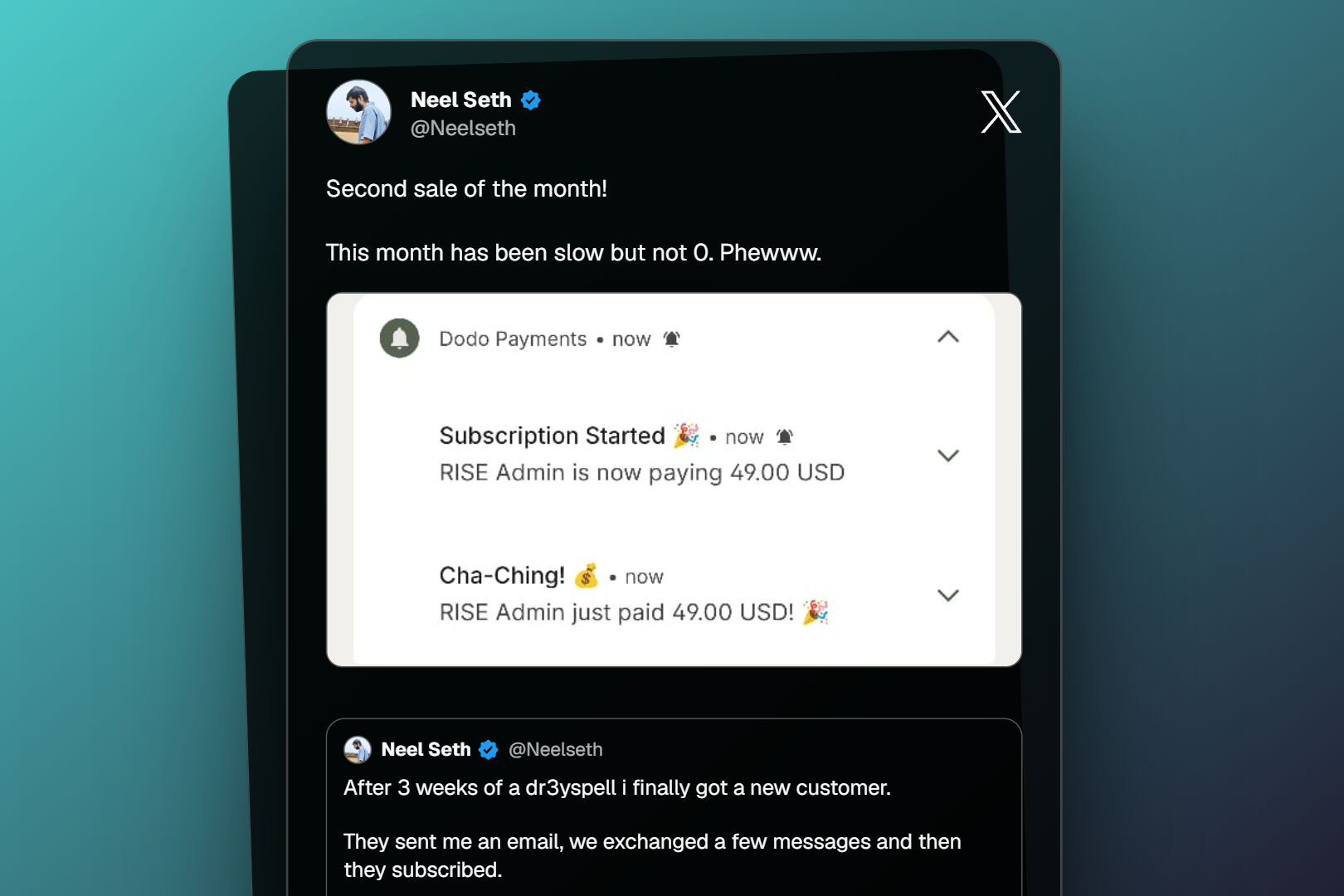
Recently, I had a brutal 3-week dry spell where I made zero sales. You start to panic. You feel stuck. I had crossed $20,000 in total revenue, but suddenly things just froze.
But you have to keep going. I posted on Twitter about finally breaking that dry spell: "Second sale of the month! This month has been slow but not 0. Phewww." Being transparent about these dry spells actually helps get customers! People respect a real founder more than a fake, perfect company.
My biggest mistake? Before ReplyDaddy, I built an AI website builder called Shipstation.ai. It was a beautiful, polished product. We got over 1,700 early users! But we made a fatal mistake: we had a major delay setting up our payment infrastructure.
Because we couldn't take payments easily, we lost all our momentum. The retention dropped. It taught me a painful but valuable lesson: Speed to revenue is critical. A reliable, "boring" backend payment gateway matters way more than a perfect, pretty frontend design.
Let's dive deep into growth channels. What is your strategy today?
My growth strategy is 100% organic and authentic. I don't spend thousands on ads.
1. "Eating My Own Dog Food" (Reddit)
I use my own tool to market my tool. I set up ReplyDaddy to find leads for ReplyDaddy. This proved the value to myself first. In fact, using my own tool boosted my leads by 300%. If your product can't help you, it won't help your customers.
2. Building in Public (Twitter/X & LinkedIn)
I post all the time about my builds, my revenue numbers, and my mistakes. On LinkedIn, I post real case studies. For example, I shared how TeacherOp generated 142 leads in its first week. People read the case study, see that I know what I am talking about, and buy my software.
3. Enterprise Referrals (NoobBookLM)
For my bigger product, NoobBookLM ($3.8K MRR), the strategy is totally different. That comes from warm introductions and enterprise demos. I use the tool to teach classes, and business owners see it and want to buy it.
You mentioned SEO. What is your secret for getting traffic from Google?

Most beginners try to rank for massive keywords like "AI Marketing Tool" or "Reddit Bot." You will never win those. Huge companies spend millions to own those words.
Instead, I focus on thousands of very small, highly specific keywords. Things like:
-
"How to market a B2B SaaS on Reddit without getting banned"
-
"Best ethical Reddit AI reply generator for indie hackers"
-
"Supabase vs Firebase for AI SaaS startups"
These "long-tail" keywords might only get 10 searches a month. But if you write 100 blog posts targeting 100 different long-tail keywords, they compound. The people searching these long phrases have very high intent to buy.
Because of this strategy, I am now getting 2 solid enterprise demos scheduled every single week, completely on autopilot, just from organic Google search. Thousands of small keywords will always beat chasing huge keywords.
What is the revenue model? How do you price your tools?
 I focus on simple paid solutions.
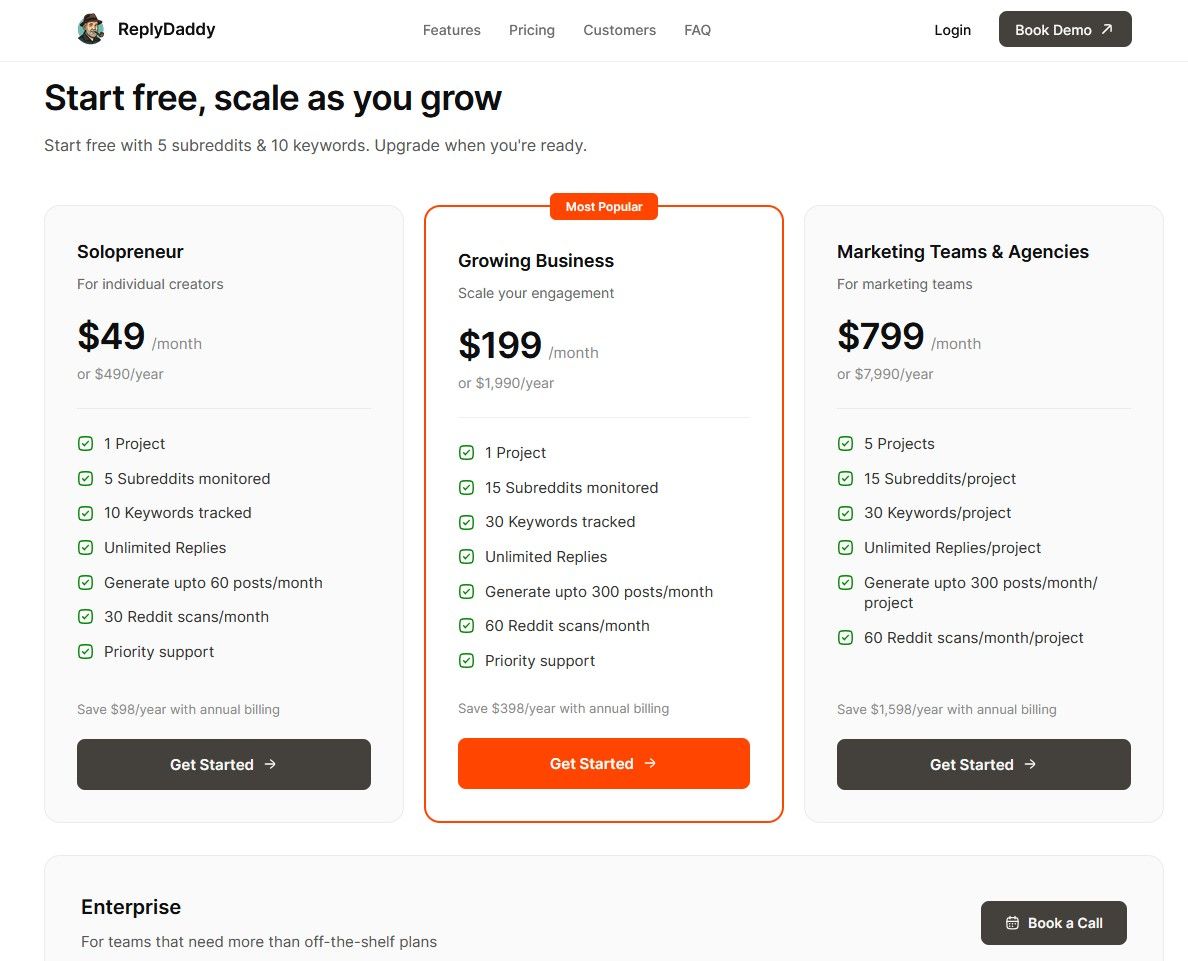
For ReplyDaddy, I started with Lifetime Deals (LTDs) to get cash flow and early users. Now, it operates as a standard SaaS. Users pay around $49 per month for the service.
One of the smartest things I did was integrate frictionless payments. A lot of indie hackers and builders are international. Stripe doesn't always work perfectly everywhere. So, I used Dodo Payments to accept stablecoins (like USDT). By letting people pay with crypto, I removed a massive barrier to entry.
For NoobBookLM, it is higher-ticket. Because it is used for heavy data, education, and GTM (Go-To-Market) strategy generation, I do custom pricing and enterprise deals, which brings in the bulk of my $3.8K MRR for that tool.
If someone reads this and wants to start today, what is your best advice?
I have two major pieces of advice that I want every aspiring indie hacker to remember:
1. Never fully automate social interactions (The Human-in-the-Loop Secret)
The biggest trap in AI right now is trying to automate 100% of your work. If you make a bot that auto-posts on Reddit or Twitter, you will get banned. Period. The platforms are too smart. The secret to my success is the "Human-in-the-Loop." Let the AI do the heavy lifting finding the posts, reading the rules, and drafting the text. But YOU must click the final button. This keeps you safe and authentic.
2. I can't code without AI but with AI, I can build almost anything.
Don't let "not being a programmer" stop you. Treat AI like your senior developer. Use Claude to write your Python scripts. But remember, the code doesn't matter if nobody buys it.
Find a specific pain point. Build a simple tool in 48 hours. Connect a payment link immediately. Share your journey online. Once you get that first notification saying a stranger paid you real money for something you built... it changes your life forever.
Just start building, cut the BS, and focus on revenue.
Neel Seth
Founder · ReplyDaddy
 India
IndiaThis story is compiled from public sources and presented in an interview format for a better reading experience.