This No-Code Sports App Hit $45K in 2 Months

TL;DR: Two Division I track athletes, Christian Rac and Braylin Byrd, leveraged their organic social media audience of 150,000+ to build 3AK Track, an AI-powered sports training app. By solving their followers' exact pain points using no-code tools, they rapidly scaled to over $17,000 in Monthly Recurring Revenue (MRR) without spending a dime on paid ads. Their journey is a masterclass in audience-first building, long-tail SEO, and hyper-niche product development.
Hello! Who are you and what business did you start?
We are Christian Rac (@Christianisrac) and Braylin Byrd (@Braylin2x). We are 19 and 20-year-old Division I college track athletes. We turned our organic social media audience into a fast-growing mobile app business.
Our flagship product is 3AK Track (Three Athletic Kings). It is an all-in-one training app built specifically for track and field athletes and serious runners.
Most running apps out there (like Strava or Nike Run Club) are basically just social media networks for joggers. They track your miles and give you "kudos." But serious athletes need more. 3AK gives you real tools: AI-powered stride analysis, smart calorie tracking, custom workout programs, daily challenges, and a built-in AI coach.
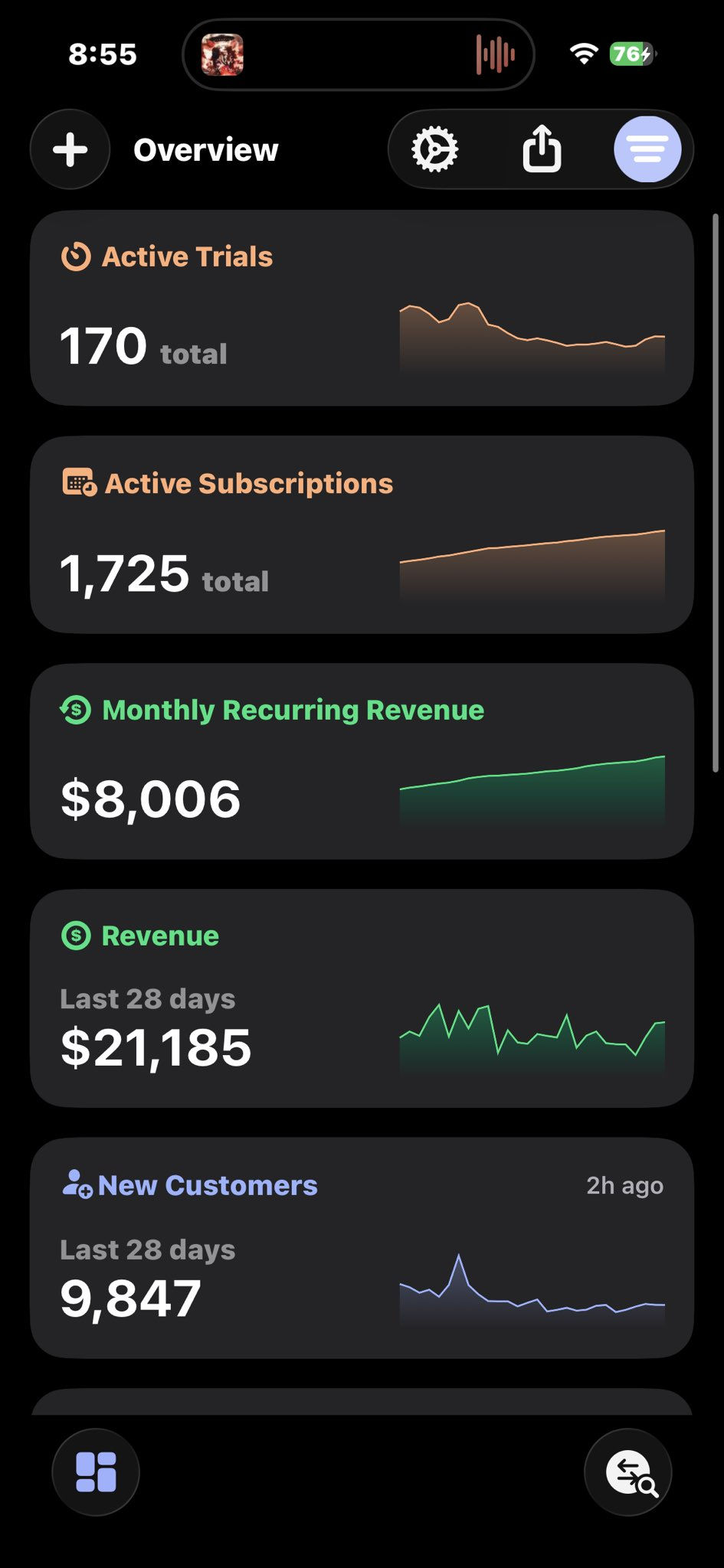
We launched the app in January 2026. In our very first month, we hit $10,000 in revenue. Shortly after, we scaled to between $17,000 and $19,000 in Monthly Recurring Revenue (MRR). We also run a complementary Shopify store that sells training programs, which brings in an extra $100 to $200 every single day.
Because we built this using a no-code tool, our profit margins are incredibly high. We recently hit a major milestone, pulling in over $45,000 in just two months even while we completely paused our paid marketing.
What's your backstory and how did you come up with the idea?
 Before we built 3AK, we spent years failing at other businesses.
Braylin and I were high school track teammates. When the COVID lockdowns hit, we were around 14 and 15 years old. We were bored, stuck at home, and wanted to make money. So, we tried every side hustle you can find on YouTube.
We tried dropshipping. We built multiple Shopify stores selling random products. They all failed. We tried day trading and ended up burning through $6,000 of our hard-earned savings. We tried cutting hair, pressure washing driveways, selling candy at school, and starting a clothing brand.
None of it worked.
The biggest mistake we made back then was guessing. We were building businesses and selling products that nobody was actively asking for. We were just guessing what people might want to buy.
But while we were failing at business, we were succeeding on the track. We started posting our athletic journeys on social media. We posted our raw training footage, our races, and our progress. Braylin had an incredible transformation he dropped his 100-meter dash time from 11.4 seconds down to an elite 10.2 seconds in just one year.
Because we posted real, verified results, our accounts blew up. Braylin grew to over 112,000 followers on Instagram. I grew to over 42,500 followers. Combined, we had an audience of over 150,000 people who loved track and field.
Soon, our direct messages (DMs) were completely flooded. Every single day, hundreds of kids were asking the exact same questions: "What is your training plan?" "How did you get so fast?" "Can you coach me?"
That was our "Aha!" moment. We realized that track and field is a massive, underserved niche. Brands and other fitness apps were reaching out to sponsor us. We looked at each other and said, "Why should we promote their apps for a small fee when we can build our own and keep all the money?"
We stopped guessing what people wanted. Our audience was literally begging us for a solution. All we had to do was build it.
Take us through the process of building the first version of the app.
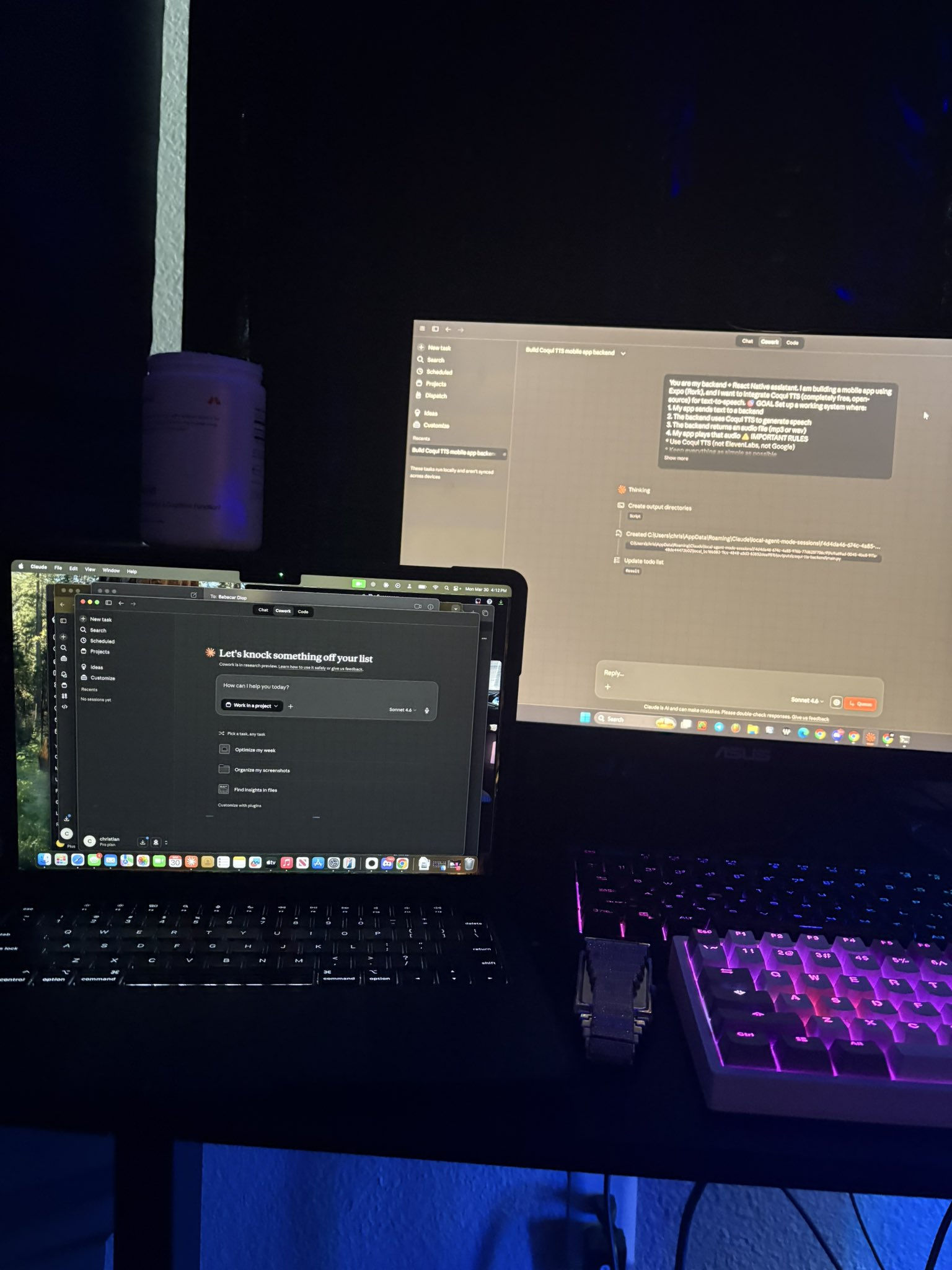
 We had a massive problem: neither of us knew how to code. We didn't know Swift, React Native, or Xcode. We are full-time Division I student-athletes. Between classes, homework, weightlifting, and track practice, we did not have the time to go to school for computer science.
But we didn't let that stop us. We discovered Rork, which is a powerful no-code mobile app builder. It allows you to build real, native apps for iPhones and Androids without writing code.
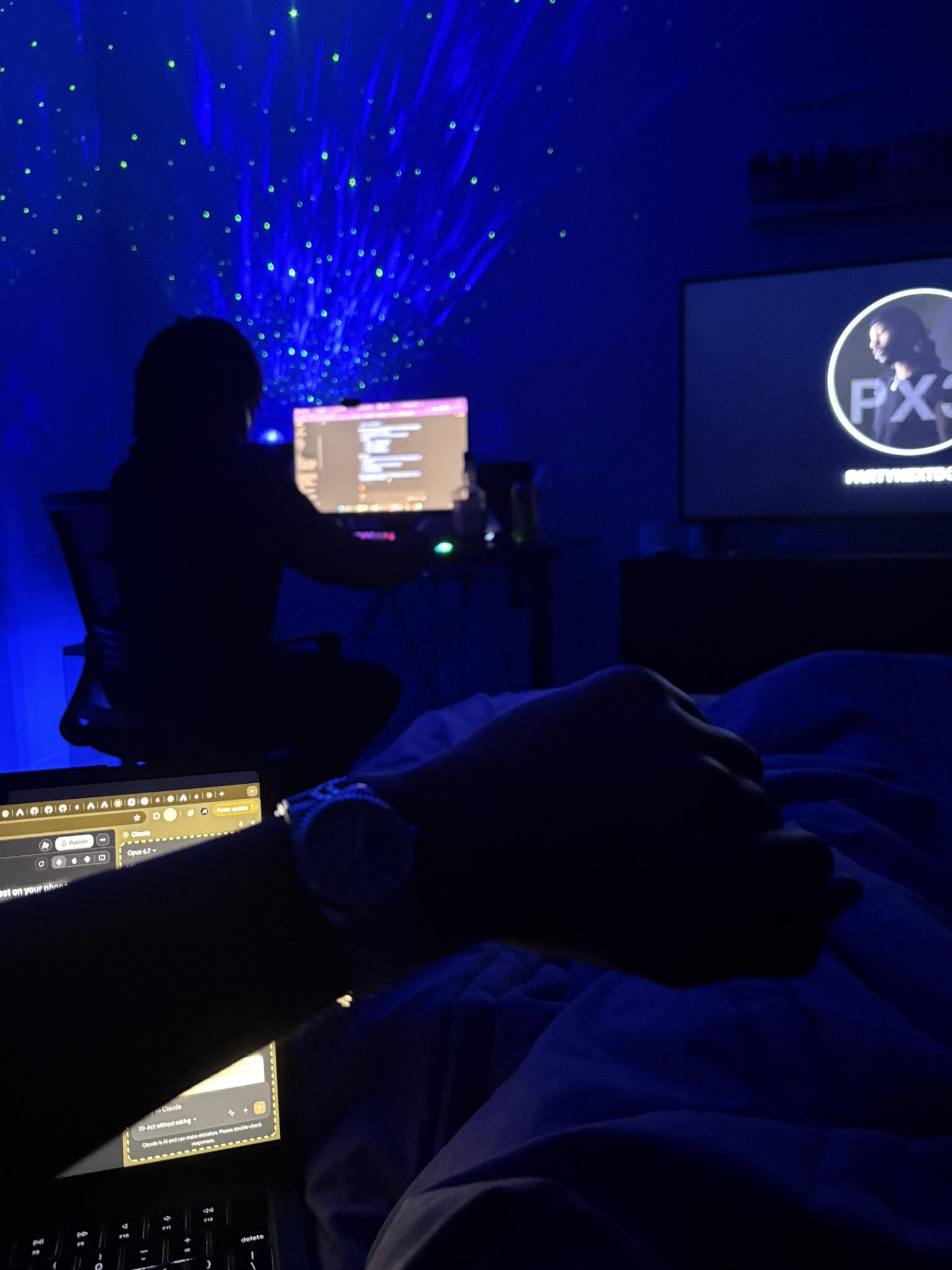
We went all-in. We spent 8 to 10 hours a day learning the Rork platform. Whenever we got stuck or needed complex logic, we used ChatGPT to help us debug and figure out the workflows. The entire 3AK Track app was built in Rork zero custom code.
The Tech Stack:
-
App Builder: Rork (No-code platform)
-
Backend/Logic Help: ChatGPT
-
Payment Processing: RevenueCat (to handle Apple App Store subscriptions)
-
E-commerce Add-on: Shopify (for one-off training program sales)
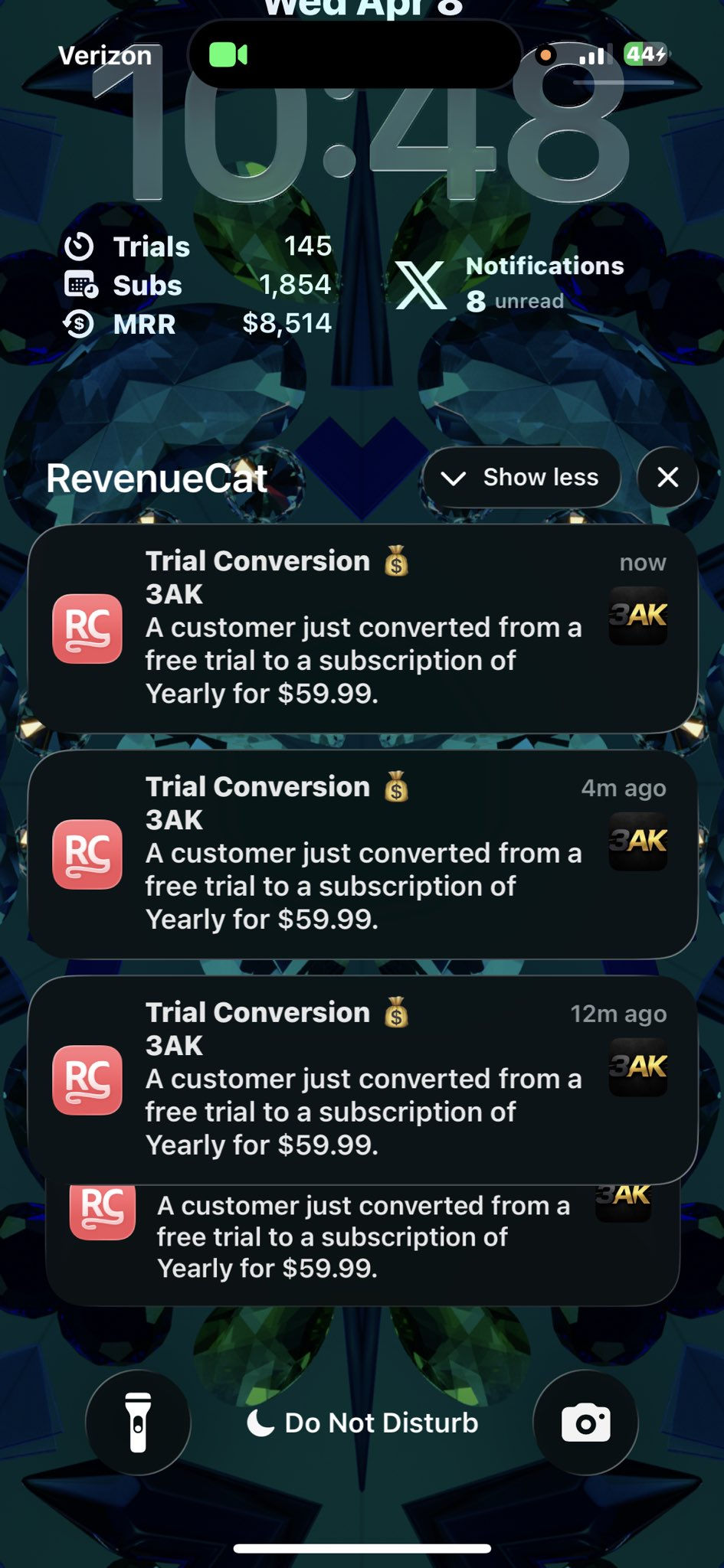
Building it was a grind. There were moments of extreme doubt. At one point, I posted a tweet on my X account (@Christianisrac) that went a bit viral. I posted a screenshot of my phone's lock screen. It was filled with nothing but automated notifications from my own app testing.
I wrote: "I feel lonely, I have no friends, these are the only notis I get." Building a startup can be very isolating, especially when you are a young solo developer or working late nights in a dorm room. But that iterative, data-driven approach testing the app in real scenarios, reading the logs, finding the bugs, and fixing them is what made 3AK so powerful.
We focused on building core features that track athletes actually care about:
-
AI Stride Analysis: You upload a video of yourself running, and the app breaks down your mechanics frame-by-frame to help you run faster.
-
Personal AI Coach: It creates custom workouts based on your goals.
-
Smart Calorie Tracking: Built for athletes burning massive calories, not just people trying to lose weight.
Startup Costs:
Our startup costs were incredibly low. Because we used no-code tools and organic marketing, our only real costs were the monthly subscriptions for Rork, Apple Developer fees ($99/year), and Shopify ($39/month).
How did you get your FIRST customer? (The Launch Strategy)
 Most founders build a product in secret, launch it to zero followers, and then wonder why nobody is buying. We did the exact opposite. We built the audience first.
When we finally launched 3AK in January 2026, we did not spend a single dollar on Facebook or TikTok ads. We didn't need to. Our launch strategy was simply telling our 150,000+ followers that the app they had been asking for was finally ready.
We posted authentic race and training footage on Instagram Reels. At the end of the video, we just added a simple call-to-action: "Get the 3AK Method in the App Store to get this fast."
These didn't look like commercials. They looked like our normal content. One of our Reels hit 118,000 likes. The comments were flooded with athletes sharing their times and talking about the app.
Because our audience was "pre-sold" based on years of trust, the downloads poured in instantly. Our first paying customer came directly from an Instagram DM reply. Within the first 30 days of launching, we crossed $10,000 in revenue.
Since launch, what has worked to attract and retain customers?
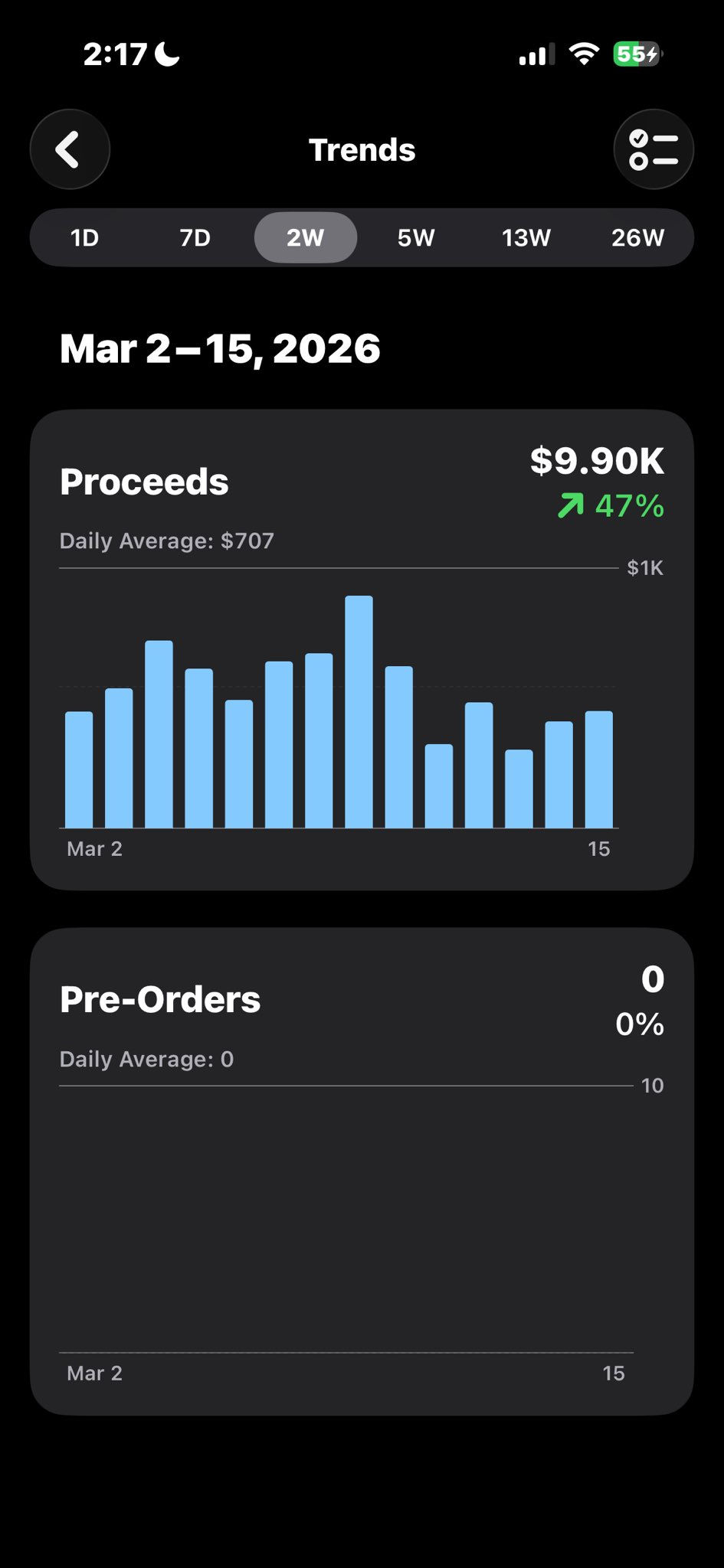 Getting to $10k was about tapping into our existing audience. Growing to $17k–$19k MRR and hitting $45k in two months required us to build real marketing engines. Here is how we grow today:
1. Organic Content as the Ultimate Funnel
We continue to post our real athletic journeys. People follow us because they want to see if we win our college track meets. Every post is a subtle advertisement for the app that trains us. We also started paying attention to user-generated content, testing strategies like having different types of creators even pretty women in the fitness space post videos using the app to reach wider demographics.
2. The Dual Revenue Flywheel (Shopify + In-App)
A major secret to our growth is our Shopify store. We sell one-off training PDF programs for athletes who aren't ready to commit to a monthly app subscription. The store makes $100 to $200 a day. Inside the PDF, we heavily promote the 3AK app. Inside the app, we promote advanced gear and plans on the store. They feed each other perfectly.
3. Long-Tail SEO Compounds (The Web Strategy)
While social media is great for spikes in traffic, we wanted sustainable, passive growth. We learned a massive lesson: Thousands of small keywords beat chasing huge keywords. Instead of trying to rank on Google for impossible terms like "running app" or "fitness tracker," we target highly specific, "long-tail" SEO keywords.
We create content around phrases like:
-
"How to improve 100m sprint time by 0.5 seconds"
-
"Best block start techniques for 400m runners"
-
"Track and field AI stride analysis software"
-
"How to get recruited for college track D1"
These long-tail keywords don't get millions of searches, but the people searching them have incredibly high intent. When a high school athlete searches for "how to improve 100m sprint time," they land on our article, get great free advice, and then see a link to download 3AK. Long-tail SEO compounds over time, acting as a 24/7 salesperson for our app.
4. Expanding to New Verticals
We recently brought on a third co-founder, Tobi Haastrup, who is a football player at West Virginia. He has his own massive audience. We used our exact same Rork framework to launch 3AK Football. We plan to do this for baseball, soccer, and basketball partnering with a niche creator in each sport to lead the vertical.
How did you figure out your pricing model?
 Pricing was one of our biggest learning curves.
When we first launched, we priced the app at $9.99/month or $59.99/year. We were getting decent sales, but we noticed a lot of people hesitating.
We took a step back and looked at our core demographic. Who is our target customer? It's a 15 to 22-year-old high school or college athlete. They don't have massive disposable incomes. $60 a year is a lot of money to a high school sophomore.
We decided to run a pricing test. We kept the monthly price but dropped the annual subscription down to $29.99/year.
The results were explosive. At $30 a year (which breaks down to just $2.50 a month), the app became a total no-brainer. It was cheaper than a single trip to a fast-food restaurant. Our conversions tripled overnight. By lowering the price, we actually made significantly more money because the volume of annual sign-ups skyrocketed.
What have been your biggest mistakes and challenges?
1. Building stuff people didn't want. As mentioned, we wasted our early teen years building dropshipping stores that no one cared about. We burned $6,000 day trading. The lesson was painful: stop chasing shiny objects and start solving real problems for a specific group of people.
2. Balancing Division I Sports and Business.
Being a student-athlete is a full-time job. We wake up, go to class, lift weights, go to track practice, do homework, and then we have to run a $17,000/month software company. Braylin and I also go to different schools (Texas Tech and Texas Southern), which are about 8 hours apart. We have to do everything completely remotely. It forces us to be extremely disciplined with our time.
3. Apple App Store Reviews.
When you don't know how to code and you are moving fast, dealing with Apple's strict review process is a nightmare. There were times when an update got rejected, and our app was bugging out for users. I once sat on hold with Apple Developer Support for an hour and a half just trying to get our app pushed through.
What is the "Secret Sauce"? (Advice for other Indie Hackers)
If someone is reading this and wants to build a SaaS or a mobile app business, here are our biggest secrets:
-
Solve your audience's exact pain: Do not guess. Look at your comments, look at your DMs, look at Reddit forums. People will explicitly tell you what they want to buy. Build that.
-
Audience First, Product Second: Having 150,000 followers gave us instant trust and distribution. Build an audience on X, TikTok, or Instagram while you build your product.
-
No-Code is a Superpower: You do not need to spend 4 years learning to code to build a tech startup in 2026. Tools like Rork level the playing field. Execute fast.
-
Price for your real customer: Don't price your app based on what your competitors charge. Price it based on what your specific user can actually afford. Test everything.
-
Multi-product flywheel: Don't just rely on App Store subscriptions. Having the Shopify store selling digital products keeps cash flow strong and diversifies our income.
-
Thousands of small keywords beat chasing huge keywords: Use long-tail SEO. Write content for the highly specific, low-volume search terms. It converts way better.
-
Ship often: I am 20 years old and have shipped over 20 apps. Most of them failed. 3AK was the one that stuck. Reps matter.
Questions We Should Ask Next (The Starter Story Follow-Up)
Based on Christian and Braylin's journey, here are the critical questions a savvy interviewer should dig into next:
-
The Tech Limits: "You built a $17k/mo app entirely without code using Rork. What are the specific technical walls or limitations you are hitting now as you scale past 50,000 users, and will you eventually have to rewrite the app in Swift/React Native?"
-
Churn & Retention: "At $29.99 a year, your upfront conversion is great. But what happens after track season ends? How are you battling seasonal churn to keep athletes engaged during their off-season?"
-
The SEO Engine: "You mentioned long-tail SEO compounds. Walk us through exactly how you find these keywords. Are you using AI to write the articles, and how long does it take for a new post to result in an app download?"
-
Time Management: "Give us the hour-by-hour breakdown of a Tuesday in your life. How exactly do you balance D1 athletics, college exams, and running a tech startup without burning out?"
To follow Christian and Braylin's journey as they scale 3AK to $100k months, follow them on X at @Christianisrac and @Braylin2x
Christian Rac
Founder · 3AK Track
 United States
This story is compiled from public sources and presented in an interview format for a better reading experience.