How a Simple SEO Service Hit $20K MRR With Zero Ads
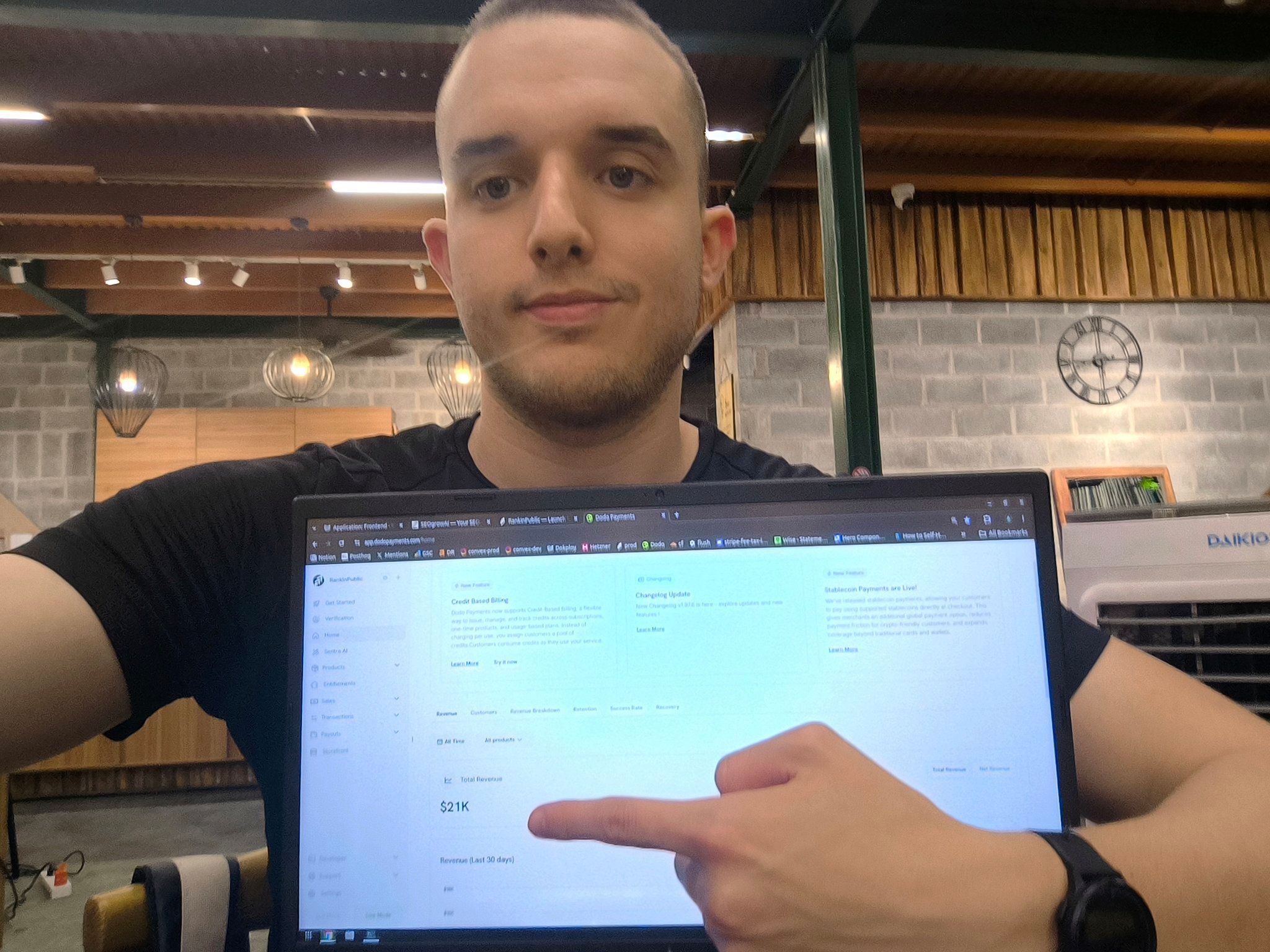
TL;DR: Antonio Escudero built RankInPublic, a gamified startup launch platform that helps founders get backlinks, traffic, and real SEO growth. By pairing free weekly tournaments with a highly profitable directory submission service, he scaled the business to over $17,000 MRR as a solo indie hacker. This case study reveals his exact playbook for getting first customers, building in public on Twitter, and using a clever ChatGPT hack to drive automated sales.
Antonio Escudero
Founder · RankInPublic
This story is compiled from public sources and presented in an interview format for a better reading experience.
Hello! Who are you and what business did you start?
Hey! I am Antonio Escudero. I am a solo indie hacker and the founder of RankInPublic, a startup launch platform and SEO tool built to help founders get traffic, get feedback, and increase their website's domain rating.
RankInPublic does two main things. First, it is a free, tournament-style launch platform. Every week, new SaaS (Software as a Service) products go head-to-head in 1-on-1 matchups. The community votes, and the winners get great exposure and backlinks.
Second, and this is where the real business is, I offer a high-value paid Directory Submission Service. Founders pay me to submit their startup to over 140+ directories. This gives them a massive SEO boost, brings in organic traffic, and raises their Domain Rating (DR) fast.
Right now, the business is making around $17,000 to $20,000 in MRR (Monthly Recurring Revenue). In April 2026 alone, we hit $13,500, with my biggest single day bringing in $2,800. Best of all, my costs are super low because I run it on a simple VPS server, so profit margins are huge. My goal is to hit $100K MRR by the end of 2026.
What's your backstory and how did you come up with the idea?
Like many builders, I faced the classic indie hacker problem. You spend months building a cool product, you launch it on X (Twitter) or Product Hunt, and... nothing happens. It's like shouting into an empty room.
I realized that traditional launch directories only give you a quick spike in traffic for one day. After that, your traffic dies. What startups actually need for long-term survival is SEO (Search Engine Optimization) and backlinks. High-quality backlinks tell Google your site is important, which brings you free traffic for years.
I also noticed that indie hackers are very competitive. We love leaderboards. We love sharing our MRR and our website traffic.
So, I thought: What if I made launching a game? I wanted to build a platform where founders could battle it out in a tournament, get real feedback from the community, and win real SEO backlinks. That is how the idea for RankInPublic was born. I started building it to solve my own problem of getting my projects noticed.
Take us through the process of building the first version.
 I believe in keeping things lean. I am a solo developer, so I built RankInPublic myself.
The first version (the MVP) was very simple. It had a form for founders to submit their product, a basic voting system, and a leaderboard. That's it. No fancy extra features.
For my tech stack, I kept costs as low as possible. I used a simple web app setup and hosted it on a cheap Hetzner VPS (Virtual Private Server). Because it is so simple, the maintenance is very low. In fact, recently, as the revenue has grown, I've barely had to write any new code to keep it running smoothly.
Validation: I validated the idea right away because I used it myself. I started doing directory submissions to boost RankInPublic's own Domain Rating. When I saw it working for my own site, I knew other founders would pay for the same result.
Describe the process of launching. How did you get your first customers?
 A lot of founders think they need to run paid ads to get customers. I didn't.
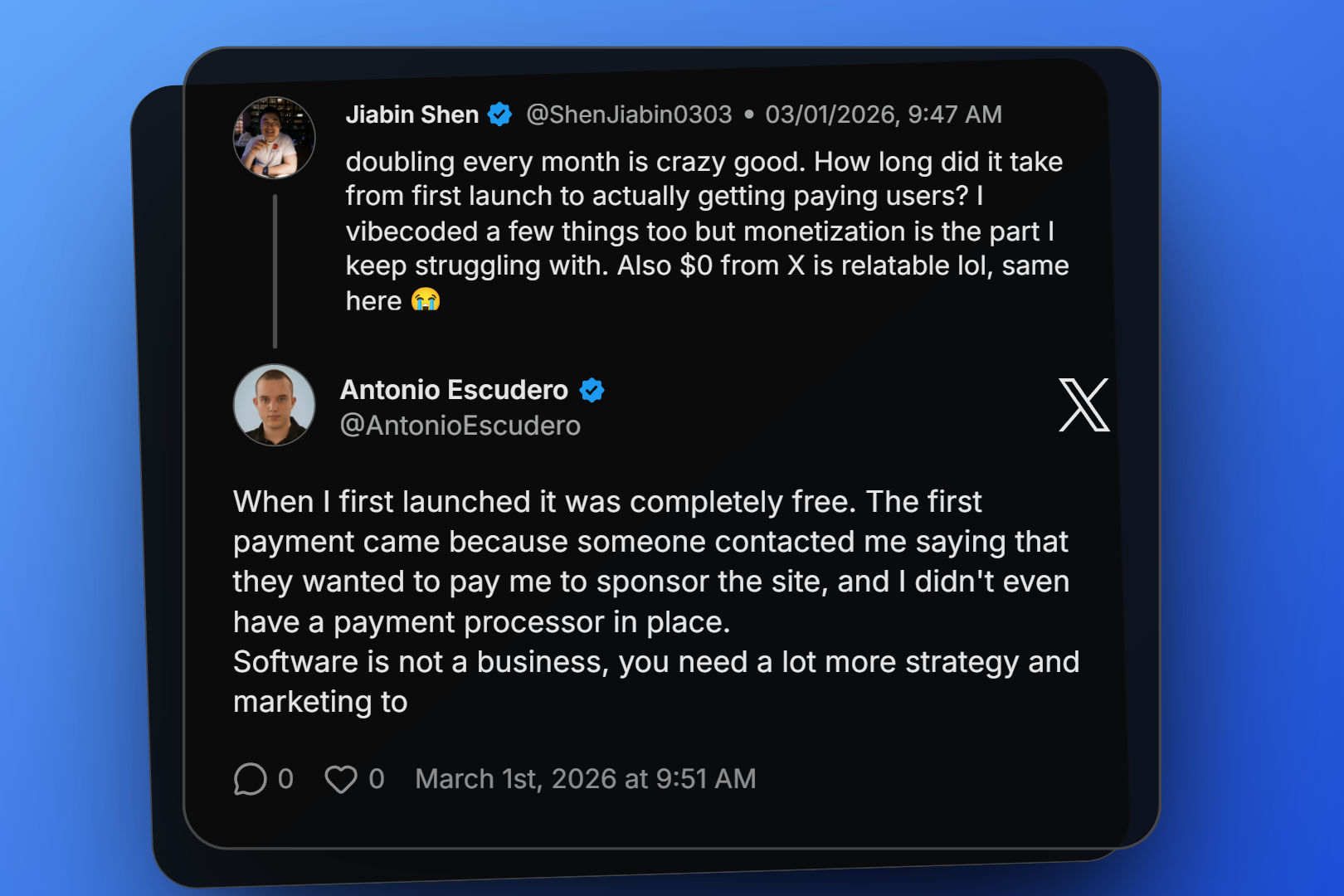
My first paying customer came from inside the platform. About two months into the grind, someone reached out and paid to sponsor one of our weekly tournaments. That was the first dollar made.
But to really grow, I had to build a smart acquisition system. Here is the exact playbook of how I got my first customers and how I still get them today:
1. The Inherent Viral Loop (Free Marketing)
RankInPublic is built to market itself. When a founder submits their startup to a tournament, they want to win. So, what do they do? They go to their own Twitter audience and say, "Hey, I'm competing on RankInPublic! Go vote for me!" Every user brings their own audience to my website for free.
2. Building in Public on X (Twitter)
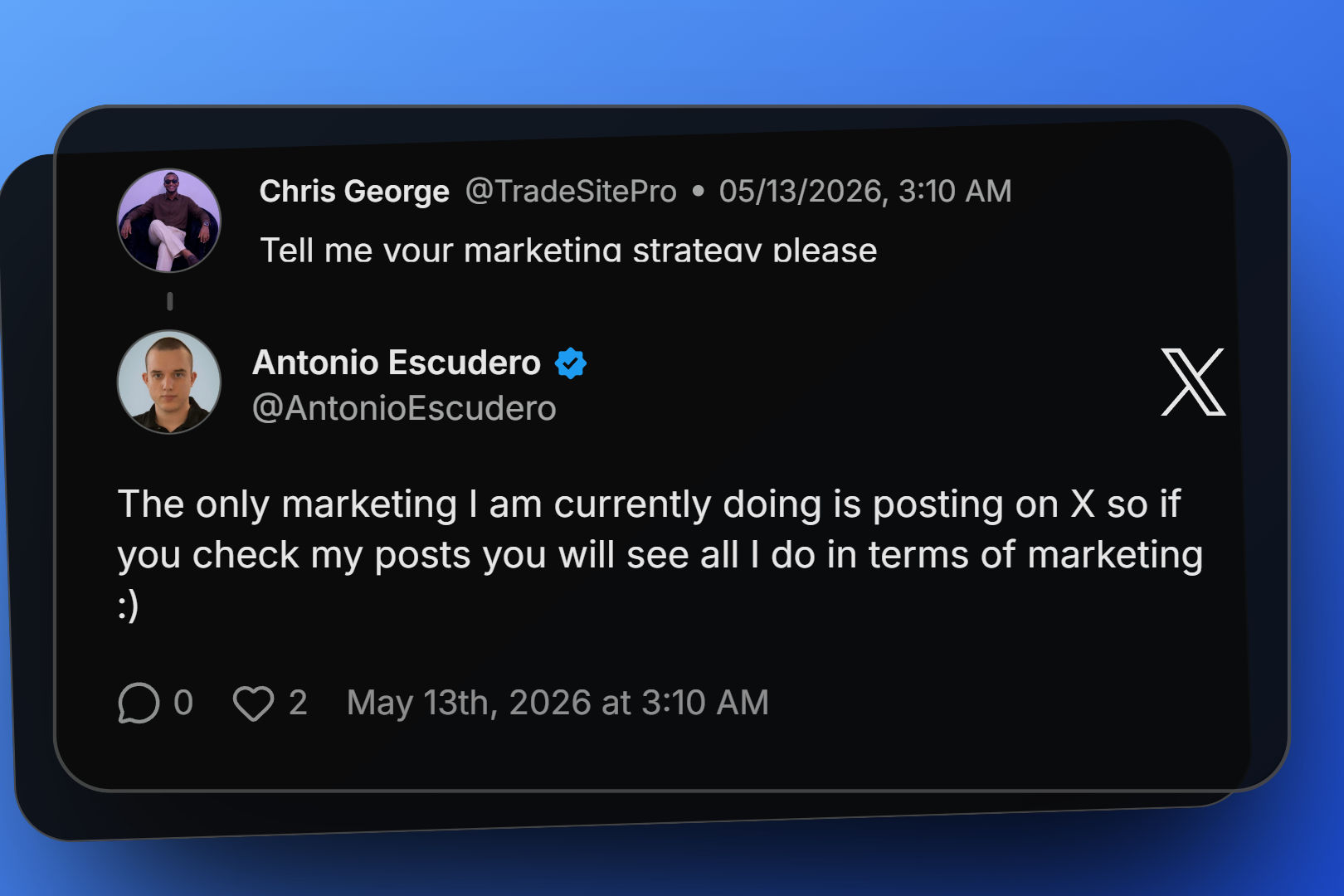
My personal X account is my biggest growth engine. I don't just post links to my tool. I share extreme value. I write free guides on how to get backlinks, how to increase domain rating, and the best times to launch. I also post screenshots of my revenue and the exact DR growth my customers get. People trust me because I am totally transparent.
3. The Free-to-Paid Funnel
Anyone can submit to RankInPublic for free. That gets people in the door. Once they are on the site, they see the paid Directory Submission Service. When they realize how hard it is to manually submit to 140+ sites by themselves, they pay me to do it for them.
Since launch, what has worked to attract and retain customers? What are your growth channels?
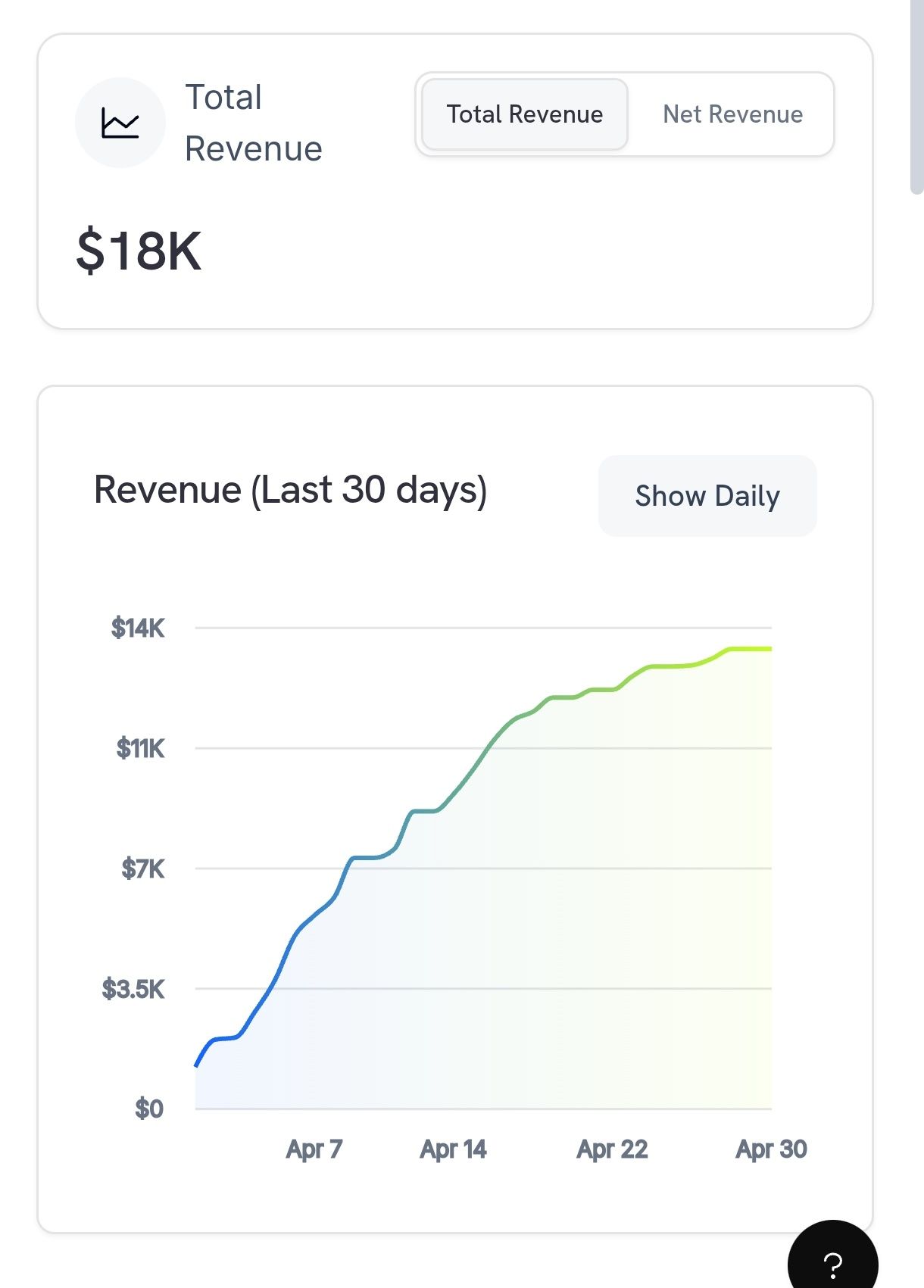 My revenue exploded in early 2026 (jumping from $4.3K in March to $13.5K in April). That happened because I stopped just marketing the "fun tournaments" and started pushing the high-ticket "Directory Submission Service" directly.
Here are my top growth channels right now:
1. Selling the Ultimate Painkiller (The Directory Service)
Founders hate doing SEO busywork. By offering a "done-for-you" service that guarantees a boost in DR (some customers see jumps of +17 or +24 points), I created a no-brainer offer. I built dedicated landing pages just for this service, which convert very well.
2. The ChatGPT SEO Hack
This is a fun secret. I started writing blog posts targeting very specific questions founders ask. I realized that people are using ChatGPT to search for tools now. So, I optimized my articles to be cited by AI. In one month, being referenced by ChatGPT brought me 41 highly targeted visitors. Out of those 41 visitors, 4 bought my service, making me $996. That is a crazy 10% conversion rate just from AI!
3. Dogfooding (Using my own product)
I submitted RankInPublic to every single directory out there. This boosted my own site's power. Because my site is powerful, the backlinks I give to tournament winners are more valuable. It is a perfect, spinning wheel of growth.
What were your biggest mistakes or challenges?
1. The slow early grind.
The first few months were very slow. I was focusing too much on the free community platform and not enough on the paid services. Once I shifted my marketing to focus on the high-value directory service, revenue took off.
2. Technical headaches.
Even with a simple stack, moving databases and doing major updates was a pain. It took time away from marketing. But you just have to push through it.
3. Not charging for the big value sooner.
The platform is great, but the service is what changes a business. I wish I had built dedicated landing pages for the paid directory service from day one.
What is your revenue model and pricing?
It is a mix of Freemium SaaS and high-ticket service.
-
Free Tier: Submit your product to the tournament, get community votes, and possibly win free exposure.
-
Premium Platform: Sponsoring tournaments or paying for guaranteed placement.
-
Directory Submission Service (The Main Earner): A one-time or recurring fee to have my team manually and semi-automatically submit your startup to 140+ high-quality directories. This saves founders dozens of hours and delivers guaranteed SEO results.
This model is great because the free platform brings in thousands of eyeballs, and a small percentage of those people upgrade to the high-ticket service.
What are the next steps for RankInPublic?
My bio says it all: the goal is $1M ARR (Annual Recurring Revenue).
To get from ~$20K MRR to $100K MRR, my focus is on:
-
Scaling the Service: Figuring out how to automate the directory submissions even more, or building a small team, so I can handle hundreds of orders a month.
-
New SEO Products: I am looking into launching new AI-driven SEO tools (like SEOgrowAI) to help founders write better content.
-
Community Stickiness: Building features that make founders come back every single week, not just when they launch.
Advice for other indie hackers who want to get started?
1. Solve your own painful problem.
I needed backlinks. I built a system to get backlinks. Then, I sold that exact system to others. If it solves your problem, someone will pay for it.
2. Stop hiding behind your code.
Build in public. Start posting on X today. You don't need to be an expert; just share what you are learning. Share your wins, your failed database migrations, your traffic stats. People buy from people they like and trust.
3. SEO is a core product feature.
Don't treat SEO as an afterthought. Build tools, write guides, and create free value that targets exactly what your customers are searching for. Reverse-engineer what ChatGPT is looking for.
4. Track the right numbers.
Don't just look at "likes" on Twitter. Look at how much your Domain Rating went up. Look at your conversion rates. Double down on whatever makes the revenue go up.
Launch your ugly first version. Iterate in public. Keep shipping.