How Origami Grew From Google Sheets to $50K MRR Without Paid Ads
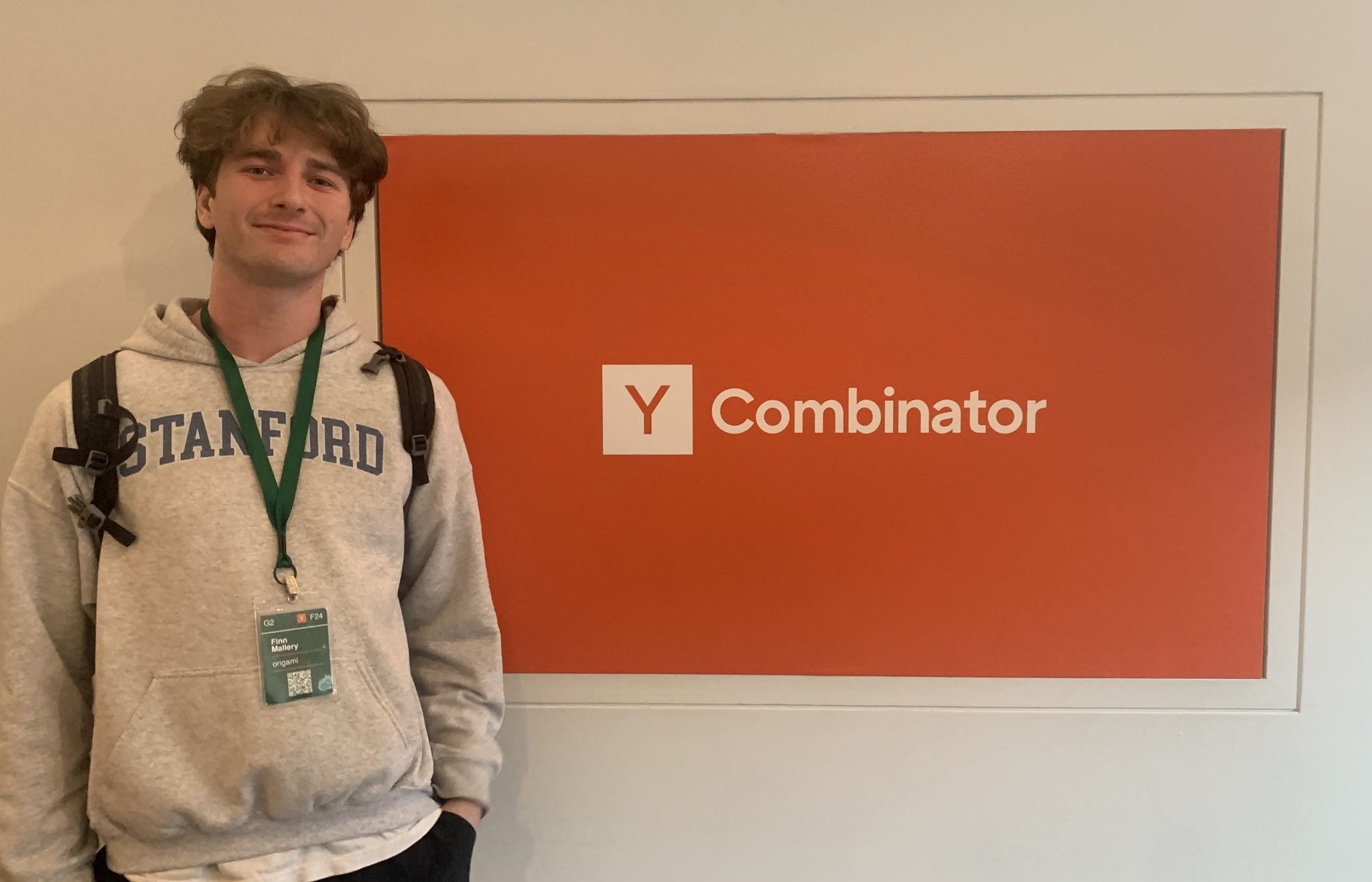
TL;DR: Discover how two 22-year-old founders bootstrapped an AI lead generation tool to $50,000 in monthly recurring revenue (MRR) in just 100 days with zero ad spend. By pre-selling their B2B sales platform as a simple Google Sheet and mastering LinkedIn outbound, they quickly scaled Origami.chat into a highly profitable SaaS.
Hello! Who are you and what are you building?
My name is Finn Mallery. I am a 22-year-old founder, and I built Origami alongside my best friend and co-founder, Kenson Chung. We are building the ultimate AI-powered "Go-To-Market Engineer in a box."
Our product, Origami, is an AI lead generation and prospecting platform. The promise is simple: "Great Leads in 1 Prompt." If you are in B2B sales, you know that finding good leads is painful. Most people use stale databases like Apollo or ZoomInfo. The problem is, those databases just give you basic facts (This company has 500 people). They don't tell you who is actually ready to buy right now.
Origami changes that. You just type what you want in plain English. For example: "Find me SaaS companies in Texas that just raised funding and are actively hiring sales reps." Our AI then searches across 100+ real-time data sources Google Maps, LinkedIn, job boards, company websites, and the open web. It gives you a verified list of leads with correct emails and phone numbers. It does the work of a human researcher in seconds.
We launched this as a new product iteration. We had zero external funding for the initial push, no marketing budget, and no marketing team. Despite that, we hit $50,000 in Monthly Recurring Revenue (MRR) in about 100 days.
What is your background, and how did you validate the idea?
 I studied Math and Computer Science at Stanford. While I was there, I worked on the early Go-To-Market (GTM) strategy for an app called Fizz, which went on to raise over $40 million.
My co-founder, Kenson, was studying computer science at University College London (UCL). We met at a hackathon in the US and bonded over our shared obsession with building things. He previously worked as the CTO of an enterprise sales platform, helping billion-dollar clients with their research workflows.
Before building Origami software, I launched a cold outbound email agency. Over five years, we built custom, automated outbound sales systems for over 20 startups. We were charging clients $5,000 to $10,000 a month just to build lead lists for them.
Validation: Selling a Google Sheet
This is the biggest secret to our early success: We validated the product before we even wrote the code for the app.
When we realized AI could do the same work my expensive agency was doing, we didn't spend six months building a fancy website. Our first "product" was literally a Google Sheet. We reached out to people and said, "Tell me your ideal customer, and my AI will find them." We used our rough, backend AI scripts to scrape the web, gather the leads, verify them, and paste them into a Google Sheet. We sold that outcome. The demand was so overwhelming that for the first few months, we didn't even have time to build a frontend user interface (UI). Customers didn't care that it was a basic spreadsheet; they just cared that the leads were pure gold and helped them book sales calls.
This taught us a massive lesson: Sell the outcome, not the feature. If people will pay you for a messy Google Sheet, you know you have true Product-Market Fit.
Take us through your growth timeline. How did you go from $0 to $50k MRR in just 3 months?
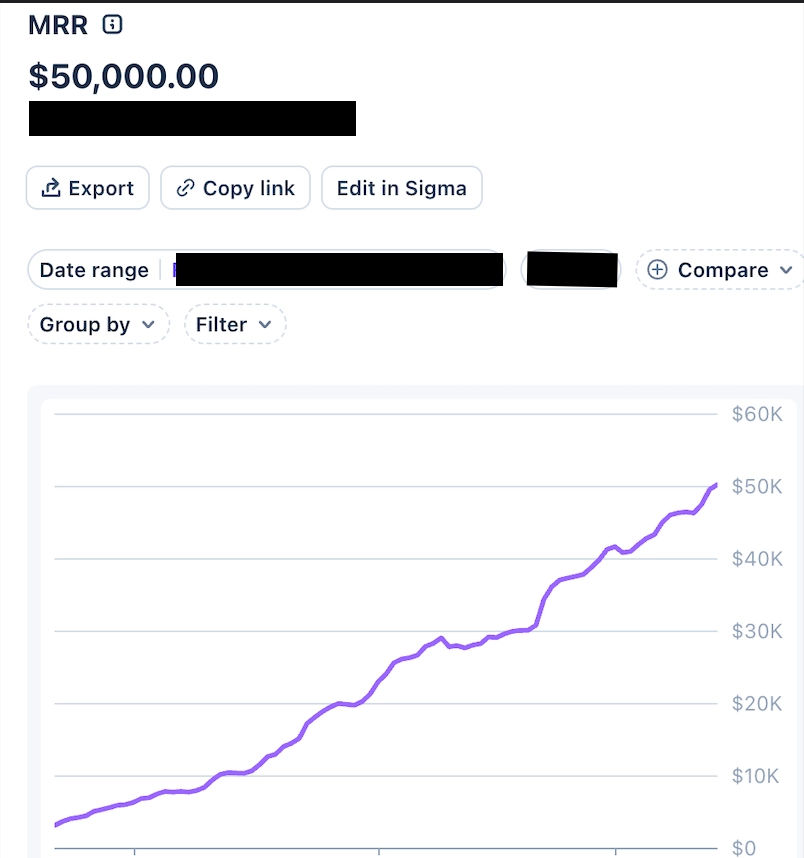 Hitting $50k MRR in 100 days sounds crazy, but when you break it down, it was a very step-by-step process. Here is the exact breakdown of our growth phases.
Phase 1: $0 → $2k MRR (The Hardest Part)
-
Timeframe: About 10 days from the first line of code to MVP launch. About 20 days total to get our first revenue.
-
Strategy: Pure, unscalable LinkedIn outbound.
-
How we got our first customer: I did not use cold email at first. I used LinkedIn Direct Messages (DMs). Early on, LinkedIn gets much better response rates than email because people get less spam there.
-
The exact mechanism: I offered pure, free value using the product itself. I would find a founder or sales leader and send a message like: "Hey [Name], I wrote an AI prompt that finds perfect prospects for [Their Specific Niche]. Drop it in origami.chat and I'll share the list for free." * This created an amazing loop. The prospect saw the power of the tool firsthand with zero risk. Once they saw the high-quality leads, they happily paid for a subscription to get more.
Phase 2: $2k → $10k MRR
-
Strategy: Expanding outbound and our Product Hunt launch.
-
Once we had a real app, we launched on Product Hunt. On February 19, 2026, we hit #1 Product of the Day with 309 upvotes.
-
We didn't just post it and pray. We timed it perfectly, rallied our early users to support us, and I sat at my keyboard all day answering every single question in the comments. This gave us a huge spike in visibility and trust. We also started capturing emails to build our newsletter.
Phase 3: $10k → $20k+ MRR
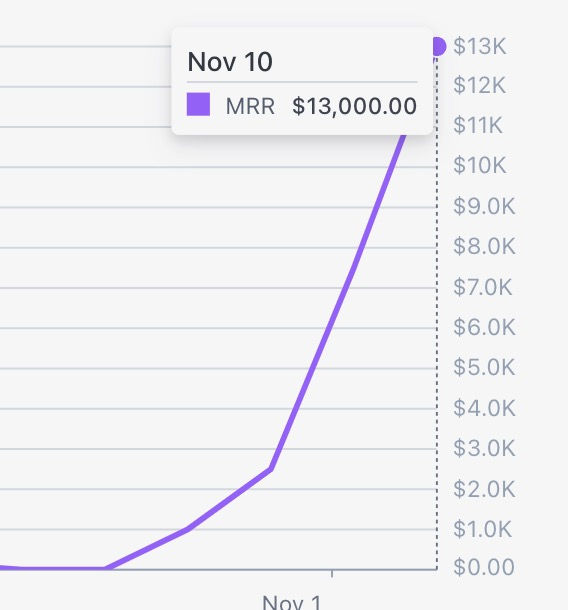 - Strategy: Riding the launch momentum and building in public.
- We started posting consistently on X (Twitter). I shared real numbers, real strategies, and real failures. People love transparency. We built a community around the problem of bad B2B sales data.
Phase 4: $20k → $50k MRR
-
Strategy: Relentless execution and feature velocity.
-
We started launching "boring" features. But because we had built trust with our audience, a post about a boring new data filter would still get 100,000+ views on X.
-
We maximized our waitlist, which grew to over 10,000 customers. We shipped new code 24/7. We also started combining our organic content with heavy cold email outbound to keep the pipeline full.
What are your top customer acquisition and growth channels today?
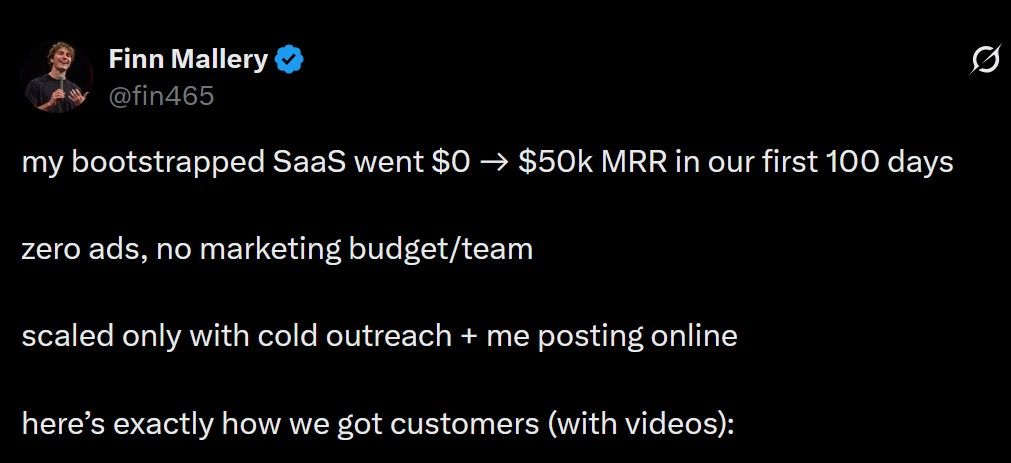 We still spend $0 on paid ads. Our entire growth engine is built on four main pillars:
1. Cold Outbound (Eating our own dog food)
Outbound is our core engine. We use Origami to sell Origami. Our AI runs 24/7, finding companies that show signals of needing a lead gen tool (like companies hiring new sales reps). Then, we reach out to them. We still rely heavily on LinkedIn DMs and highly personalized cold emails.
2. Personal Brand on X (Twitter)
I have around 16,000 followers on X (@fin465). I post deep breakdowns, tips, and product updates. This acts as an incredible top-of-funnel magnet. When you share value for free, people trust you. When they need a tool later, you are the first person they think of.
3. Long-Tail SEO Compounds
This is a huge secret for SaaS growth. We do not try to rank on Google for massive, highly competitive words like "Lead Generation Software." We would lose to billion-dollar companies.
Instead, we focus on Long-Tail SEO. Thousands of small keywords beat chasing huge keywords. We create pages and content for very specific searches, like: "How to find leads for commercial roofing companies in Ohio" or "Alternative to ZoomInfo for small SaaS startups." These small keywords have low search volume, but the people searching for them have extremely high buying intent. Over time, all these small pages compound into massive organic traffic.
4. The Waitlist & Product-Led Growth (PLG)
We built a lot of hype before opening the doors fully. A waitlist builds desire. Once users are in, the product acts as its own marketing tool. We have a free tier where users can test the prompt. Once they see the "Aha!" moment when perfectly targeted leads appear on their screen upgrading is a no-brainer.
Let's talk about the business: What is your pricing and revenue model?
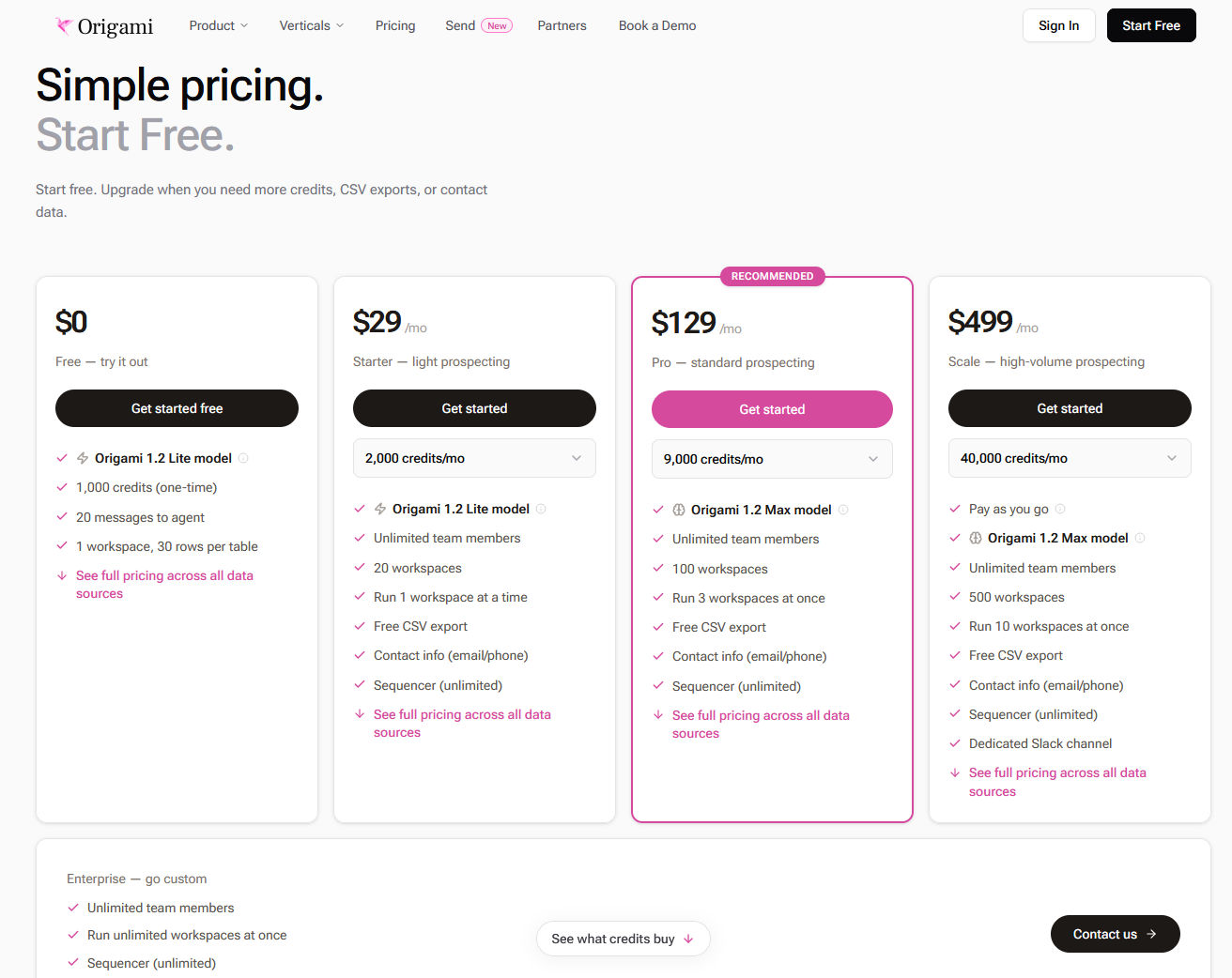 We use a Freemium to Pay-for-Credits model.
-
Free Tier: Users can sign up for free to test the interface and see how the AI searches for leads. This removes all friction from trying the product.
-
Paid Plans: Users buy monthly subscriptions that give them "credits." They spend credits to export leads, reveal verified contact information (emails/phones), and use our built-in sequencing tool to send emails.
-
Enterprise: For larger teams, we offer custom plans with unlimited usage, custom data integrations, and dedicated support.
This model works perfectly because it aligns with our customers' success. The more leads they need, the more they pay us.
What is the tech stack behind Origami?
Building a tool that searches the internet in real-time is not easy. Our stack is designed for speed and accuracy.
-
The Brain: We use advanced LLMs (Large Language Models) to understand the user's natural language prompt and figure out what kind of data to look for.
-
The Search Engine: The AI agents connect to 100+ real-time data sources. We scrape the open web, job boards, LinkedIn, news articles, and Google Maps live. We don't rely on cached, old data.
-
The Waterfall Enrichment: Finding a name is easy; finding a valid email is hard. We use a "waterfall" method. This means if one data provider doesn't have the email, our system automatically falls back to checking another, and another, until we find it. We integrate with tools like Findymail and LeadMagic to enrich the contacts.
-
Validation: Before we show an email to a user, we run it through zero-bounce validation. If the email is going to bounce, we don't charge the user for it. Accuracy is everything.
What were the biggest mistakes you made, and what challenges did you face?
 1. The "0 to 1" phase is brutal.
Our very first attempts at building tools took way longer than they should have. We spent too much time thinking and not enough time shipping. We fixed this by forcing ourselves to launch the MVP in 10 days.
2. Ruining Inbox Health.
When you first learn cold email, the temptation is to send 10,000 emails a day. We made the mistake early on of not warming up our email domains properly and hitting volume limits. Our emails went to spam. We had to learn the hard way that sending 50 highly personalized emails a day is 100x better than sending 5,000 generic, spammy emails.
3. Balancing Building and Selling.
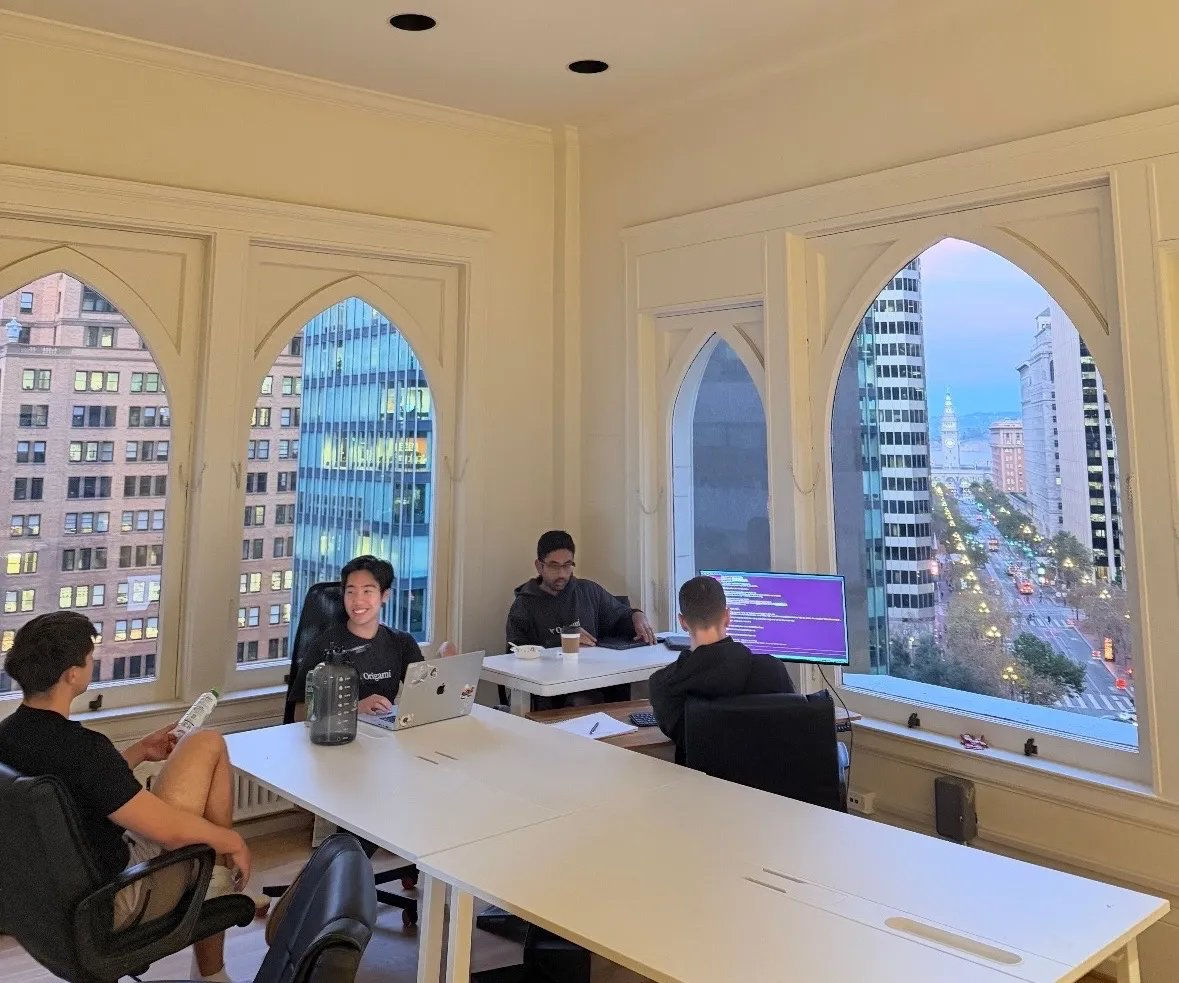
When there are only two of you, every hour you spend coding is an hour you aren't selling. It was exhausting. We operated on a "grindcore" culture working insane hours just to keep the servers alive while taking sales calls all day. Now that we have scaled to a 10-person team post-Y Combinator, we can divide the work better.
What are the biggest "secrets" you’ve learned that other founders should know?
 If I could give advice to anyone trying to bootstrap a SaaS to $50k MRR, it would be these three things:
Secret 1: Don't build tools that create more spam; build tools that create context.
The industry trend right now is building AI to write a million cold emails for you automatically. That is just spam. Our secret was realizing the problem isn't sending emails; the problem is knowing who to email. We built AI to do the boring background research. If you send an email based on a real-time signal (like a company just posting a job for exactly what you sell), it’s not spam it’s a highly relevant business offer.
Secret 2: If you can crack cold email, everything else becomes 10x easier.
Cold outreach forces you to perfect your messaging. If your product is bad or your message is confusing, strangers will ignore you. If you can write a cold message on LinkedIn that gets a stranger to jump on a Zoom call and hand you money, you have achieved Product-Market Fit. You don't need a massive marketing budget if you know how to write a good direct message.
Secret 3: Do things that don't scale.
Don't wait until your software is perfect to start selling. Sell a Google Sheet. Sell a manual service. Use the money from that service to fund the software development. The manual work teaches you exactly what features the software actually needs to have.
For more about Finn and his startup, visit Origami.chat or follow him on X @fin465. Watch out for future breakdowns as they scale toward $1M+ ARR!
Finn Mallery
Co-Founder · Origami.chat
 United States