I Built a €4,000/Month Social Media Scheduling Tool While Working a Full-Time Job
 ## Hello! Who are you and what business did you start?
Hi, I'm Petar Georgiev (@peturgeorgievv). I'm a software developer from Bulgaria with over 7 years of experience building MVPs and enterprise-scale applications. By day, I hold a full-time job, and by night and on weekends, I'm an indie hacker.
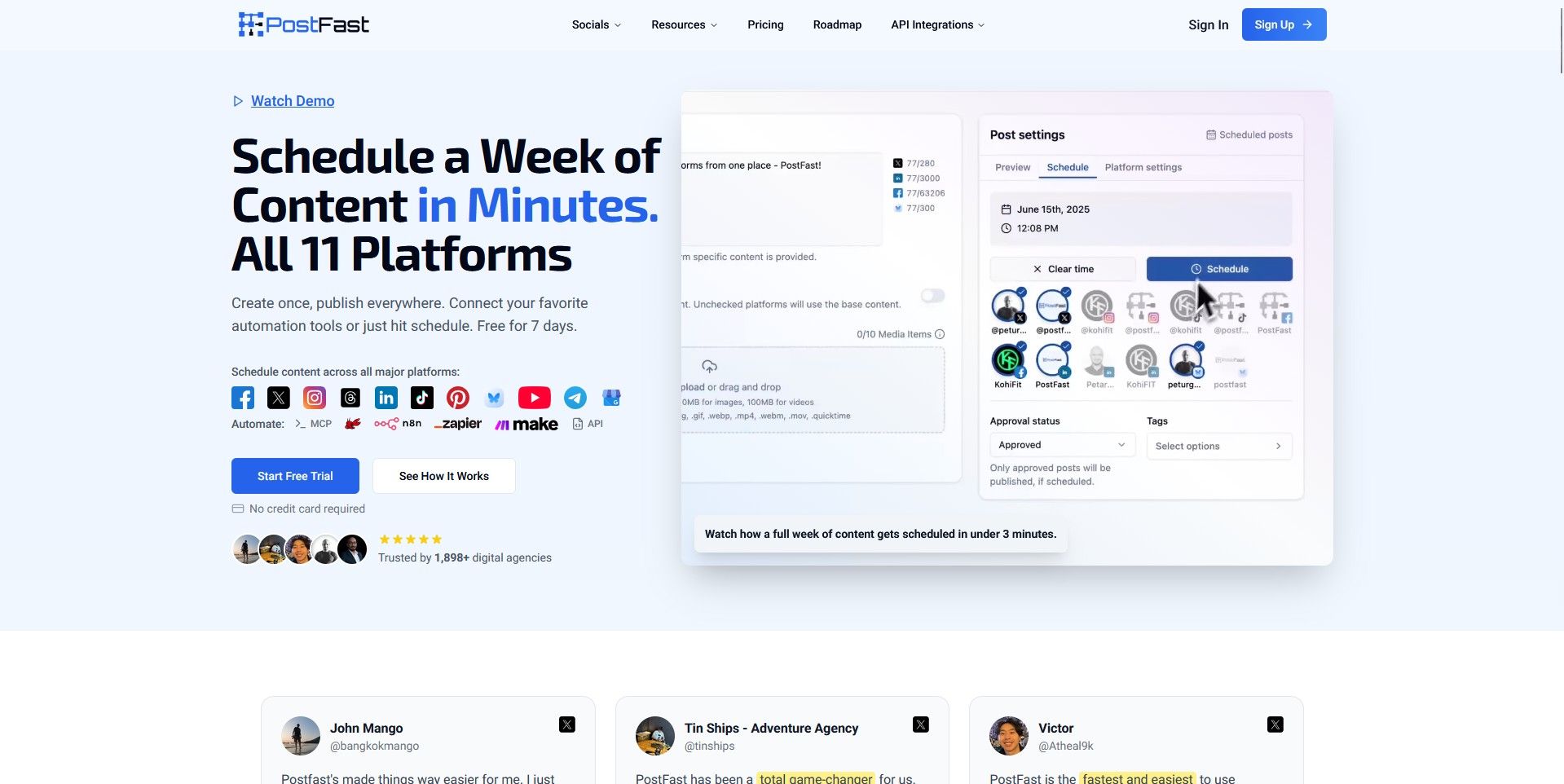
I am the founder of PostFast (postfa.st), a social media scheduling and analytics tool that lets users create content once and publish or automate it across 10+ platforms from a single dashboard.
PostFast is built for creators, founders, and large agencies who manage multiple accounts. It supports TikTok, Instagram (Feed, Reels, Stories, carousels), Facebook, Threads, X/Twitter, YouTube (Shorts & videos), LinkedIn, Pinterest, BlueSky, Telegram, and Google Business Profile.
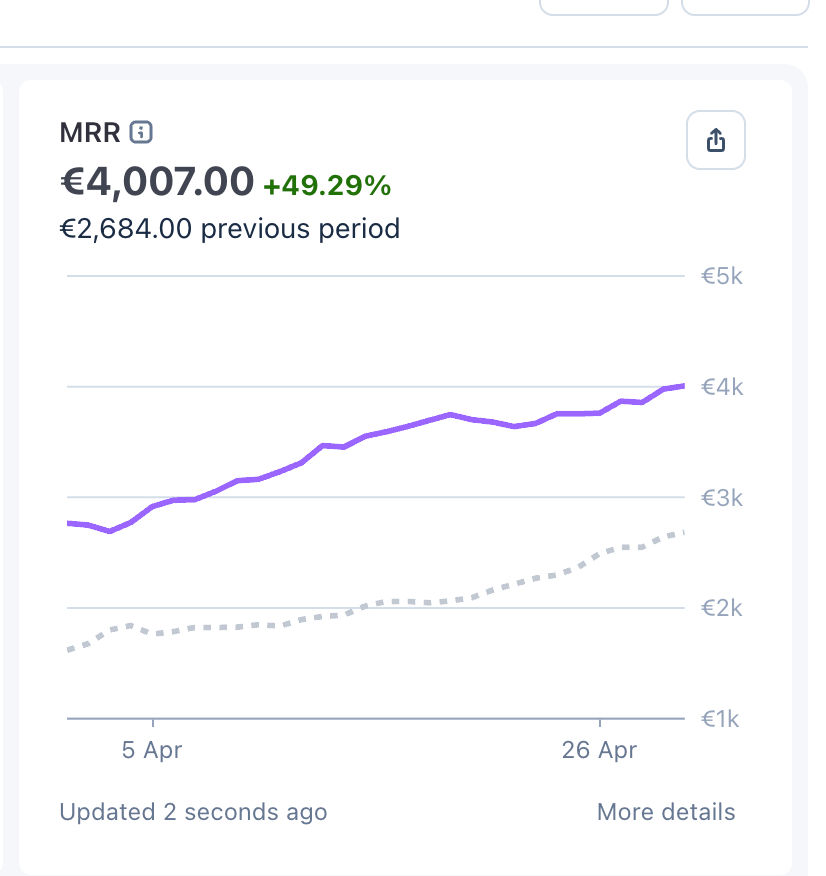
After 4+ years of struggling to make a dime on the internet and paying thousands in "indie hacker tuition," PostFast became the project that finally broke my streak. In April 2026, we hit a decent MRR of around €4,000 ($4,300–$4,500 USD).
We've been profitable since December 2025, and today, over 1,898+ creators trust the platform. I shifted my focus from "cool and interesting" to "boring, reliable, and affordable," and it changed everything.
Petar Georgiev
Founder · PostFast
 Bulgaria
This story is compiled from public sources and presented in an interview format for a better reading experience.
What's your backstory and how did you come up with the idea?
My backstory is one that a lot of indie hackers can relate to: a long runway of experimentation, financial sinkholes, and zero revenue.
I am building out of Bulgaria a country that, frankly, has almost no startup culture. There is no culture here of "hustling" in tech. No one is doing it. It’s strange for people when you tell them that you work after your work.
Pre-2025, I spent over 4 years working on various projects. I built a closed real estate platform for the Bulgarian market. I built a fitness tracking app. One major effort took me almost 2 years to build, yielding maybe one paying customer. My total sunk costs? Thousands of dollars out of my own pocket on hosting, design, and accounting.
The idea for PostFast didn’t come from a brainstorming session. It came from an acute, personal frustration. I was posting heavily across X, BlueSky, and LinkedIn to market my dead projects. To keep those channels alive, I had to write the same core message, adapt the tone for each platform, and manually log in everywhere to copy-paste and schedule.
Existing tools like Buffer and Hootsuite existed, but most didn’t fit my needs or had issues that annoyed me as a developer especially silently failing on Instagram Reels or TikTok. I decided: "I need this tool for myself, even if I’m the only one using it."
Take us through the process of building PostFast.
Phase 1: The Internal Tool
Initially, PostFast wasn't a SaaS. It was a simple script that worked with n8n (a self-hosted automation tool). The script let me push posts to a few platforms without clicking through a dozen dashboards. I used it daily, and it solved my immediate problem.
But as I kept using it, I realized agencies and other indie hackers were facing the exact same grind.
Phase 2: Evolving into a SaaS
I formalized the script into a web platform. I focused purely on the core mechanism: saving time and providing deep analytics. The feature set grew based strictly on what I needed and what early users begged for:
-
Smart Scheduling: Auto-suggests posting times with randomization so posts don’t go out at the exact same minute (making it look natural).
-
Cross-Platform Tuning: Write a "base" version and tweak the tone instantly (e.g., a professional tone for LinkedIn and a casual one for X).
-
Video Transcoding: Automatically encodes videos to meet each platform's specific requirements.
-
Analytics & Client Exports: I built a dedicated view for top-performing posts and added professional PDF/CSV exports so freelancers can hand their clients a branded report instantly.
Phase 3: Going Native
PostFast didn’t stay web-only for long. To close the loop for creators, I launched an iOS app in April 2026 and a Chrome extension. This creates a "create in browser, manage on the go" ecosystem.
The Tech Stack
Because I am bootstrapping, I had to be smart about infrastructure. I deploy on a VPS using Coolify.
-
Stack: React, NextJS, NestJS, Express, GraphQL, and TypeScript.
-
Database & Queues: PostgreSQL with TypeORM, Kafka, and Redis to handle concurrent posting at scale.
-
AI: Native integrations with Claude, Cursor, and an open-source MCP server (OpenClaw) for natural language scheduling.
Describe the process of launching the business.
I didn't spend a single dollar on paid ads to get PostFast off the ground. My entire early-stage growth came from a deliberate storytelling approach. I codified my launch strategy into an 8-Principle "Build in Public" Playbook:
-
Craft a Genuine Narrative: I posted raw progress reports on X bugs that took days to fix, platform review rejections, and small wins.
-
Lead with a Hook: Instead of "I shipped a feature," I wrote "Finally got approved for Facebook scheduling!"
-
Engage Deeply in Comments: I turned every post into a mini-AMA, building real relationships.
-
Adapt Content: Quick threads for X, long-form transparent stories for Reddit, and technical depth for my Medium/personal blog.
-
Use the Product to Market the Product: I scheduled all my marketing using PostFast.
-
Learn from Failures: Generic marketing tips fell flat. Vulnerability and struggle resonated.
-
Sell Without Selling: I rarely included direct links. I let people get curious.
-
Stay Consistent: Regular updates built an audience that eagerly waited for my next move.
Since launch, what has worked to attract and retain customers?
1. The Pricing Moat (The 75% Cheaper Alternative)
The social media scheduling market is mature, but I went after the giants directly using pricing and feature availability as my weapon.
 For an agency managing 30 clients, switching to PostFast saves them roughly $2,000 per year. By making enterprise features like API access and CSV imports available on every tier, I gave people a compelling reason to switch.
2. SEO from Day One
Aside from building in public, I optimized PostFast for search engines immediately. Technical SEO, JSON-LD, and writing topical clusters on SaaS building and automation drive massive organic search traffic.
How are you doing today and what does the future look like?
 Today, we operate on four tiers: Starter (€12), Creator (€29), Growth (€49), and Pro (€99).
I can happily say that PostFast has been fully profitable since December 2025. In April 2026, we crossed the €4,000 MRR mark. Probably a lot of people won’t care, as this is not $10k or whatever, but for me, this is an amazing milestone in my builder’s life.
The business has high margins (70%+) because I keep infrastructure lean. However, I remain grounded. I still work my full-time job. Every feature, bug fix, support ticket, and blog post is done during evenings and weekends.
My roadmap is focused on:
-
More Integrations: Deepening Google Business Profile features and adding Mastodon.
-
Deeper AI Features: Expanding the MCP server capabilities so AI can adapt tone and optimize performance automatically.
-
Scaling the Team: Eventually, the goal is to hit a revenue number that lets me go full-time and bring on support staff.
Through starting the business, have you learned anything particularly helpful or advantageous?
1. Bureaucracy is a silent killer. Building a startup in a non-startup country like Bulgaria means double the workload. Setting up a SaaS involves generating receipts and navigating bureaucratic requirements like submitting XML files to the legal authority every month. You have to endure it.
2. Solve a Boring Problem.
"Social media analytics for freelancers" isn't a sexy idea. It won't get breathless TechCrunch coverage. But boring problems are where the money is. People will pay for tools that save them 10 hours a week.
3. Features Can Be Distribution.
The client PDF/CSV export feature isn't just useful it's a growth engine. Every time a freelancer sends a branded report to their client, it acts as a marketing asset.
4. Failure Is Tuition, Not a Verdict.
Four years of zero revenue weren't wasted. Every failed project taught me about shipping, markets, and what users actually care about. They were the education that made PostFast possible. Don't quit before the breakthrough.
You can follow Petar Georgiev's journey on X at @peturgeorgievv, read his technical blog at peturgeorgievv.com, or check out PostFast at postfa.st.