From $1K to $9.5K MRR in 30 Days: The Solo AI Tool Fixing Ugly ‘Vibe-Coded’ Apps
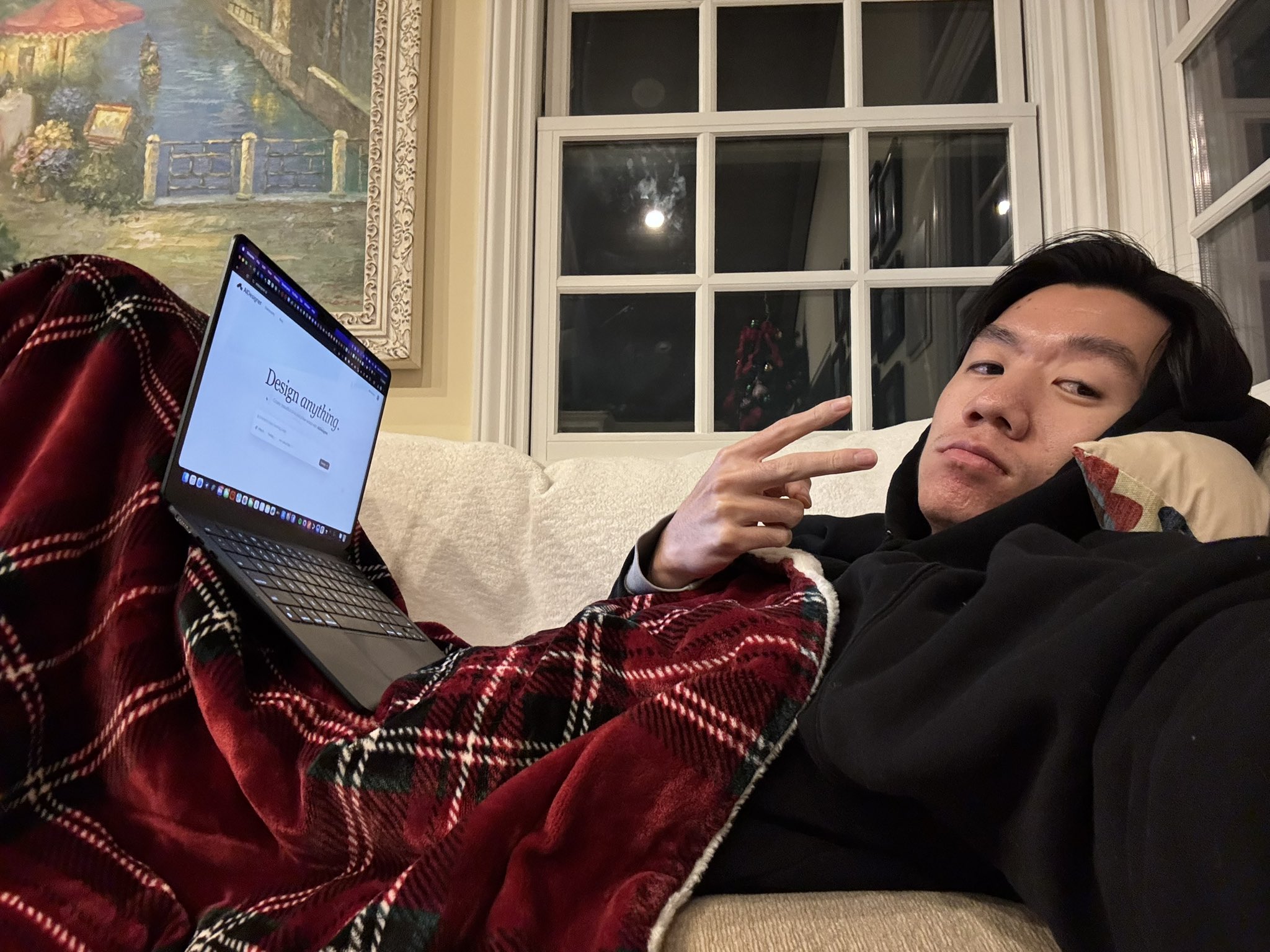 ## Hello! Who are you and what business did you start?
Hey! I’m Tyler Yin, though I go by Wiz online. My bio is pretty simple hi I build cool stuff. My background is a unique mix of art, design, and AI engineering. I studied Design and Media Arts at UCLA, went on to teach at the Parsons School of Design, and later worked as a Product Manager at Meta. Recently, I've been a solo indie hacker building AI tools like Postless.ai and LogoGen.ai.
But my most explosive project to date is AIDesigner.ai.
AIDesigner is a next-gen AI UI design platform. It generates production-ready, beautiful interfaces for websites and mobile apps from simple text prompts. Unlike typical AI image generators that spit out flat JPEGs with fake text, AIDesigner outputs usable, aesthetic, non-generic designs that integrate directly into real developer workflows.
We operate on a freemium model with a $25/month Pro tier. Recently, the product hit a massive inflection point. In just 30 days (April to May 2026), we went from under $1k MRR to $9.5k MRR, putting us 95% of the way to my $10k goal.
What's your backstory and how did you come up with the idea?
 In early 2025, Andrej Karpathy coined the term "vibe coding." Tools like Cursor, Claude Code, and Lovable made it possible for anyone to describe an app in plain English and have an AI write the functional code for it.
But there was a massive, unspoken problem that nobody was addressing on their landing pages: vibe-coded apps look horrible.
When an AI writes your UI, it usually spits out generic card layouts, bad spacing, and a Frankenstein mix of default Tailwind components. It screams "an AI built this in 5 minutes." On launch day, I posted:
 The market was split. You either had AI coding assistants that generated fast but ugly UI, or you had traditional design tools like Figma that produced beautiful outputs but required significant skill and time. Furthermore, generic AI image generators created pretty pictures, but the UI assets were completely fake and unusable for a developer.
I realized that if I could bridge that gap if I could teach an AI to have taste, composition, and spacing, and then make those designs instantly usable for developers I would have a massive hit.
Take us through the process of building the product.
 Building AIDesigner wasn't just about wrapping an OpenAI API. Teaching a statistical pattern-matching LLM to understand visual hierarchy and "taste" is incredibly hard.
I had to build a platform that treated design as an editable state, not just a static output. The core stack relies heavily on Next.js, Tailwind, and a multi-model pipeline leveraging custom fine-tuned vision models (like Stable Diffusion/Flux) to ensure high aesthetic standards.
The product evolved to include several key features:
-
The Infinite Canvas: You generate a design, but then you can click into buttons, text, and layouts to iterate specifically on that element.
-
Website Cloner: Instantly clone or draw inspiration from existing sites.
-
Asset Extraction Tool: This was a game-changer. It allows for one-click extraction of every asset (icons, images, components) from any design image. It enables a true "image-to-live-code in under 5 minutes" pipeline.
The Strategic Moat: The MCP Server
The biggest technical and strategic breakthrough was launching the MCP (Model Communication Protocol) Server.
Instead of forcing developers to use my website, I turned AIDesigner into infrastructure. With a simple CLI command (npx @aidesigner/agent-skills init), developers can connect their local AI coding assistants (Claude Code, Cursor, Windsurf) directly to AIDesigner.
Now, a developer can prompt their local IDE, and the AIDesigner engine will generate UI components, stream them to a live canvas, respect the local repo's design tokens, and push Tailwind-ready HTML/CSS directly into their codebase. This turned AIDesigner from a cool web app into an autonomous UI designer integrated directly into the dev workflow.
Describe the process of launching and the 30-day growth sprint.
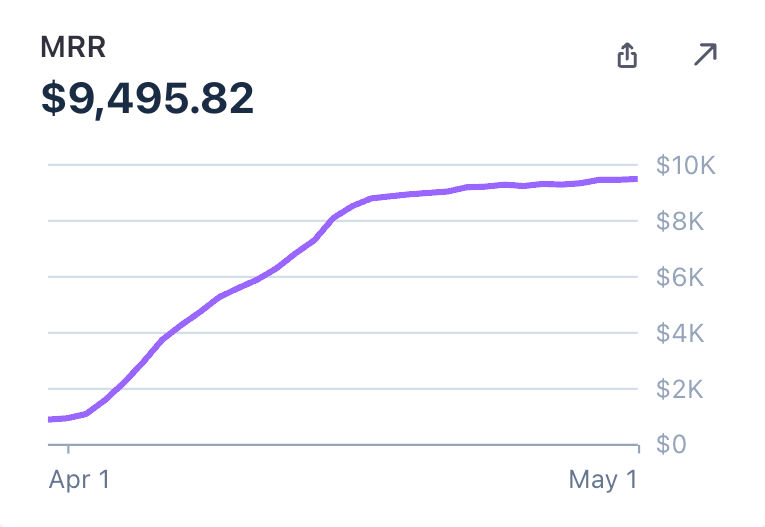 Like most of my projects, I built AIDesigner in public on X, Threads, and Reddit.
The real explosion happened between April and May 2026. My strategy was relentless shipping. The great thing about being a solo indie dev is you can ship new stuff at lightning speed. Every time I shipped a feature (like the MCP server or the Asset Extractor), I recorded a raw, unpolished demo showing it in action and posted it.
Here is what that growth sprint looked like:
-
Mid-April: Hit $6k MRR (added $5k in just 9 days).
-
One Viral Day: A single post showcasing our autonomous UI design capabilities resulted in +$1,025 in sales and +$700 MRR in just 24 hours.
-
Late April: Crossed $8k MRR, hitting 92% of my $10k goal.
-
May 1, 2026: I announced we had gone from $1k to $9.5k MRR in 30 days. My ARR essentially jumped from $11.4k to over $100k in a generational two-week run.
Users were reacting exactly how I hoped. The testimonials started pouring in,
"The aesthetic output is truly the standout",
"UI is my weakness and I've just received super powers."
Since launch, what has worked to attract and retain customers?
1. Anti-Positioning: I explicitly called out a pain point everyone felt but nobody was solving: AI code is great, but AI UI is ugly. By positioning AIDesigner as the cure for generic AI aesthetics, it immediately resonated with my exact target audience.
2. Building in Public on X and Threads: Sharing MRR wins, raw feature demos, and transparently discussing my challenges builds incredible trust. I don't use polished marketing videos; a screen recording of an infinite canvas generating a SaaS dashboard does the selling for me.
3. Workflow Integration (MCP): You retain developers by living in their IDE. By integrating with Cursor and Claude via our MCP server, AIDesigner isn't just a site they visit once; it’s a tool they use every time they code.
4. Battling Churn via Shipping:
My biggest ongoing challenge right now is churn. This is common with hype-driven early adopters in the AI space. To outrun churn, my primary focus is delivering continuous, undeniable value. You're always one feature away from changing your life, so I keep shipping.
What platforms/tools do you use for your business?
-
Next.js & Tailwind: The foundation of the web app and the generated code outputs.
-
Anthropic's MCP: The backbone of our integration with developer IDEs (JSON-RPC over HTTP).
-
TrustMRR & IndieRank: For openly verifying and sharing my revenue milestones.
-
X (Twitter), Reddit, Threads: My entire marketing and distribution engine.
Advice for other indie hackers who want to get started?
1. Taste is a Moat. In an era where anyone can prompt an AI to generate code, tasteful curation and high visual standards become your competitive advantage. Don't just build another wrapper; focus on aesthetics and uniqueness.
2. Solve Real Workflow Friction.
Generating a pretty picture isn't enough anymore. You have to make AI outputs usable. Bridging the gap between AI ideation and actual production code (like our Asset Extractor and MCP server) is where the real money is.
3. Partner With the Ecosystem.
Instead of trying to fight massive platforms like Cursor or Claude, I built integrations that made them better. Become infrastructure for the tools people already love.
And finally: keep shipping. You're one feature and one Reddit post away from changing your life.
Tyler Yin (Wiz)
Founder · AIDesigner.ai
 United States
This story is compiled from public sources and presented in an interview format for a better reading experience.